Туркменистан, Дашогуз

СДЕЛАЙТЕ СВОИ УРОКИ ЕЩЁ ЭФФЕКТИВНЕЕ, А ЖИЗНЬ СВОБОДНЕЕ
Благодаря готовым учебным материалам для работы в классе и дистанционно
Скидки до 50 % на комплекты
только до
Готовые ключевые этапы урока всегда будут у вас под рукой
Организационный момент
Проверка знаний
Объяснение материала
Закрепление изученного
Итоги урока
Была в сети 12.09.2022 20:53

Матьякубова Наргиза Бабахановна
учитель английского языка
33 года
 1 241
1 241
 55 482
Местоположение
Специализация
What couses seasons. ppt
Категория:
Английский язык
15.06.2022 00:05

Просмотр содержимого документа
«What couses seasons. ppt»
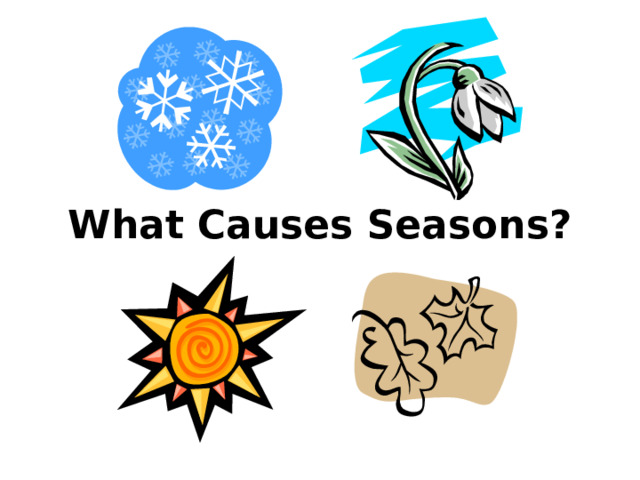
What Causes Seasons?

We know that the reason we have day and night is because the Earth
rotates.
Rotate means
to turn.
The Earth rotating on its
______
gives us day and night.
axis
Earth’s axis is
the imaginary line that goes through the center of the Earth.
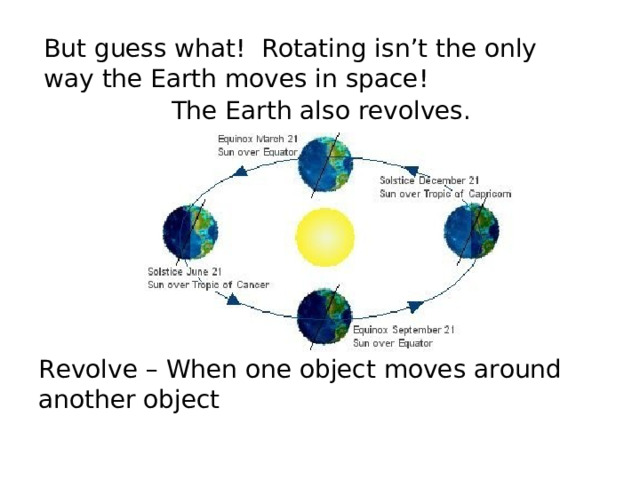
But guess what! Rotating isn’t the only way the Earth moves in space!
The Earth also revolves.
Revolve – When one object moves around another object
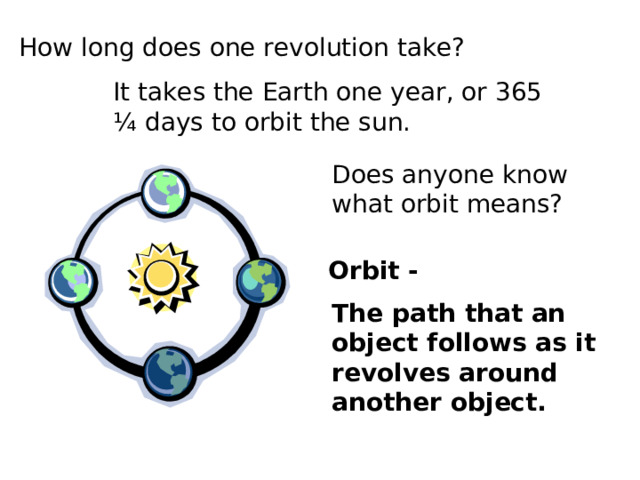
How long does one revolution take?
It takes the Earth one year, or 365 ¼ days to orbit the sun.
Does anyone know what orbit means?
Orbit -
The path that an object follows as it revolves around another object.

All over the world, people experience the four seasons.

Winter…

Spring…

Summer…

and fall.

But why do we have four seasons?
It’s because the Earth’s axis is tilted.
Take a good look at our globe. It‘s not tilted like that because it looks nice. No way. That’s the way the Earth is tilted in space.
That tilt gives us seasons!

Look at this diagram. Notice how the Earth is always tilted in the same direction. As the Earth __________ the part of Earth tilted toward the sun changes.
revolves

During part of the year the North Pole tilts towards the sun. This season is ________.
summer
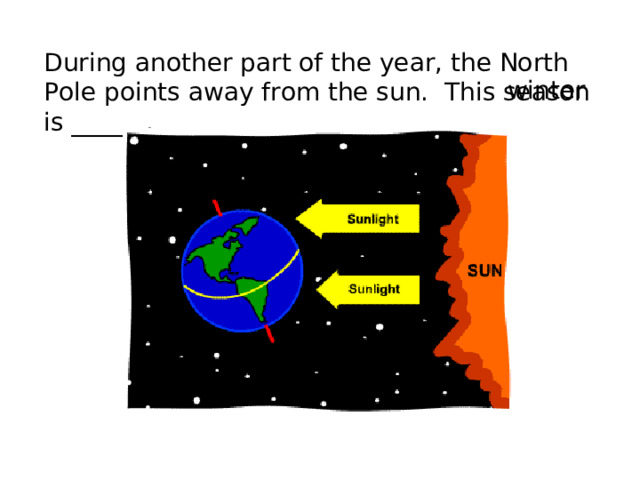
During another part of the year, the North Pole points away from the sun. This season is ______.
winter

When the North Pole is tilted toward the Sun, the Sun travels higher overhead in the sky. The Sun’s rays shine straighter down on that part of the Earth. It is summer in that part of the Earth.
It’s like pointing a flashlight at a piece of paper. When you hold the flashlight straight above the paper, the rays from the flashlight shine down straighter.
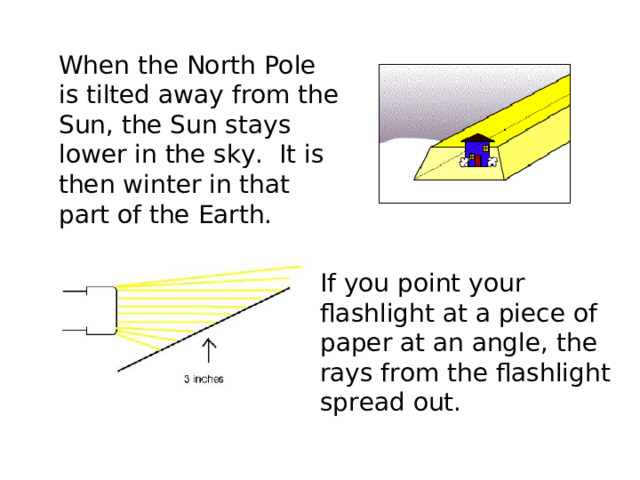
When the North Pole is tilted away from the Sun, the Sun stays lower in the sky. It is then winter in that part of the Earth.
If you point your flashlight at a piece of paper at an angle, the rays from the flashlight spread out.
Вебинар для учителей
Свидетельство об участии БЕСПЛАТНО!