


Россия, Ярославль


СДЕЛАЙТЕ СВОИ УРОКИ ЕЩЁ ЭФФЕКТИВНЕЕ, А ЖИЗНЬ СВОБОДНЕЕ
Благодаря готовым учебным материалам для работы в классе и дистанционно
Скидки до 50 % на комплекты
только до
Готовые ключевые этапы урока всегда будут у вас под рукой
Организационный момент
Проверка знаний
Объяснение материала
Закрепление изученного
Итоги урока

Была в сети 14.04.2026 22:46

Забелина Ольга Юрьевна
Учитель английского языка
52 года
 2 297
2 297
 30 366
Местоположение
Специализация
Youth Subcultures/Stilyagi
Категория:
Английский язык
07.06.2021 12:50

Просмотр содержимого документа
«Youth Subcultures/Stilyagi»

Stilyagi
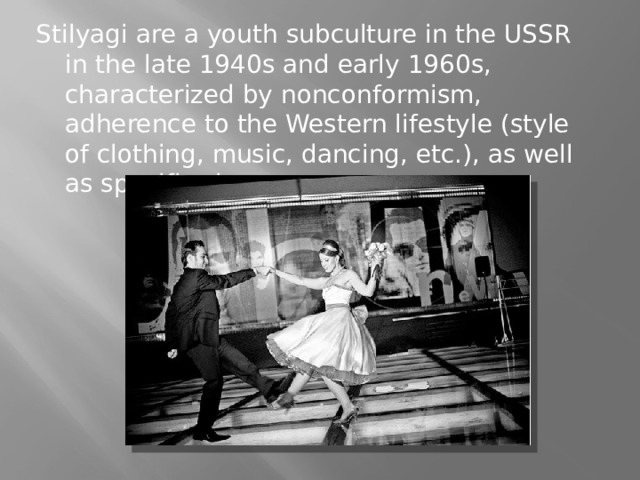
Stilyagi are a youth subculture in the USSR in the late 1940s and early 1960s, characterized by nonconformism, adherence to the Western lifestyle (style of clothing, music, dancing, etc.), as well as specific slang.
The history of the subculture
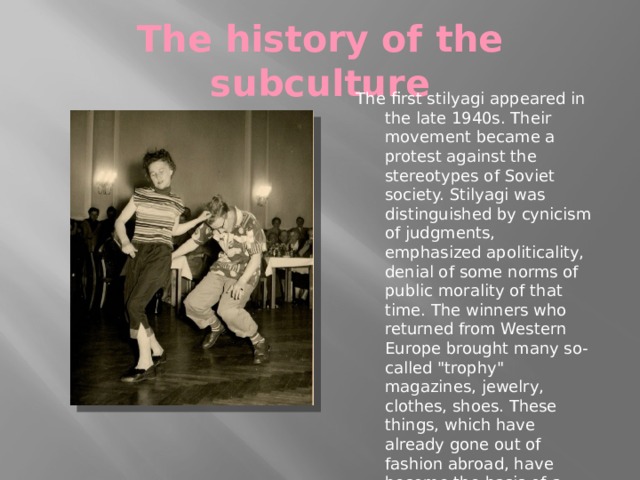
The first stilyagi appeared in the late 1940s. Their movement became a protest against the stereotypes of Soviet society. Stilyagi was distinguished by cynicism of judgments, emphasized apoliticality, denial of some norms of public morality of that time. The winners who returned from Western Europe brought many so-called "trophy" magazines, jewelry, clothes, shoes. These things, which have already gone out of fashion abroad, have become the basis of a protest wardrobe for stylish "people".
Attributes
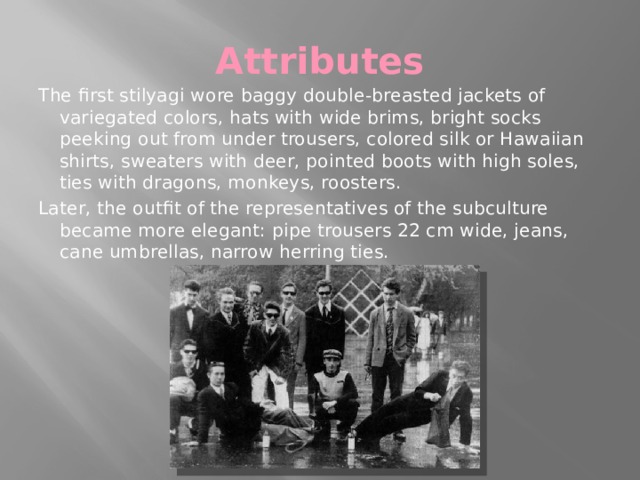
The first stilyagi wore baggy double-breasted jackets of variegated colors, hats with wide brims, bright socks peeking out from under trousers, colored silk or Hawaiian shirts, sweaters with deer, pointed boots with high soles, ties with dragons, monkeys, roosters.
Later, the outfit of the representatives of the subculture became more elegant: pipe trousers 22 cm wide, jeans, cane umbrellas, narrow herring ties.
Wealthy stilyagi bought clothes from blacksmiths or visiting foreigners, and also ordered sewing of things from Western fabrics bought in thrift stores. Stilyagi from poor families often sewed raincoats and trousers from canvas.
Representatives of the subculture held in high esteem special "luxury items" - foreign fountain pens, cigarette cases and lighters, as well as American playing cards with girls in the Pin-up style.
Stilyagi had a special manner of movement, which were presented as "extremely cheeky". The plastics of the representatives of the subculture was deliberate and thoughtful: a high head and a free gait indicated that they belonged to the movement. Stilyagi from different cities in the evenings strolled along "Broadway" - usually the central street of the city (Gorky Street in Moscow, Nevsky Prospekt in Leningrad). An important element of these walks was the demonstration of their costumes.
The special slang of stilyagi was formed from English borrowings, altered into the Russian way, in combination with elements of musical jargon. Stilyagi also changed their names to foreign ones consonant with them.
The main attribute of stilyagi was the saxophone, which personified the music of free people. Stilyagi were fond of foreign dances and music - first of all, jazz.

(stills from the movie «Stilyagi», 2008)
The position in the society
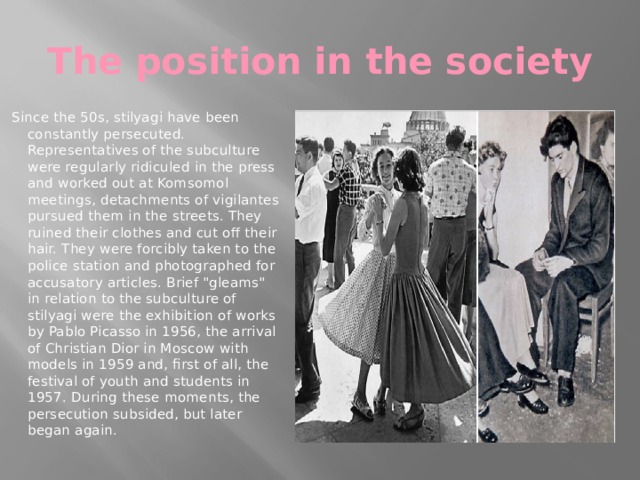
Since the 50s, stilyagi have been constantly persecuted. Representatives of the subculture were regularly ridiculed in the press and worked out at Komsomol meetings, detachments of vigilantes pursued them in the streets. They ruined their clothes and cut off their hair. They were forcibly taken to the police station and photographed for accusatory articles. Brief "gleams" in relation to the subculture of stilyagi were the exhibition of works by Pablo Picasso in 1956, the arrival of Christian Dior in Moscow with models in 1959 and, first of all, the festival of youth and students in 1957. During these moments, the persecution subsided, but later began again.
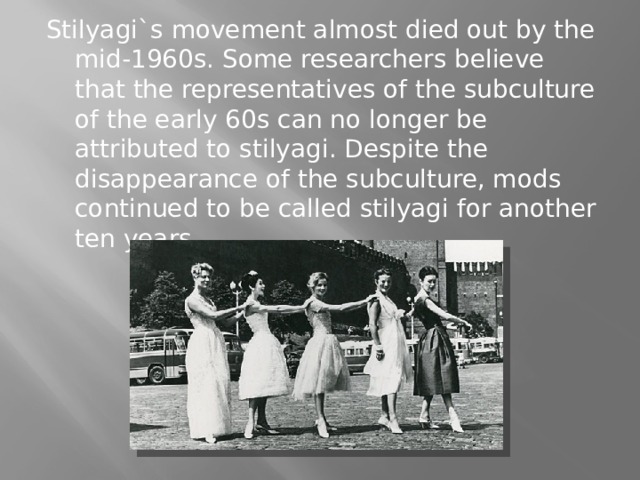
Stilyagi`s movement almost died out by the mid-1960s. Some researchers believe that the representatives of the subculture of the early 60s can no longer be attributed to stilyagi. Despite the disappearance of the subculture, mods continued to be called stilyagi for another ten years.



Вебинар для учителей

Свидетельство об участии БЕСПЛАТНО!



