Россия, Калининград


СДЕЛАЙТЕ СВОИ УРОКИ ЕЩЁ ЭФФЕКТИВНЕЕ, А ЖИЗНЬ СВОБОДНЕЕ
Благодаря готовым учебным материалам для работы в классе и дистанционно
Скидки до 50 % на комплекты
только до
Готовые ключевые этапы урока всегда будут у вас под рукой
Организационный момент
Проверка знаний
Объяснение материала
Закрепление изученного
Итоги урока

Была в сети 05.12.2024 20:39

Северина Елизавета Викторовна
Преподаватель
23 года
 151
151
 193 004
Местоположение
Специализация
Глоссарий по TKT
Категория:
Английский язык
05.12.2024 17:10

Просмотр содержимого документа
«Глоссарий по TKT»
GLOSSARY
Module 3
Managing the teaching and
learning process
| № | WORD/TERM | Meaning | Russian Equivalent
| Examples or/and Notes |
| Unit 31 Grouping learners | ||||
| 1 | class dynamics | the relationship between the members of a group (such as a language class) that contributes to its cohesion and helps motivate its individual members. | динамика класса | Teachers think about group dynamics when they are deciding which learners should work together in different groups. |
| 2 | closed pair | a classroom organisation in which learners work in pairs in order to complete a task. | парная работа перед проверяющим | For example, learners discuss the answers to a task with the person sitting next to them. |
| 3 | dominate
| To have a very strong influence over what happens. If a particular learner is dominant in class, then other learners get less chance to participate actively. | лидирующая роль | If a teacher dominates, the lesson is teacher-centred. |
| 4 | group dynamics | The relationship between learners in the group or class. | динамика класса | Teachers think about group dynamics when they are deciding which learners should work together in different groups. |
| 5 | interaction pattern | The different ways learners and the teacher work together in class, e.g. learner to learner in pairs or groups, or teacher to learner in open class, in plenary. | Виды взаимодействия | When teachers plan lessons, they think about interaction patterns and write them on their plan. |
| 6 | mingle
| A mingle is an activity which involves learners walking round the classroom talking to other learners to complete a task | смешанное задание | For example, learners could mingle to find out what the other learners in the class like doing in their free time. |
| 7 | оpen class, whole class | When the teacher leads the class and each learner is focusing on the teacher, rather than working alone or in groups. When learners respond, they do so in front of everyone in the class. | Открытый урок , урок где все поддерживают и слушают друг друга | For example, at the beginning of a lesson, the teacher puts a picture on the board and asks all of the learners to look at it. He/she then chooses individual learners to describe the picture while everyone else listens. |
| 8 | class | A description of the learners and information about their learning, including their age, ability, strengths and weaknesses in language and skills. | класс | the 6th class |
| 9 | scanning | Reading a text to look for specific information and paying no attention to everything else in the text, | чтение с поиском деталей | e.g. looking for a word you want to know the meaning of in a dictionary |
| 10 | pace | the flow of activities in a lesson and the variations in the speed and intensity of the activities. | последовательность, ход урока | A teacher can vary the pace in a lesson by planning different activities in order to keep the learners’ attention. |
| 11 | feedback | 1. To tell someone how well they are doing. 2. Teachers also give feedback after an exercise that learners have just completed; 3. In addition, learners can give feedback to teachers, and teacher trainers give feedback to trainee teachers about what went well or less well in their lessons. See peer feedback. | обратная связь | After a test, or at a certain point in the course, teachers might give learners feedback on how well they are doing. e.g. after learners have done a gap-fill activity the teacher conducts feedback by asking learners to tell him/her which words they have put in the gaps. He/she writes the correct answers on the board.
|
| 12 | learner characteristics | The typical things about a learner or learners that influence their learning, | Хар-ка обучающегося | e.g. age, L1, past learning experience, learning style. |
| 13 | chart | Information in the form of diagrams, lists or drawings often placed on the classroom wall for learners to use. | ряд правил(список) | Common examples are lists of irregular verb forms or drawings illustrating the meanings of prepositions |
| 14 | learner autonomy | When a learner can set his/her own aims and organise his/her own study, they are autonomous and independent. | самостоятельность обучающегося | Many activities in coursebooks help learners to be more independent by encouraging them to find out more about things in the book and helping them to organise their learning, such as by suggesting they keep vocabulary lists. |
| 15 | confidence | The feeling someone has when they are sure of their ability to do something well | уверенность | Teachers often do activities that help learners to feel more confident about their own ability. |
| Unit 32 Correcting learners | ||||
| 1. | concept question | A concept question is a question asked by the teacher to make sure that a learner has understood the meaning of new language, | специальный вопрос | e.g. teaching the new grammatical structure ‘used to’, using the example He used to live in Paris concept question – Does he live in Paris now? Answer – No. |
| 2. | correction code | A series of symbols a teacher may use to mark learners’ writing so that they can correct mistakes by themselves, | символы для ошибок | e.g. P = punctuation mistake, T = tense mistake. |
| 3. | echo correct
| When learners make a mistake, the teacher repeats the mistake with rising intonation encouraging learners to correct themselves, | использование интонации в исправлении | e.g. Learner: He don’t like it. Teacher: Don’t? Learner: He doesn’t like it. |
| 4. | facial expression | A person can show how they feel through their face, | выражение лица | e.g. smiling, showing surprise. |
| 5. | finger correction
| A way of drawing attention to where a learner has made a mistake. The teacher counts out the words a learner has said on her fingers. The fingers represent words and the teacher can show clearly in which word (finger) the mistake was made. | исправление пальцами | A teacher may use finger correction to show that a mistake has been made with word or sentence stress, word order, grammar, pronunciation of sounds etc. |
| 6. | gesture | A movement of part of the body, which is used to communicate an idea or a feeling | жесты | e.g. a gesture for saying goodbye is waving a hand. |
| 7. | ignore (erors)
| To choose not to pay attention to something; | игнорировать ошибки | e.g. a teacher may choose to ignore an error made by a learner in a speaking activity because he/she wants to help the learner with fluency, not accuracy. |
| 8. | indicate | To show, point out, make known; | узнать/определить | e.g. a teacher can indicate that a learner has made a mistake by repeating the mistake with rising intonation |
| 9. | punctuation | The symbols or marks used to organise writing into clauses, phrases and sentences to make the meaning clear. | пунктуация | Apostrophe noun ’ ’ is added to a singular noun before an ‘s’ to show that something belongs to someone, e.g. Mae’s house. An apostrophe is also common in contractions, e.g. He’s (He is or He has). ‘at’ symbol noun @ used instead of ‘at’ in email addresses,. |
| 10. | Reference materials
| The materials which teachers and learners can use to find or check information, | проверочные материалы | e.g. grammar books, dictionaries and online teaching resources |
| 11. | self-correction | Teachers helping learners to make what they write or say better or right. | самоисправление | When learners correct language mistakes they have made, perhaps with some help from the teacher. |
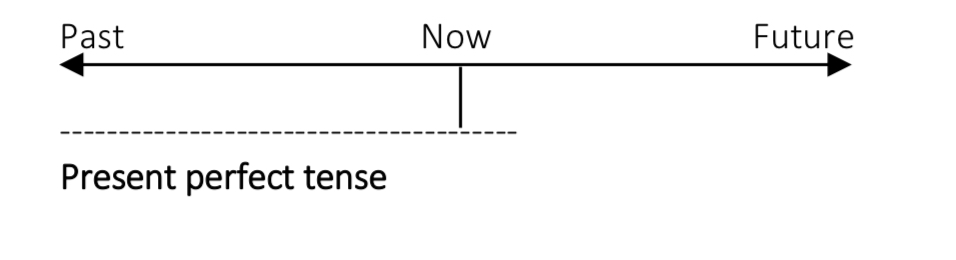
| 12. | time line
| A diagram that shows learners the relationship between tense and time. It is often used in language teaching to present the use of a new tense or to correct learners when they use tenses wrongly | временная диаграмма |
|
| 13. | utterance | A complete unit of speech in spoken language. An utterance can be shorter than a sentence | высказывание | e.g. A: When’s he coming? B: Tomorrow. C: Oh! ‘When’s he coming?’ is an utterance and ‘Tomorrow’ and ‘Oh’ are both utterances. |
| 14. | slip | A mistake that a learner makes when trying to say or write something above their level of language or language processing. | оговорка | When a learner makes a slip they make a language mistake but they are able to correct themselves, e.g. Learner: He like ice-cream, I mean, he likes ice-cream. |
| 15. | prompt | A card on which there is/are (a) word(s) or (a) picture(s) to prompt or encourage learners to produce particular language, often during a controlled practice activity or drill | материалы | e.g. a teacher presenting I like + ing / I don’t like + ing could have a number of picture cue cards with different activities (swimming, reading etc.). Learners have to respond to the cue card using I like + swimming or I don’t like + swimming. |
Вебинар для учителей

Свидетельство об участии БЕСПЛАТНО!