Российская Федерация, Тобольск

СДЕЛАЙТЕ СВОИ УРОКИ ЕЩЁ ЭФФЕКТИВНЕЕ, А ЖИЗНЬ СВОБОДНЕЕ
Благодаря готовым учебным материалам для работы в классе и дистанционно
Скидки до 50 % на комплекты
только до
Готовые ключевые этапы урока всегда будут у вас под рукой
Организационный момент
Проверка знаний
Объяснение материала
Закрепление изученного
Итоги урока
Была в сети 14.05.2026 13:46

Тулюлюк Валентина Валентиновна
учитель английского языка
39 лет
 568
568
 98 908
Местоположение
Специализация
План урока английского языка "Healthy World"
Категория:
Английский язык
27.05.2019 10:22

Просмотр содержимого документа
«План урока английского языка "Healthy World"»
Lesson plan
| Unit of a long term plan: Healthy World | School: Dimitrovskaya secondary school, Altynsarin district, Kostanai region | ||||||||||||||||||||||||||||||||
| Date: | Teacher name: Tulyulyuk Valentina Valentinovna
| ||||||||||||||||||||||||||||||||
| CLASS: 4 | Number present: | absent: | |||||||||||||||||||||||||||||||
| Lesson title: | Healthy bodies 1 | ||||||||||||||||||||||||||||||||
| Learning objectives | 4.W.7.1 spell most familiar high-frequency words accurately when writing independently;
4.UE.12.1 use adverbs of time and frequency: sometimes, often, always, never to indicate when and how often, begin to use simple adverbs of manner example given well, badly, use common -ly manner adverbs to describe actions example given slowly, quickly
| ||||||||||||||||||||||||||||||||
| Lesson objectives
| All learners will be able to record 2-3 sentences on the topic “Healthy bodies” using active vocabulary and adverbs of time and frequency: sometimes, often, always, never to indicate when and how often, begin to use simple adverbs of manner example given well, badly, use common -ly manner adverbs to describe their health
Most learners will be able to make 4-5 sentences on the topic “Healthy bodies” using active vocabulary and adverbs of time and frequency: sometimes, often, always, never to indicate when and how often, begin to use simple adverbs of manner example given well, badly, use common -ly manner adverbs to describe their health
Some learners will be able to characterize their health, composing 5-6 sentences on the topic “Healthy bodies” using active vocabulary, adverbs of time and frequency: sometimes, often, always, never to indicate when and how often, begin to use simple adverbs of manner example given well, badly, use common -ly manner adverbs to describe their health
| ||||||||||||||||||||||||||||||||
| Assessment criteria | Learners can demonstrate using adverbs of time and frequency: sometimes, often, always, never to indicate when and how often, begin to use simple adverbs of manner example given well, badly, use common -ly manner adverbs to describe their health in 5-6 sentences using active vocabulary on the topic “Healthy bodies”
| ||||||||||||||||||||||||||||||||
| Values links | Respect each other, support, cooperation, responsibility, Mangilik El patriotically act(Healthy life - the basis forming a healthy nation)
| ||||||||||||||||||||||||||||||||
| Cross-curricular links | Physical Education Nature Science Kazakh Russian | ||||||||||||||||||||||||||||||||
| Previous learning | vocabulary “Snow and ice”, prepositions of place and time | ||||||||||||||||||||||||||||||||
| Plan | |||||||||||||||||||||||||||||||||
| Planned timings | Planned activities (replace the notes below with your planned activities)
| Resources | |||||||||||||||||||||||||||||||
| Start
3 min
| -Greeting
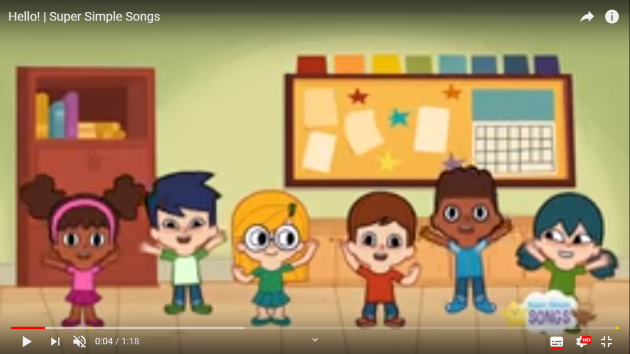
-Warming up. Sing a song “Hello!”. “The hot circle” Learners make a circle and tell to each other good wishes, complements.
|
https://www.youtube.com/watch?v=tVlcKp3bWH8
| |||||||||||||||||||||||||||||||
| Middle
3 min
5 min
5 min
5 min
3 min
4 min
2 min
3 min
2 min
2 min | Activity 1 Division into pairs. The method of “Puzzle technology”. With the help pictures about body parts. Learners for “Forecasting Method” name the title of lesson «Healthy bodies». Do these puzzles and find their pairs’ name
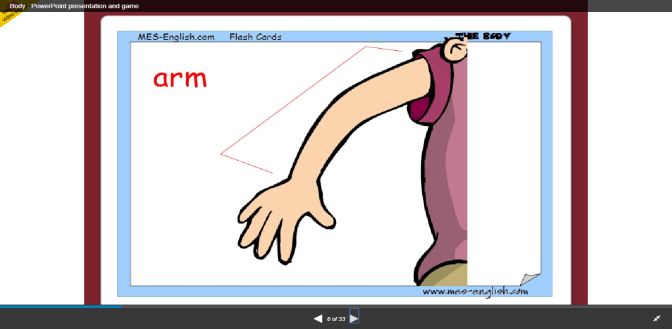
Activity 2 Task 1 Work in pair. Learners start the lesson with the PPT with vocabulary on it and drills pronunciation and words into Kazakh, English and Russian. Then show each other the cards as they recall them. Descriptor
Task 2 FA “Circle, Triangle, Square” Learners can draw geometric shapes or the teacher can distribute already prepared shapes. * In the circle figure, the students write what they didn’t understand enough. * On the figure of a triangle, they will write what they are interested in. * In the square figure, they write about what they agree with.
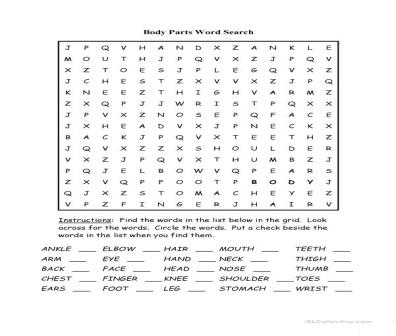
Activity 3 “Scramble” Task 1 to unscramble the words “Scramble” task on worksheet individuals.
Descriptor:
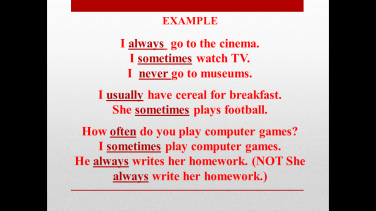
Activity 4 Involving new grammar adverbs of time and frequency.
-Look at the board with the PPT “Adverbs” and repeat words, Task 1 to write sentence Learners write 3- 4 sentences about their health and their body using always, sometimes and never e.g. I sometimes have a cold. I never have toothache. My granddad always has backache.
Descriptor:
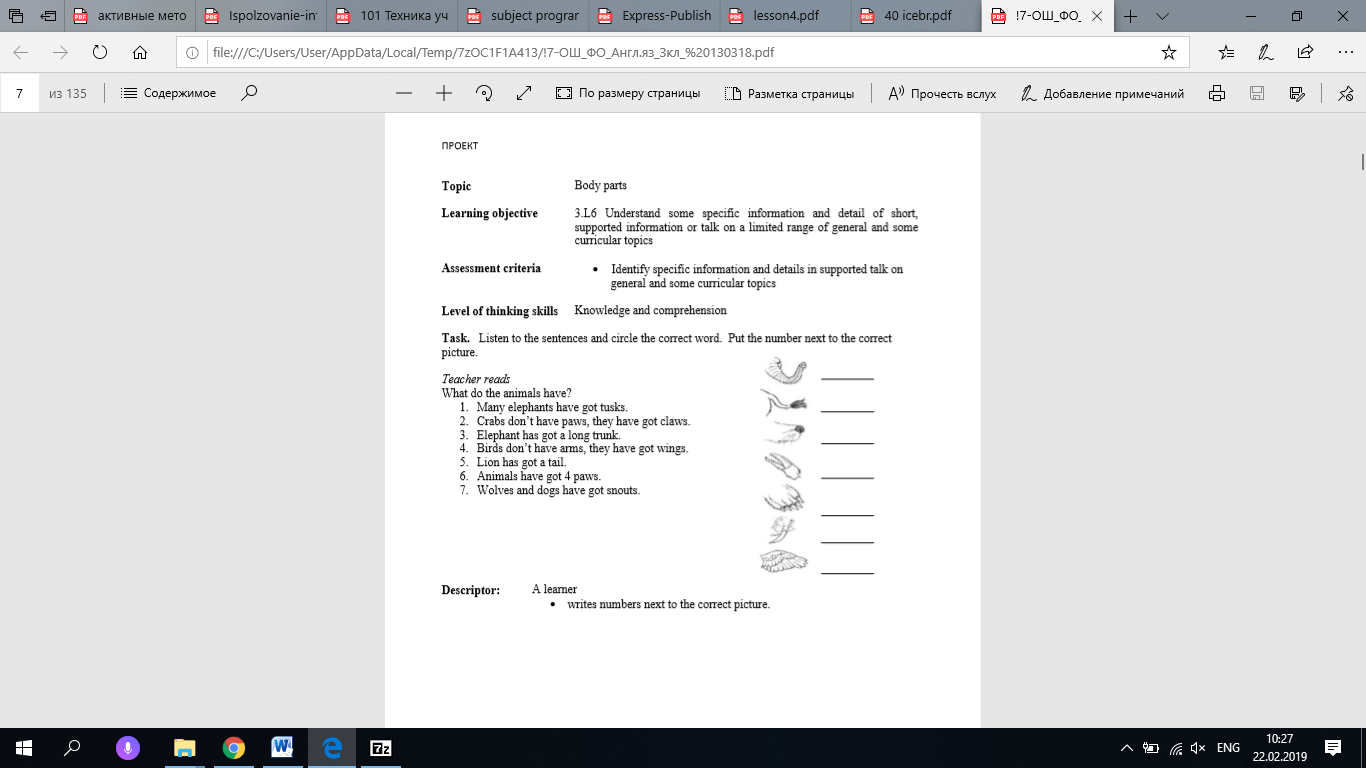
Task 2 Listen to the sentences and circle the correct word. Put the number next to the correct picture. What do the animals have? 1. Many elephants have got tusks. 2. Crabs don’t have paws, they have got claws. 3. Elephant has got a long trunk. 4. Birds don’t have arms, they have got wings. 5. Lion has got a tail. 6. Animals have got 4 paws. 7. Wolves and dogs have got snouts
Descriptor: -A learner writes numbers next to the correct picture. -a learner knows words
Task 2 Writing (complete sentences) To write new words and complete the sentences with adverbs
Peer-assessment Learners change worksheets with each other pairs and to check up them and to access according to the key and give smiles. Learners evaluate each other: pair assessment Let`s have a Dynamic pause Let´s sing “Wash your hands” and dance. Individual Assessment
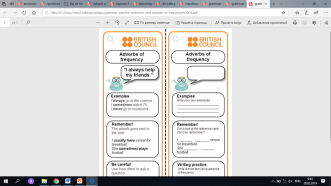
Level: 2-3 - High 1-2 - middle 0-1 - low | Sheets of papers with the pictures Appendix 1 Handout 1,2 https://www.slideshare.net/MJSIMOES/body-presentation-and-game https://www.google.com/search?q=Circle,+Triangle,+Square&rlz=1C1SQJL_ruKZ820KZ820&source=lnms&tbm=isch&sa=X&ved=0ahUKEwivldvNkd7gAhXd8qYKHTJsBI4Q_AUIDigB&biw=1366&bih=657#imgrc=B7pWxyDpyM24WM: Appendix 2 Handout1 https://www.google.com/search?q=scrambled+words+parts+of+body&rlz=1C1SQJL_ruKZ820KZ820&source=lnms&tbm=isch&sa=X&ved=0ahUKEwjoyvWD2NjgAhVkwqYKHbZ4CKEQ_AUIDigB&biw=1366&bih=657#imgrc=364lOdk5itqodM: PPT Appendix 2 Handout 2 A collection of tasks for Formative Assessment English Grade 3 https://learnenglishkids.britishcouncil.org/ru/grammar-practice/adverbs-frequency https://learnenglishkids.britishcouncil.org/ru/grammar-practice/adverbs-frequency
Handout 2 http://www.nathandiehl.com/wp-content/uploads/2007/08/smiles_large.jpg https://www.youtube.com/watch?v=dDHJW4r3elE Appendix 3 Handout 1 | |||||||||||||||||||||||||||||||
| End 3 min | Feedback: “Fingerprints” Learners draw prints and write on each finger what they have learned today. The lesson is over. | https://www.google.com/search?q=%D1%80%D1%83%D0%BA%D0%B0&rlz=1C1SQJL_ruKZ820KZ820&source=lnms&tbm=isch&sa=X&ved=0ahUKEwjsj5ejk97gAhWJwcQBHVJnAkIQ_AUIDigB&biw=1366&bih=608#imgrc=ymDLmR97UHhP-M: | |||||||||||||||||||||||||||||||
| Additional information | |||||||||||||||||||||||||||||||||
| Differentiation – how do you plan to give more support? How do you plan to challenge the more able learners? | Assessment – how are you planning to check learners’ learning? | Health and safety check | |||||||||||||||||||||||||||||||
| -Recommendations, praising words – during the lesson; -Emoticons; -Peer-assessment to exchange worksheets for Self assessment; -Based assessment criteria -Formative Assessment “Circle, Triangle, Square” -Feedback “Fingerprints” | -Health saving technologies. -Dynamic pause song -“Hello!” -song “Wash your hands” -Using ICT not more than 15 minutes | |||||||||||||||||||||||||||||||
| Reflection Were the lesson objectives/learning objectives realistic? Did all the learners achieve the lesson objectives/ learning objectives? If not, why? Did my planned differentiation work well? Did I stick to timings? What changes did I make from my plan and why? | Use the space below to reflect on your lesson. Answer the most relevant questions from the box on the left about your lesson. | ||||||||||||||||||||||||||||||||
| | |||||||||||||||||||||||||||||||||
| Summary evaluation What two things went really well (consider both teaching and learning)? 1: 2: What two things would have improved the lesson (consider both teaching and learning)? 1: 2: What have I learned from this lesson about the class or individuals that will inform my next lesson? | |||||||||||||||||||||||||||||||||


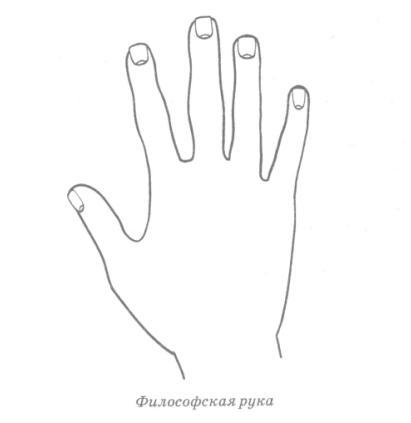
Appendix 1
Handout 1
https://www.google.com/search?q=%D0%BA%D0%B0%D1%80%D1%82%D0%B8%D0%BD%D0%BA%D0%B8+%D1%87%D0%B0%D1%81%D1%82%D0%B8+%D1%82%D0%B5%D0%BB%D0%B0&rlz=1C1SQJL_ruKZ820KZ820&tbm=isch&source=iu&ictx=1&fir=dze7E-eRgmuo3M%253A%252Ctr30wuqkUp77RM%252C_&usg=AI4_-kSod3fBSTj_UClJkfj1hA_nVYazAA&sa=X&ved=2ahUKEwj-9uWlw9jgAhXSlosKHbkOBs8Q9QEwBnoECAUQEA&biw=1366&bih=657#imgrc=qjPyD4bka5q0QM:
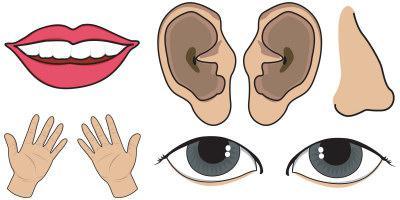
Handout 2
https://www.google.com/search?q=%D0%BA%D0%B0%D1%80%D1%82%D0%B8%D0%BD%D0%BA%D0%B8+%D1%87%D0%B0%D1%81%D1%82%D0%B8+%D1%82%D0%B5%D0%BB%D0%B0&rlz=1C1SQJL_ruKZ820KZ820&tbm=isch&source=iu&ictx=1&fir=dze7E-eRgmuo3M%253A%252Ctr30wuqkUp77RM%252C_&usg=AI4_-kSod3fBSTj_UClJkfj1hA_nVYazAA&sa=X&ved=2ahUKEwj-9uWlw9jgAhXSlosKHbkOBs8Q9QEwBnoECAUQEA&biw=1366&bih=657#imgdii=_Vo9SYJbEtRRnM:&imgrc=qjPyD4bka5q0QM:
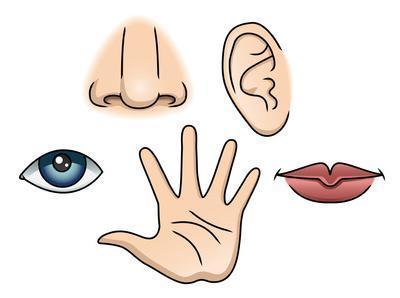
Appendix 2
Handout 1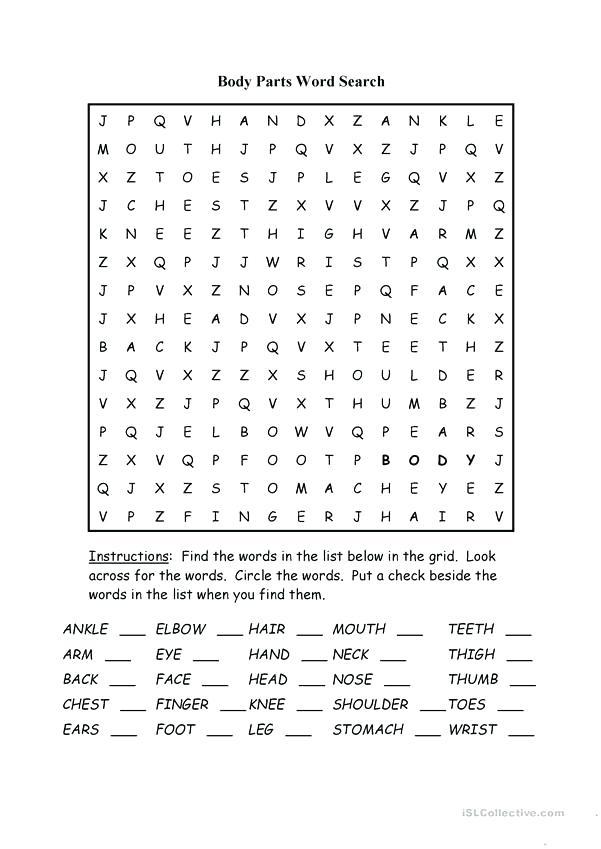
Handout 2
FA 1
Appendix 3
Handout 1
Based assessment criteria
| Criteria | Task | Descriptor | Mark |
| record 2-3 sentences on the topic “Healthy bodies” using active vocabulary and adverbs of time and frequency
| record 2-3 sentences on the topic “Healthy bodies” using active vocabulary and adverbs of time and frequency | can record 2-3 sentences on the topic “Healthy bodies” using active vocabulary and adverbs of time and frequency | 1 |
| make 4-5 sentences on the topic “Healthy bodies” using active vocabulary and adverbs of time and frequency | make 4-5 sentences on the topic “Healthy bodies” using active vocabulary and adverbs of time and frequency | can make 4-5 sentences on the topic “Healthy bodies” using active vocabulary and adverbs of time and frequency | 2 |
| characterize their health, composing 5-6 sentences on the topic “Healthy bodies” using active vocabulary, adverbs of time and frequency | characterize their health, composing 5-6 sentences on the topic “Healthy bodies” using active vocabulary, adverbs of time and frequency | can characterize their health, composing 5-6 sentences on the topic “Healthy bodies” using active vocabulary, adverbs of time and frequency | 3 |
| Total |
|
|
|
Level: 2-3 - high 1-2 - middle 0-1 -low
Handout 2
|
| ||
| Ihave a questions | Good job | Nice job |


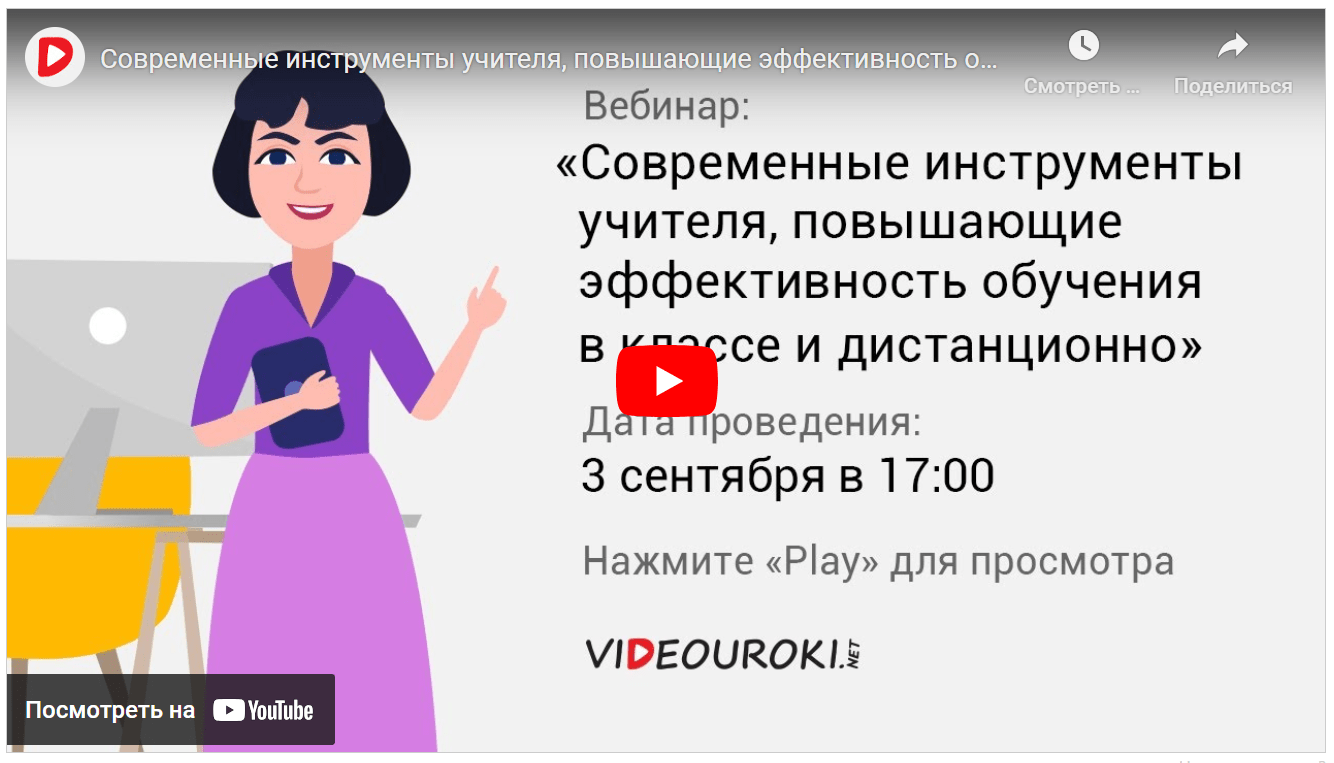
Вебинар для учителей
Свидетельство об участии БЕСПЛАТНО!