




© 2026, Галляметдинова Энже Маратовна 22 0

СДЕЛАЙТЕ СВОИ УРОКИ ЕЩЁ ЭФФЕКТИВНЕЕ, А ЖИЗНЬ СВОБОДНЕЕ
Благодаря готовым учебным материалам для работы в классе и дистанционно
Скидки до 50 % на комплекты
только до
Готовые ключевые этапы урока всегда будут у вас под рукой
Организационный момент
Проверка знаний
Объяснение материала
Закрепление изученного
Итоги урока

Была в сети 28.04.2026 00:19

Галляметдинова Энже Маратовна
Учитель английского языка
 205
205
 170 415
Специализация
Презентация "Waterworld in danger"
Категория:
Английский язык
03.04.2026 22:37

Просмотр содержимого документа
«Презентация "Waterworld in danger"»
Оригинальные шаблоны для презентаций: https://presentation-creation.ru/powerpoint-templates.html
Бесплатно и без регистрации.
Waterworld in danger
- Water pollution is a global environmental problem. The Earth's water resource may soon become scarce. And one of the reasons for such a catastrophe is the pollution of the seas and oceans with plastic garbage, waste and toxic substances.
Sources of pollution
Extensive eutrophication caused by agricultural, sewage, animal, human and industrial runoff, resulting in excessive concentrations of nutrients, such as phosphorus and nitrogen .
1
Personal care products and pharmaceuticals, including birth control pills, antibiotics and painkillers, are washed into water reservoirs and lakes, contributing to the rising water pollution.
2
Chemical fertilizers and pesticides are used by farmers to protect crops from insects and bacteria. But they are harmful to water.
3
Waste water. This water is washed down drains after you have used it. Such water contains soap or detergents that people use to wash their dishes or clothes. Some of this wastewater is also discharged from factories.
4
Plastic is bad for water. When our plastic waste is not thrown into a landfill, it is usually dumped in the water.
5
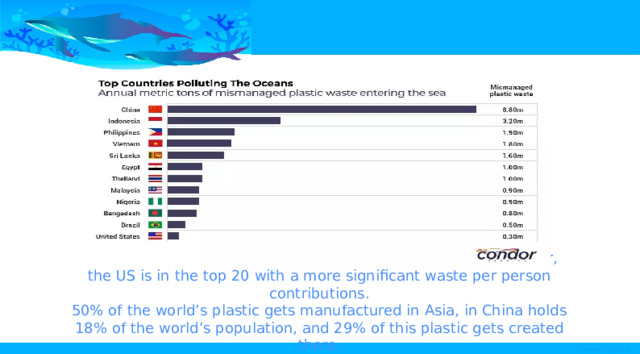
China is ranked #1 for mismanaged waste and plastics; however, the US is in the top 20 with a more significant waste per person contributions. 50% of the world’s plastic gets manufactured in Asia, in China holds 18% of the world’s population, and 29% of this plastic gets created there.
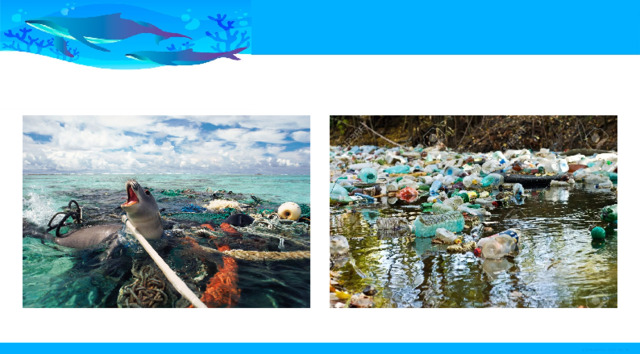
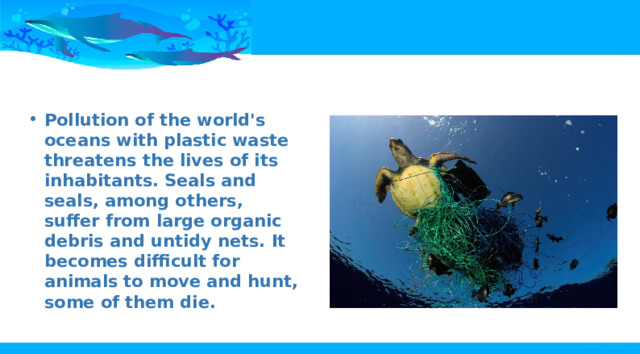
- Pollution of the world's oceans with plastic waste threatens the lives of its inhabitants. Seals and seals, among others, suffer from large organic debris and untidy nets. It becomes difficult for animals to move and hunt, some of them die.
Ways to reduce water pollution
- Use fewer chemicals to clean your home.
Natural cleaners are just as effective at getting the house clean. Using toxic chemicals like bleach and ammonia to clean your home is not only bad for the water supply, it's not necessary. With natural cleaners, you don't have to worry that you're contributing to water pollution when you use them.
- Practice tree planting.
Planting trees reduce the speed of surface water runoff and as such, lessens erosion and prevents toxic substances and chemicals from washing into water systems. Trees are excellent at managing stormwater. In essence, they act like mini-reservoirs, capturing and storing rainfall and melting snow. This helps reduce the volume of stormwater runoff that enters our stormsewers.
- Dispose trash properly.
When trash is not disposed properly some of the non-degradable products such as diapers and sanitary towels may end up destroying the process of sewage treatment, especially when they are flushed down the toilet. At times, poor disposal of solid non-degradable materials such as plastics normally ends up littering the beaches and river banks.
- Conserve as much water as possible .
Conservation is an important way to help preserve water as a global resource. Treating water so it's clean enough to drink and use around the house requires a lot of energy, so it's important to conserve as much as possible, especially in areas where droughts are occurring.
- Help clean up litter in water-filled areas.
Volunteer for a cleanup day in your city to purify local waterways. If you live near a local body of water, there's a lot you can do to help reduce pollution there. See if there's a group working to clean up local beaches, lakes, rivers or oceans.
Вебинар для учителей

Свидетельство об участии БЕСПЛАТНО!