Россия, Чита

СДЕЛАЙТЕ СВОИ УРОКИ ЕЩЁ ЭФФЕКТИВНЕЕ, А ЖИЗНЬ СВОБОДНЕЕ
Благодаря готовым учебным материалам для работы в классе и дистанционно
Скидки до 50 % на комплекты
только до
Готовые ключевые этапы урока всегда будут у вас под рукой
Организационный момент
Проверка знаний
Объяснение материала
Закрепление изученного
Итоги урока
Была в сети 16.04.2026 03:24

Кострица Екатерина Игоревна
кандидат культурологии, учитель английского языка, преподаватель высшей квалификационной категории по профилю: "Английский язык"
42 года
 5 824
5 824
 10 241
Местоположение
Специализация
The critical thinking methods, as the approach in english studying (on the pilot site of the zabaikalsky regional boarding school lyceum)
Категория:
Английский язык
24.05.2025 02:08
Тема:
Language in Use 6 p. 12S

Просмотр содержимого документа
«The critical thinking methods, as the approach in english studying (on the pilot site of the zabaikalsky regional boarding school lyceum)»
THE CRITICAL THINKING METHODS,
AS THE APPROACH IN ENGLISH STUDYING
(ON THE PILOT SITE OF
THE ZABAIKALSKY REGIONAL BOARDING SCHOOL LYCEUM)
Author: Ekaterina Igorevna Kostritsa, Candidate of Culture Study
The technology of critical thinking has been the topic of the research approach of many progressive scholars, dealing with the teaching-learning process in the field of pedagogy. There exists a number of various concepts in the area of the critical thinking field. The research, being carried out during the actual academic year proves the inevitability of critical thinking application in the linguistic modern practice. The personal widely spread approaches in this methodology include: “Cinquain”, “Mind Map”, “Fishbone”, “Prediction Tree” and “Bloom’s Chamomile”.
The didactic cinquain is closely related to the Crapsey cinquain. It is an informal cinquain widely taught in elementary schools. It has been featured in and popularized by children’s media resources. This form is also embraced by young adults and older poets for its expressive simplicity. The prescriptions of this type of cinquain refer to the word count. Ordinarily, the first line is a one-word title, the subject of the poem; the second line is a pair of adjectives describing that title; the third line is a three-word phrase that gives more information about the subject; the fourth line consists of four words describing feelings related to that subject; and the fifth line is a single word synonym or other reference for the subject from the first line.
T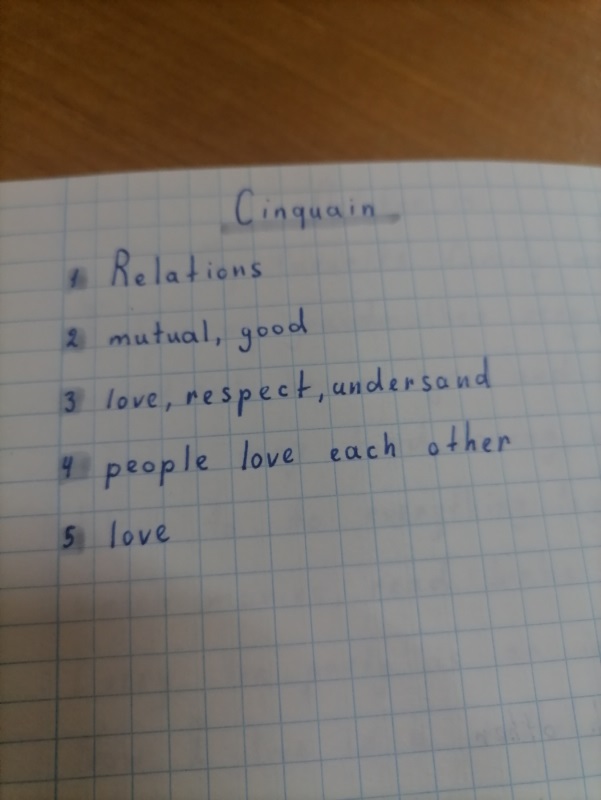 his cinquain sample was compiled by the student of the group E-12, Elena Surovneva.
A mind map is a diagram used to visually organize information into a hierarchy, showing relationships among pieces of the whole. It is often created around a single concept, drawn as an image in the center of a blank page, to which associated representations of ideas, such as images, words and parts of words are added. Major ideas are connected directly to the central concept, and other ideas branch out from those major ideas.
T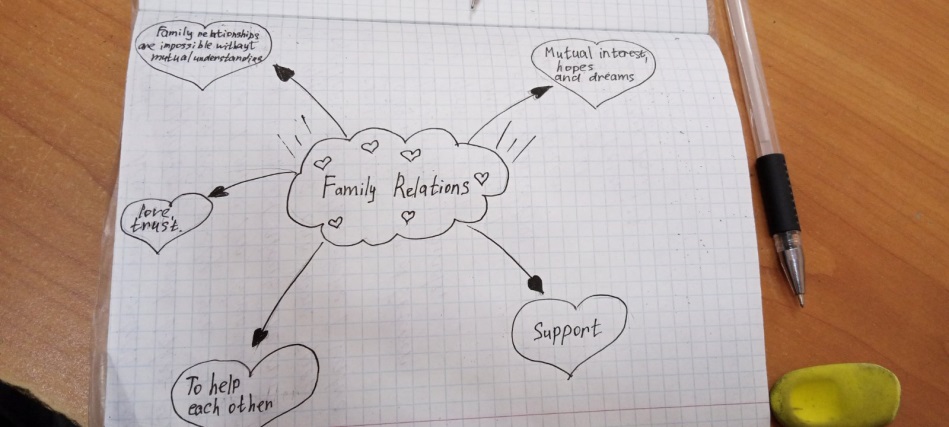 his mind map sample was realized by the student of the group E-12, Taisiya Lopatina.
Common uses of the Ishikawa diagram, or the fishbone diagram, are product design and quality defect prevention to identify potential factors causing an overall effect. Each cause or reason for imperfection is a source of variation. Causes are usually grouped into major categories to identify and classify these sources of variation.
T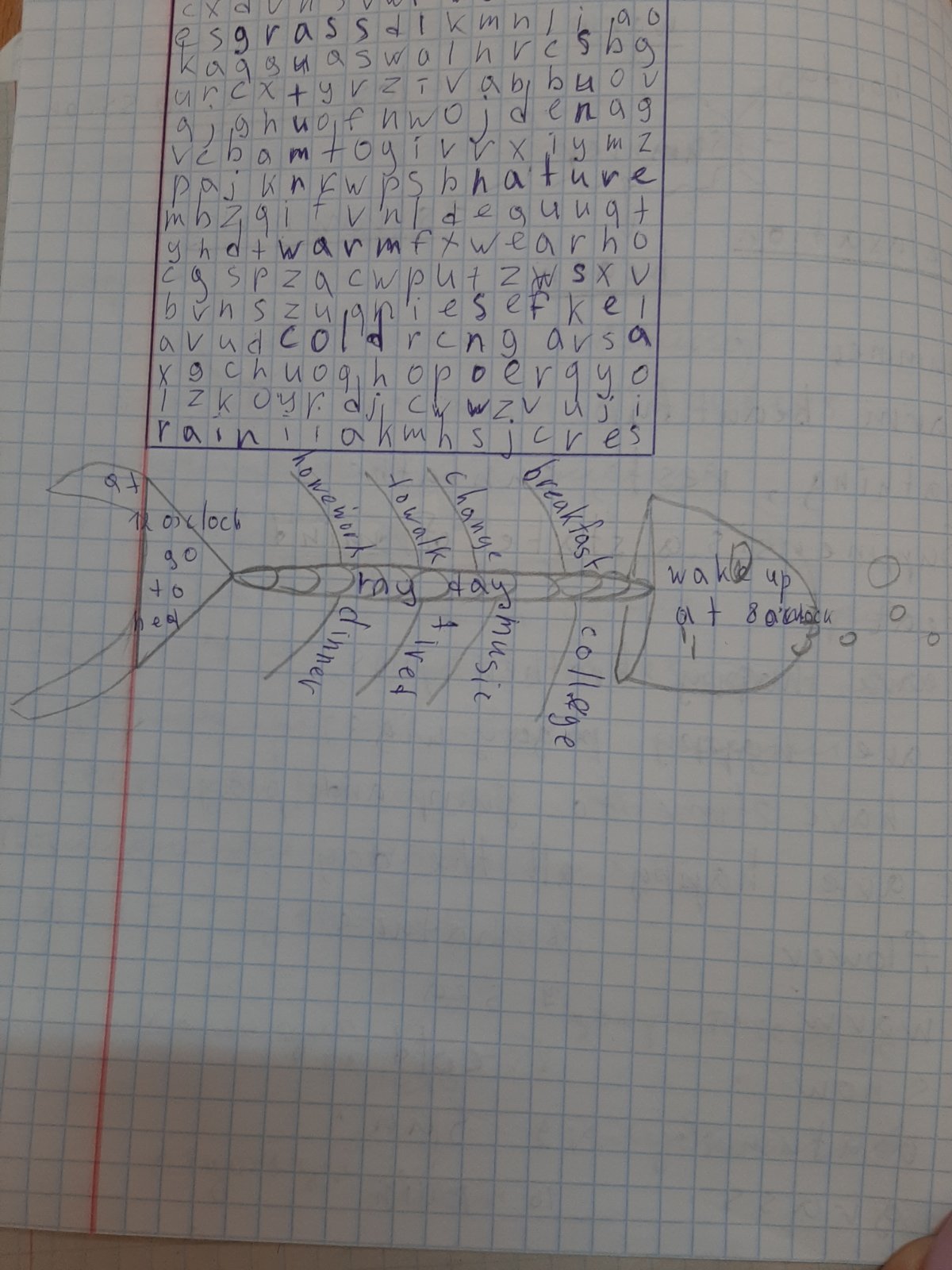 his fishbone sample was set by the student of the group L-12, Angelina Kalinina.
T ree-based methods are techniques for issue planning and exploratory modeling. These models are used for predicting different types of outcome. The tree model is called classification tree, based on the type of the outcome.
T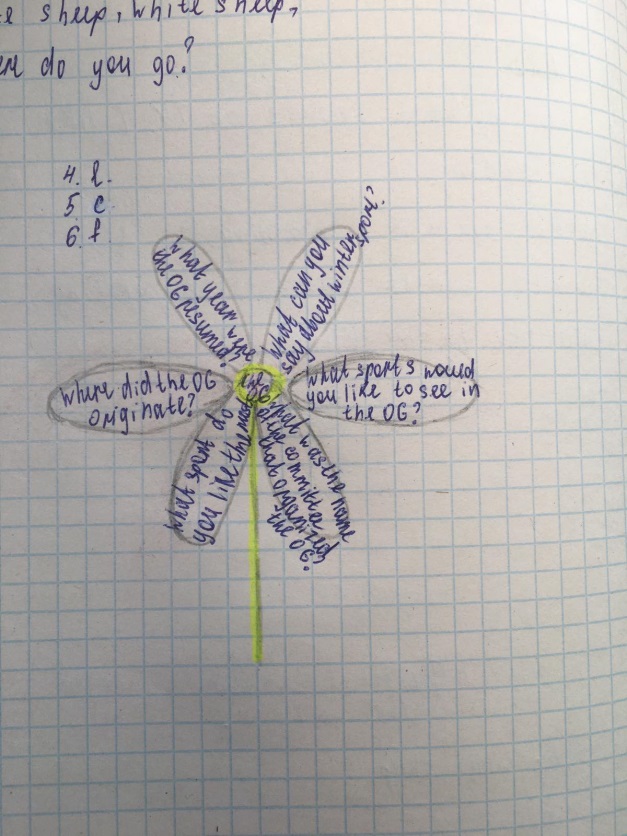 his prediction tree sample was performed by thestudent of the group L-12, Tatiyana Karelina.
Bloom’s chamomile is the method of building questions to the information essence. This Bloom’s chamomile sample was settled by the student of the group E-12, Dariya Stativo.
In conclusion, the critical thinking technology is aimed at the analysis of available facts, evidence, observation, and arguments to form some sort of judgment. This method of English language studying turns out to be progressive and cognitive for the students of the Chita Polytechnical College. It enriches their professional knowledge and improves the course of the teaching-learning process, making it dynamic and creative. Moreover, this technology accelerates the cognitive skills and the linguistic potential of future professionals, enriching the secondary language personality development.
References:
Schamber, J.F. & Mahoney, S.L. (2006). Assessing and improving the quality of group critical thinking exhibited in thefinal projects of collaborative learning groups. The Journal of General Education, 55 (2), 103-137.
Sewell, B. Damron, R., and High, K. (2008, July). Freshman entrepreneurship: Student critical thinking enhancement through paired engineering and English composition courses.
Wagner, S.C. & Stewart, R.S. (2000). Microbial safari: Isolation & characterization of unknowns in an introductory Microbiology laboratory. The American Biology Teacher, 62, 588-592.
Youngblood, N. & Beitz, J.M. (2001). Developing critical thinking with active learning strategies. Nurse Educator, 26 (1), 39-42.



Вебинар для учителей
Свидетельство об участии БЕСПЛАТНО!