Беларусь, Горки

СДЕЛАЙТЕ СВОИ УРОКИ ЕЩЁ ЭФФЕКТИВНЕЕ, А ЖИЗНЬ СВОБОДНЕЕ
Благодаря готовым учебным материалам для работы в классе и дистанционно
Скидки до 50 % на комплекты
только до
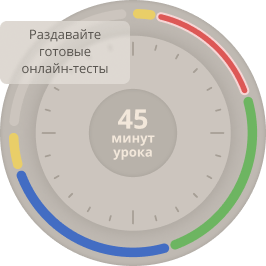
Готовые ключевые этапы урока всегда будут у вас под рукой
Организационный момент
Проверка знаний
Объяснение материала
Закрепление изученного
Итоги урока
Была в сети 11.02.2023 05:24

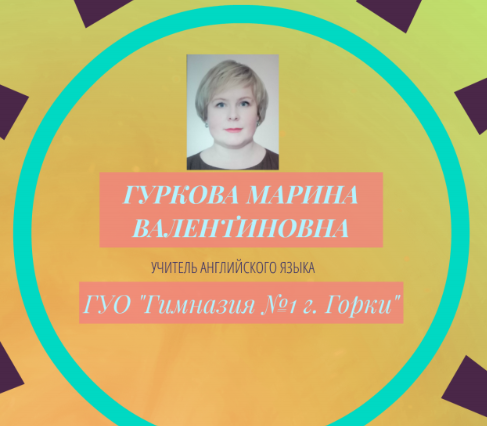
Гуркова Марина Валентиновна
Учитель английского языка/ классный руководитель
 48 000
 490
490 
Местоположение
Специализация
Glossary 'About the UK'

Head of state
Queen Elizabeth II
Elizabeth II became queen of the United Kingdom of Great Britain and Northern Ireland in 1952 upon the death of her father, George VI.

Queen Elizabeth II
She is the second longest serving head of state, after the Thai King Bhumibol Adulyadej, who was crowned in 1946.
She is also head of state of 16 independent countries including Canada and Australia.
As a constitutional monarch, her role in the legislative process is largely ceremonial.
River Thames
The River Thames (i/tɛmz/ TEMZ) flows through southern England. It is the longest river entirely in England and the second longest in the United Kingdom. While it is best known because its lower reaches flow through central London, the river flows alongside several other towns and cities, including Oxford, Reading, Henley-on-Thames, Windsor, Kingston upon Thames and Richmond.
The river gives its name to several geographical and political entities, including the Thames Valley, a region of England around the river between Oxford and west London, the Thames Gateway, the area centred on the tidal Thames, and the Thames Estuary to the east of London. The tidal section of the river is covered in more detail under Tideway.

The Thames in London
Country England
Counties Gloucestershire, Wiltshire, Oxfordshire, Berkshire, Buckinghamshire, Surrey, Essex, Kent
Metropolitan County Greater London
Towns/Cities Cricklade, Lechlade, Oxford, Abingdon, Wallingford, Reading, Henley on Thames, Marlow, Maidenhead, Windsor, Staines-upon-Thames, Walton on Thames, Kingston upon Thames, Teddington, London, Dartford
|
Source - location Thames Head, Gloucestershire, UK - elevation 110 m (361 ft) - coordinates 51.694262°N 2.029724°W Mouth Thames Estuary, North Sea - location Southend-on-Sea, Essex, UK - elevation 0 m (0 ft) - coordinates 51.4989°N 0.6087°E Length 346 km (215 mi) Basin 12,935 km2 (4,994 sq mi) Discharge for London - average 65.8 m3/s (2,324 cu ft/s) Discharge elsewhere (average) - entering Oxford 17.6 m3/s (622 cu ft/s) - leaving Oxford 24.8 m3/s (876 cu ft/s) - Reading 39.7 m3/s (1,402 cu ft/s) - Windsor 59.3 m3/s (2,094 cu ft/s) Thames route map (from Wikipedia, the free encyclopedia) VIDEOS Воспроизвести видео |

Robert Burns
The best-known portrait of Burns, by Alexander Nasmyth, 1787 (detail)
Born 25 January 1759
Ayrshire, Scotland
Died 21 July 1796 (aged 37)
Dumfries, Scotland
Occupation Poet, lyricist, farmer, exciseman
Nationality Scottish
Citizenship Kingdom of Great Britain
Literary movement Romanticism
Notable work(s) Auld Lang Syne, To a Mouse, A Man's A Man for A' That, Ae Fond Kiss, Scots Wha Hae, Tam O'Shanter, Halloween, The Battle of Sherramuir
Robert Burns (25 January 1759 – 21 July 1796) (also known as Rabbie Burns, Scotland's favourite son, the Ploughman Poet, Robden of Solway Firth, the Bard of Ayrshire and in Scotland as The Bard)[1][2] was a Scottish poet and a lyricist. He is widely regarded as the national poet of Scotland, and is celebrated worldwide. He is the best known of the poets who have written in the Scots language, although much of his writing is also in English and a "light" Scots dialect, accessible to an audience beyond Scotland. He also wrote in standard English, and in these his political or civil commentary is often at its most blunt.
He is regarded as a pioneer of the Romantic movement, and after his death he became a great source of inspiration to the founders of both liberalism and socialism, and a cultural icon in Scotland and among the Scottish Diaspora around the world. Celebration of his life and work became almost a national charismatic cult during the 19th and 20th centuries, and his influence has long been strong on Scottish literature. In 2009 he was chosen as the 'Greatest Scot' by the Scottish public in a vote run by Scottish television channel STV.
As well as making original compositions, Burns also collected folk songs from across Scotland, often revising or adapting them. His poem (and song) Auld Lang Syne is often sung at Hogmanay (the last day of the year), and Scots Wha Hae served for a long time as an unofficial national anthem of the country. Other poems and songs of Burns that remain well known across the world today include A Red, Red Rose; A Man's A Man for A' That; To a Louse; To a Mouse; The Battle of Sherramuir; Tam o' Shanter, and Ae Fond Kiss.
UK
The United Kingdom is made up of England, Wales, Scotland and Northern Ireland. It has a long history as a major player in international affairs and fulfils an important role in the EU, UN and Nato.
The twentieth century saw Britain having to redefine its place in the world. At the beginning of the century it commanded a world-wide empire as the foremost global power.
Two world wars and the end of empire diminished its role, but the UK remains a major economic and military power, with considerable political and cultural influence around the world.
Facts
- Full name: United Kingdom of Great Britain and Northern Ireland
- Population: 62.4 million (UN, 2011)
- Capital: London
- Area: 242,514 sq km (93,638 sq miles)
- Major language: English
- Major religion: Christianity
- Life expectancy: 78 years (men), 82 years (women) (UN)
- Monetary unit: 1 pound sterling = 100 pence
- Main exports: Manufactured goods, chemicals, foodstuffs
- GNI per capita: US $38,370 (World Bank, 2010)
- Internet domain:.uk
- International dialling code: +44
Категория:
Английский язык
02.09.2018 20:58

Вебинар для учителей

Свидетельство об участии БЕСПЛАТНО!