

Российская Федерация, Обнинск


СДЕЛАЙТЕ СВОИ УРОКИ ЕЩЁ ЭФФЕКТИВНЕЕ, А ЖИЗНЬ СВОБОДНЕЕ
Благодаря готовым учебным материалам для работы в классе и дистанционно
Скидки до 50 % на комплекты
только до
Готовые ключевые этапы урока всегда будут у вас под рукой
Организационный момент
Проверка знаний
Объяснение материала
Закрепление изученного
Итоги урока

Была в сети 07.05.2026 17:30

Драганова Лилия Васильевна
Учитель английского языка
 2 449
2 449
 29 372
Местоположение
Специализация
"3D Technologies"
Категория:
Английский язык
29.07.2024 12:36

Просмотр содержимого документа
«"3D Technologies"»
Муниципальное Бюджетное Общеобразовательное Учреждение
«СОШ №1 им. С.Т.Шацкого»
Проект
по английскому языку
« 3D Technologies»
Выполнил: Антонов Святослав,
ученик 8А класса
Научный руководитель:
Драганова Л.В.
2023-2024
Introduction
We live in 21st century, century of technologies. They are very essential for all the humanity. Nowadays, people tend to improve everything to make their life easier or make the world better.
So, in 1984, Chuck Hull invented an «Apparatus for production of three-dimensional objects by Stereolithography» (Picture 1), for which he received a patent on March 11, 1986. Thus the first 3D technology machine was born.
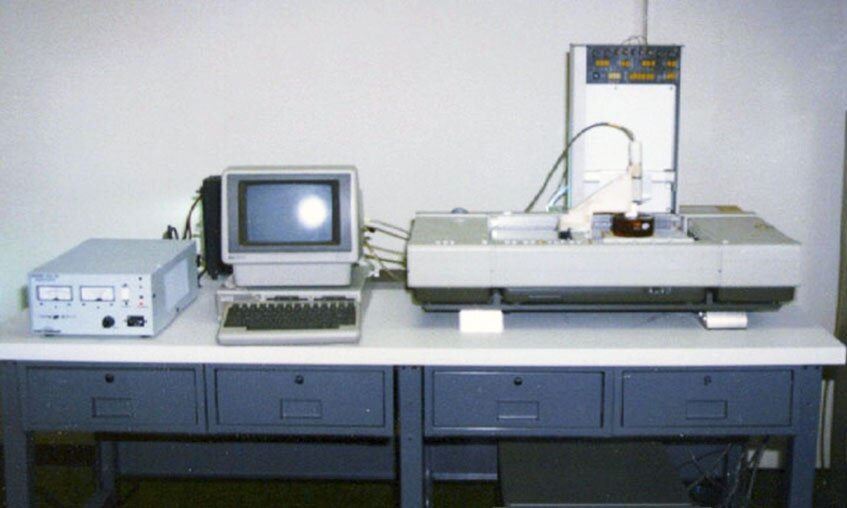
Picture 1 - Machine “SLA-1”, the first of its kind, prototype of a 3D-Printer
After 3D-technologies appeared, an Era of inventions and their extensive usage in different industries began. This invention became an integral part of the modern world. Currently, 3D technology is one of the leading trends and is used in most of the modern enterprises, small business.
1 Aim of the project
Learn more about various 3D-printing technologies and it’s capabilities and usage.
2 Tasks of the project
2.1 Get to know various 3D Printers and features of various technologies.
2.2 Get to know where and how they are used.
2.3 Suggest how 3D Printing could change the future.
3 Hypothesis
The possibilities of 3D technologies are great nowadays, so they will probably be in great demand in the future.
4. Basics of 3D-Printing
3D Printers – main element of 3D-Parts Creating technology at the current time. Their usage allows manufacture of complex 3D objects, which, with commonly used methods, require a large amount of different equipment and time. Before 3D-Printing, designers carefully create a 3D Model in a special software.
P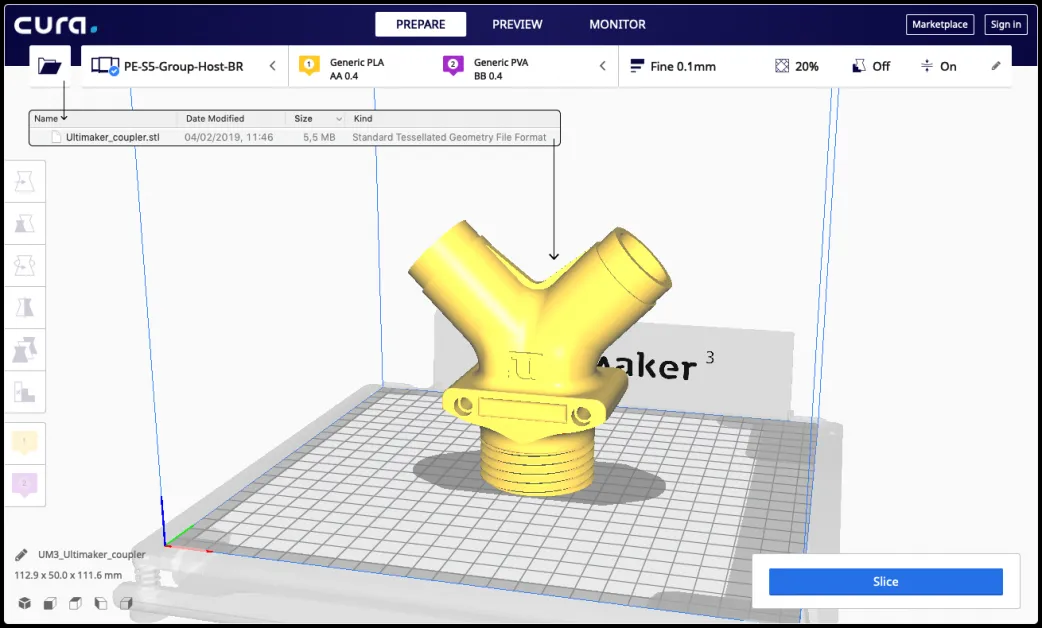
icture 2 – Example of 3D modeling in special software
Besides the model itself, in the software, a control program for the printer is developed, aka an algorithm is created – a controlling program, which determines the order in which printer’s printing nozzle head moves to properly print the designed part.
After creating the model and control software, they are shared to the printer control unit, which directly produces 3D Printing.
3D Printers use a variety of materials. They are used in industries such as architecture, design, production of aircraft parts and many others.
4.2 Types of 3D Printers.
There are several types of 3D Printers in the world, let’s look at some of them:
- FDM (Fused Deposition Modeling)
- SLA (Stereolithography Apparatus);
- DLP (Digital Light Processing).
It is worth telling about how each of them works and where they are used.
4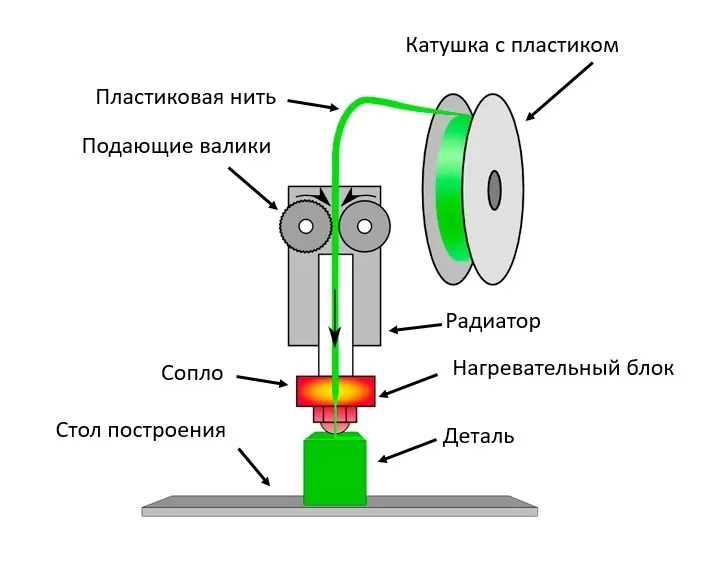
.2.1 FDM Printer
Picture 3 – Schematic diagram of FDM Printer operation.
This model uses fused deposition modeling technology (picture 3). It works using a spool of thermoplastic filament that is loaded into the printer.
When the nozzle reaches required temperature, the thread is fed into an extruder, a machine for processing plastic and making products, and into the nozzle, where it melts. Next, printing is carried out using the same extruder machine, which is attached to a 3-axis system which moves in three directions X, Y, Z. (X – forward-back; Y – left-right; Z – up-down).
F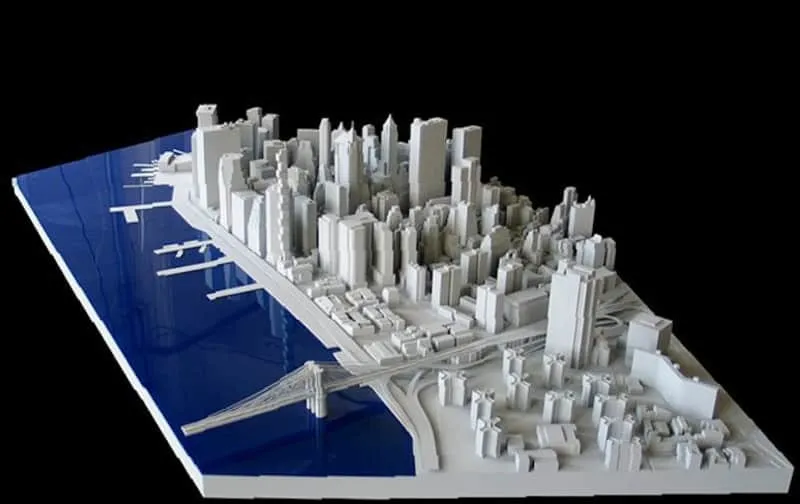
DM Printer is used in industries, design, architecture, science and business. The printing speed of FDM model ranges from 50 to 150 mm/hour.
Рисунок 4 – Example of usage in architecture – modern city quarter project.
Р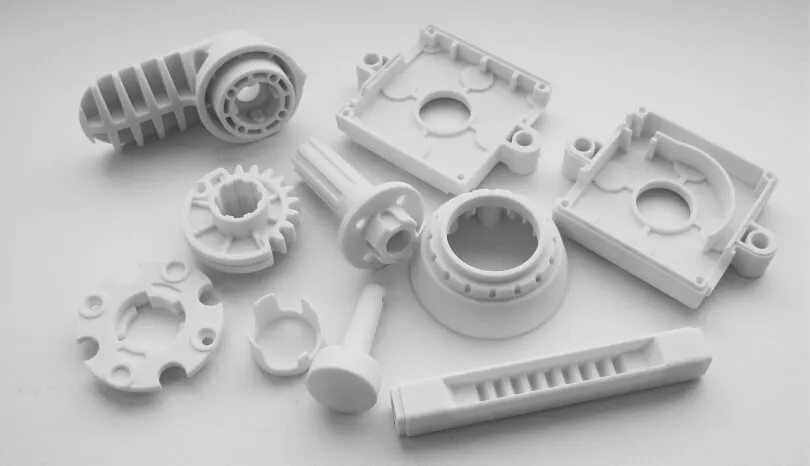
исунок 5 – Example of usage in mechanical engineering – functional car and units details.
4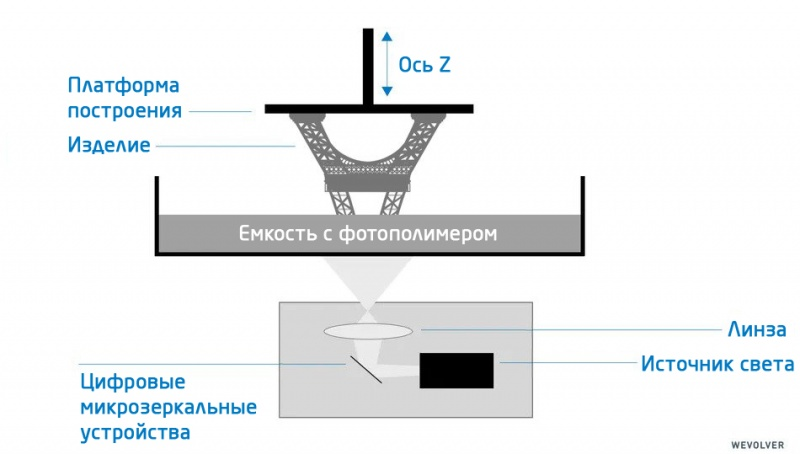
.2.2 SLA Printer
Picture 6 – Schematic diagram of SLA Printer operation.
SLA Printer uses photopolymer resins as the printing material – photosensitive polymers. They harden under the influence of a certain spectrum of ultraviolet rays. To harden the resins, a laser beam is used, which is focused on the desired point using mirrors. SLA Printer is mostly used for producing complex and non-standard parts, which are impossible to produce by common foundry. The printing speed of SLA model is 50mm/hour.
Picture 7 – Example of produced parts using SLA printer. 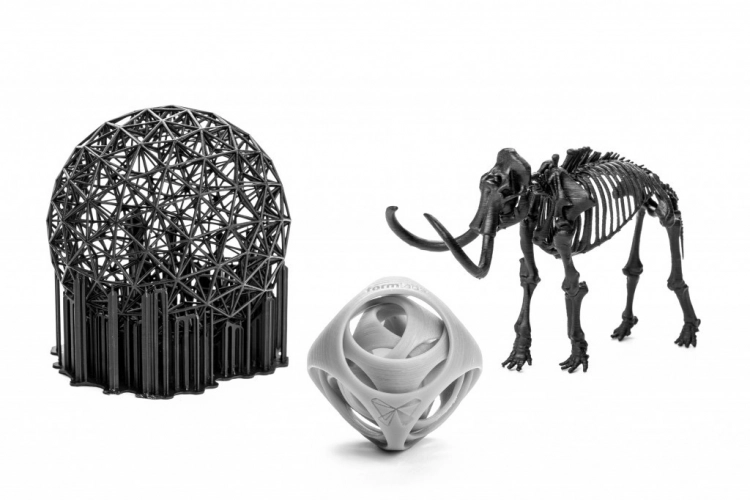
4.2.3 DLP Printer
DLP Printer uses thermoplastic polymer resin. During DLP printing, a built-in source of ultraviolet light is used. In DLP instead of lasers, the model is equipped with UV Projectors, which work using micro mirrors to control the projected light. Cross sections of each layer are projected once, illuminating the entire layer in one pass, increasing printing speed several times compared to previous ones, 150mm/hour.
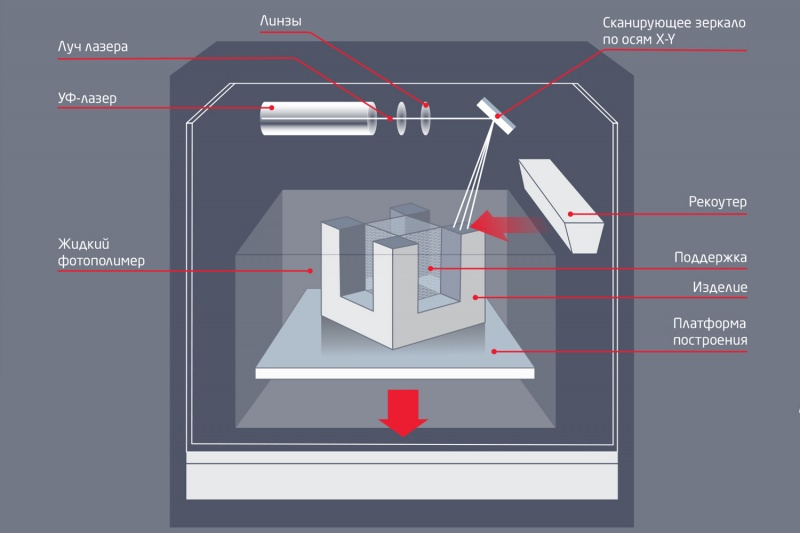
Picture 8 – Schematic diagram of DLP Printer operation.
It is worth mentioning, that projectors can be very huge and such printer can cost you an arm and a leg.
DLA Printer is used almost everywhere, where accuracy and high detail of the product are important.
For example, in medicine, 3D Printing is used in dentistry, research centers and creation of prosthetic teeth, organs and body parts.
By using this type of printing, a huge amount of money can be saved, which is very beneficial for patients and clinics. The prostheses have also already been successfully tested on animals too.
4.2.4 Ceramic 3D Printers
3D Technology has also found application in the ceramic industry. But here everything is more limited, since from the huge variety of ceramic’s types, 3D Printing of products is currently possible on the basis of:
- Aluminium Oxide Al2O3;
- Silica SiO2;
- Zirconium Oxide ZrO2;
- Silicon nitride Si3N4;
- Reactive Silicon Carbide SiC.
But such production is very expensive and is expedient and is most often used in difficult and complex technological purposes to create sophisticated details.
The characteristic of ceramic materials and their high heat resistance make it impossible to directly copy the methods used to form products from metals and polymers. Today, several methods of obtaining are being mastered:
– performing sintering of material particles by local heating with a laser or electron beam during layer-by-layer construction of the part.
– using low-temperature methods to form a workpiece using an adhesive or low-temperature polymer-based binder, and then high-temperature firing of the workpiece for sintering ceramics.
Numerous studies conducted over the past two decades using methods to produce products from various ceramic materials have not yet let to any significant progress.
This is due to the tendency of ceramic materials to crack when sudden temperature changes occur due to local exposure to a laser or an electron beam.
It has not yet been possible to obtain dense, defect-free ceramics using direct sintering under the influence of laser or an electron beam. However, it is possible to produce porous products with a porosity of 50-70%, for example, based on SiC, Si3N4, using these methods.
Second method, in which raw blanks of final parts are formed, turned out to be more productive. Currently, several methods have been discovered that make it possible to form raw blanks using an additive method.
а) Binder injection – a method, in which the bonding of powder particles occurs by spraying an organic binder through nozzles onto a layer of powder;
б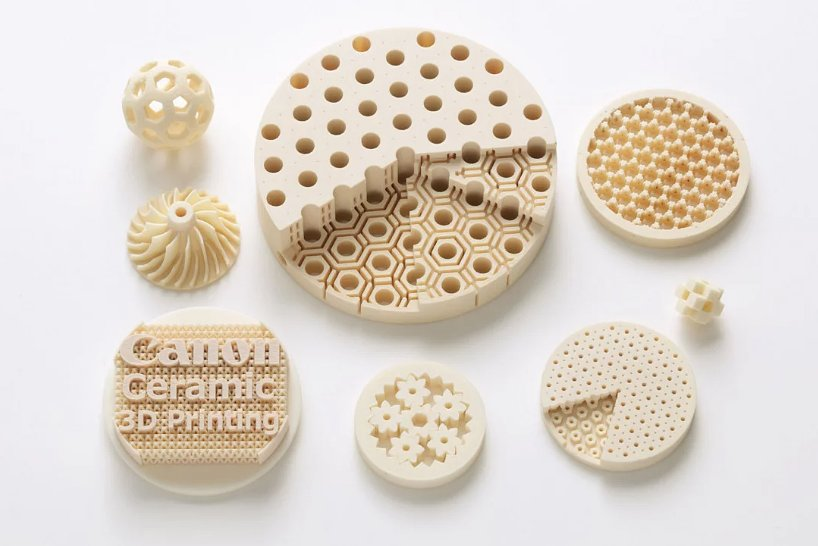
) Injection of ceramic suspension – spraying solutions saturated with ceramic nanoparticles through jet heads;
Picture 9 – Example of ceramic details obtained by using 3D-Technology
в) Extrusion of a ceramic slip – modification of the FDM method, in which, instead of a polymer thread, a ceramic slip with a binder is used.
в) Stereolithography – layer-by-layer curing of a material containing a photosensitive binder and filler in the form of a ceramic powder due to polymerization when exposed to ultraviolet radiation.
T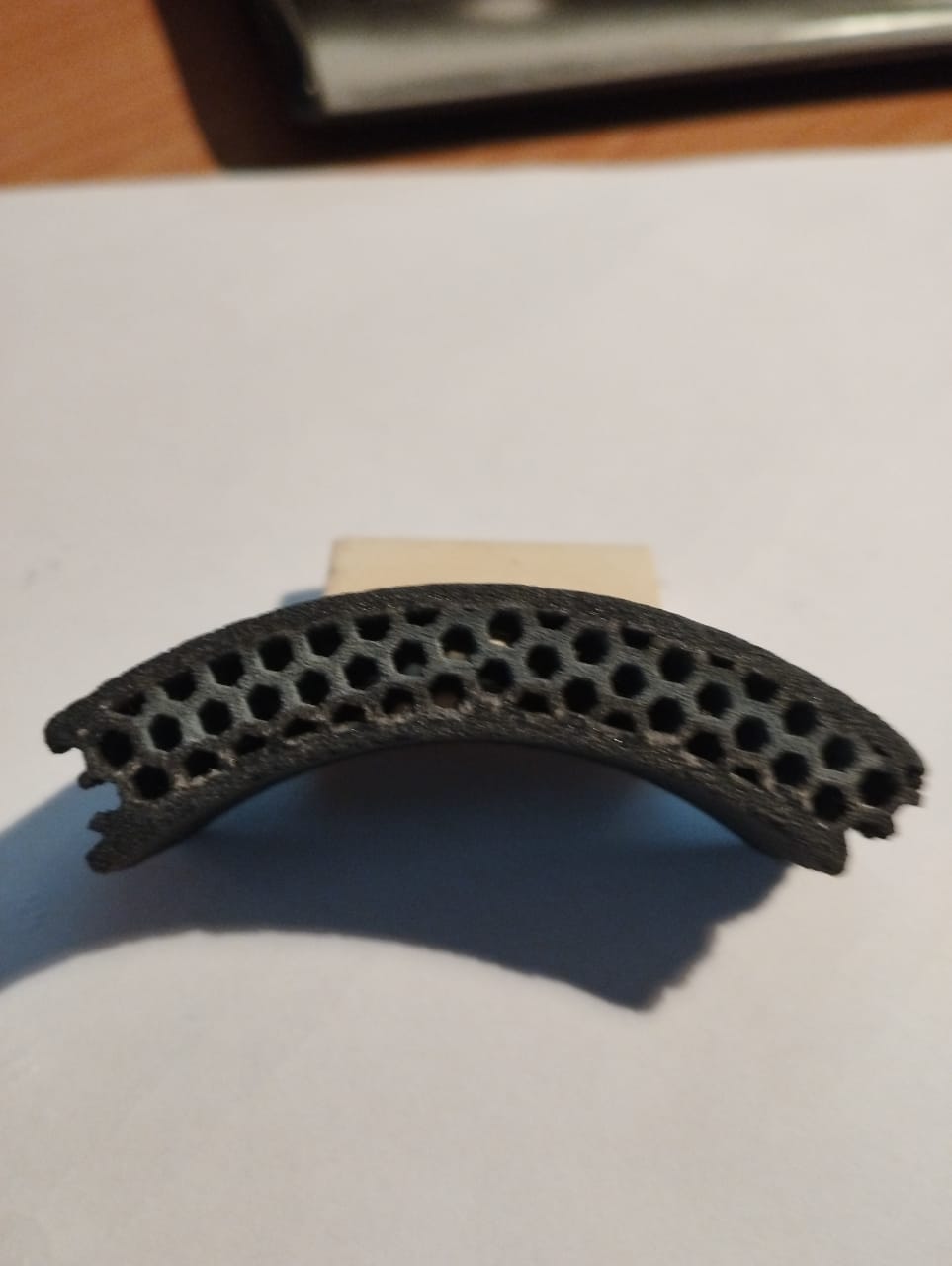
oday, technologies based on the above methods have made great progress in the ability to produce ceramic products of required quality from various materials.
Picture 10 – Fragment of a ceramic part obtained using 3D Technology.
This technology also finds practical usage in our city. Picture 10 shows a fragment of a ceramic part made by specialists of JSC ONPP Technology named after. A.G. Romashin has developed a 3D technology for manufacturing complex ceramic parts that are part of the most perspective aircraft of our time. This technology allows to produce products whose strength, thermophysical and electrical properties can be adjusted due to geometric dimensions - the wall thicknesses of the outer and inner walls.
5. Future of 3D-Technologies
The digital revolution over the past 20 years has made a huge contribution to the development of technologies that determine the way of our life. Without a doubt, 3D Printing is one of the most exciting solutions; we can see it change the face of entire sectors of the economy, from industry to healthcare. Although, we are only at the beginning of the journey, the positive effect of its implementation is already visible.
In the field of education, 3D Printers are used to teach students modeling, programming in various languages, imaginative thinking, and teaching process automation. This is in demand because the youth of the 21st century are more interested in using this technology, as it allows them to turn their dreams in reality. It should be mentioned that in the future there will be a need for even more such specialists in the areas of 3D Modeling and Programming.
In business, 3D Printers are used to create:
- Details of various engines;
- Prostheses for medicine;
- Models of buildings and constructions;
- Jewelry and small jewelry, etc.
Using this technique, the consumption of materials, time and material costs is reduced. If earlier it was very expensive and took a long time to do, now with the advent of this technology, the cost and production time have decreased significantly.
6 Conclusion
All in all, after detailed study of the way 3D printers work and the areas of their extensive use, we can say that, soon, 3D Printing will replace a huge aspect in our lives and that we will use it more often.
Now there is a real opportunity to implement things that were impossible back in the past. New technical solutions will inevitably appear in all the areas of technology, where the necessary ceramic parts and assemblies can only be manufactured using 3D-Technologies.







Вебинар для учителей

🎓 Свидетельство об участии ✨БЕСПЛАТНО!✨



