Казахстан, Павлодар

СДЕЛАЙТЕ СВОИ УРОКИ ЕЩЁ ЭФФЕКТИВНЕЕ, А ЖИЗНЬ СВОБОДНЕЕ
Благодаря готовым учебным материалам для работы в классе и дистанционно
Скидки до 50 % на комплекты
только до
Готовые ключевые этапы урока всегда будут у вас под рукой
Организационный момент
Проверка знаний
Объяснение материала
Закрепление изученного
Итоги урока
Была в сети 24.04.2026 06:40
Карибаева Гульфиза Ислямовна
преподаватель английского и немецкого языков
60 лет
 4 547
4 547
 13 924
Местоположение
Специализация
Chemical Hazards
Категория:
Английский язык
03.05.2018 10:39

Просмотр содержимого документа
«Chemical Hazards»
Сабақтың жоспары
План урока
| Пән/ Предмет | Prof. English | Күні/ дата |
|
| сабақтың № / № занятия | 20 | Топ/ группа |
|
| Тақырып/ Тема | Chemical Hazards | ||
| Мақсат/ Цели Білімділік/ Дидактическая - to fasten reading skills and working with text Дамытушылық/ Развивающая - to develop work in pairs skills of students Тәрбиелік/ Воспитывающая - to bring up interest in the study of English in Ecology sphere | |||
| Сабақтын типі (тұрпаты)/ Тип урока | Combined lesson. Developing lexical skills. | ||
| Сабақтын әдісі/ Метод обучения | Practical method. | ||
| Корнекілік/ Оснащение | Worksheets, tasks | ||
| Сабақтын барысы/ Ход урока | |||
| 1. Бағдарлану – мотивациялық блок/ Мотивационно – ориентировочный блок | |||
| Сабақтың тақырыбын шығу, жазу Выход на тему, запись темы урока What date is it today? What day of the week is it today? What season is it now? What is the weather like today? Theme of our lesson is ‘Chemical Hazards | Оқу мақсатын қою Постановка цели, задач урока Learn new vocabulary and practice pronunciation. | ||
| Сабақтың барысымен танысу Знакомство с ходом урока | |||
| Б You have to find these words into text: particulate contaminants - ластаушы заттар, gas and vapor contaminants - газ және бу ластануы, solid – қатты, crushing - ұсақтау, grinding - ұнтақтау, drilling - бұрғылау, abrading – майдалану, blasting - жарылыс жұмыстары, volatilized - ұшып кету, condenses - қойылу, condensation – қатаю, finely – ұсақ, suspended – аспалы, ілмелі, breaking up – бүліншілік, splashing – шашырату, foaming – көпірту, atomizing – тозаңдату, respirable - дем жұту; evaporation - булану; volatile – ұшпа, solvents – езгіштер, welding gases – дәнекерлеу газдар, internal combustion engines - іштен жанатын қозғалтқыш, decomposition – ыдырау, sulfur - күкірт | |||
 ілім жаңғыртуы/ Актуализация знаний
2. Жана материалды мазмұндау (баяндау)/ Изложение нового материала
Read the text CHEMICAL HAZARDS and guess Kazakh equivalent for the terms:
vapor - пар, бу, dust - пыль, шаң, fume - дым, түтін, mist - туман, тұман, fiber – волокно, талшық
CHEMICAL HAZARDS
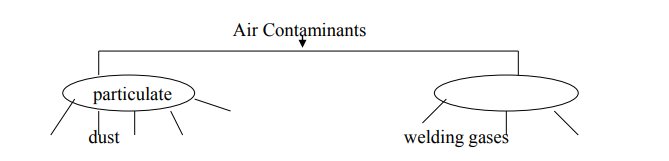
These are commonly classified as either particulate or gas and vapor contaminants. The most common particulate contaminants include dusts, fumes, mists, aerosols, and fibers. Dusts are solid particles that are formed or generated from solid organic or inorganic materials by reducing their size through mechanical processes such as crushing, grinding, drilling, abrading or blasting.
Fumes are formed when material from a volatilized solid condenses in cool air. In most cases, the solid particles resulting from the condensation react with air to form an oxide.
Fibers are solid particles whose length is several times greater than their diameter. The term mist is applied to a finely divided liquid suspended in the atmosphere. Mists are generated by liquids condensing from a vapor back to a liquid or by breaking up a liquid into a dispersed state such as by splashing, foaming or atomizing. Aerosols are also a form of a mist characterized by highly respirable, minute liquid particles.
Gases are formless fluids that expand to occupy the space or enclosure in which they are confined. Examples are welding gases such as acetylene, nitrogen, helium, and argon; and carbon monoxide generated from the operation of internal combustion engines or by its use as a reducing gas in a heat treating operation. Another example is hydrogen sulfide which is formed wherever there is decomposition of materials containing sulfur under reducing conditions.
Liquids change into vapors and mix with the surrounding atmosphere through evaporation. Vapors are the volatile form of substances that are normally in a solid or liquid state at room temperature and pressure. They are formed by evaporation from a liquid or solid and can be found where parts cleaning and painting takes place and where solvents are used.
The degree of worker risk from exposure to any given substance depends on the nature and potency of the toxic effects and the magnitude and duration of exposure.
3. Рефлексия бақылау блогы/ Рефлексивно – оценочный блок
Б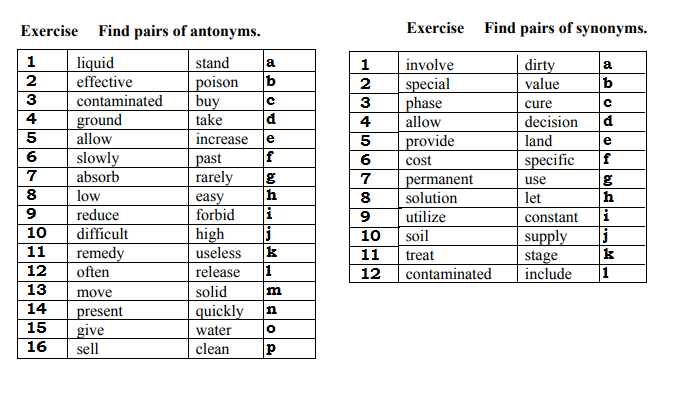 ілімдерін бекіту/ Закрепление знаний
Antonyms: 1-m, 2-k, 3-p, 4-o, 5-i, 6-n, 7-l, 8-j, 9-e, 10-h, 11-b, 12-g, 13-a, 14-f, 15-d, 16-c
Synonyms: 1-l, 2-f, 3-k, 4-h, 5-j, 6-b, 7-i, 8-d, 9-g, 10-e, 11-c, 12-a
Рефлексия
1. Which type of Hazards is described in the text?
2. What are the types of Chemical hazards?
Үй тапсырмасы – to know basic words, retelling
қолы ___________________


Вебинар для учителей

Свидетельство об участии БЕСПЛАТНО!