Приднестровье, Бендеры

СДЕЛАЙТЕ СВОИ УРОКИ ЕЩЁ ЭФФЕКТИВНЕЕ, А ЖИЗНЬ СВОБОДНЕЕ
Благодаря готовым учебным материалам для работы в классе и дистанционно
Скидки до 50 % на комплекты
только до
Готовые ключевые этапы урока всегда будут у вас под рукой
Организационный момент
Проверка знаний
Объяснение материала
Закрепление изученного
Итоги урока

Была в сети 12.10.2025 23:13

Иванченко Мария Андреевна
Учитель английского языка
27 лет
 59
59
 245 593
Местоположение
Специализация
Ecological Problems Presentation
Категория:
Английский язык
27.09.2025 20:47

Просмотр содержимого документа
«Ecological Problems Presentation»


POLLUTED BEACH
- Do you think this is a real photo or a scene from a movie?
- What emotions does it provoke?
- Why do such things happen?
WARM UP
https://www.baamboozle.com/game/2147804
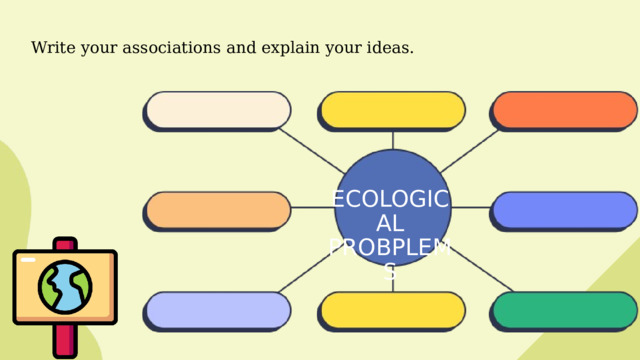
Write your associations and explain your ideas.
ECOLOGICAL PROBPLEMS
ECOLOGICAL PROBLEMS
Aims:
- to fing out what types of ecological problems exisct; to find solutions to sertain ecological problems; to talk about ecological problems; to expand the lexics; to improve speaking skills.
- to fing out what types of ecological problems exisct;
- to find solutions to sertain ecological problems;
- to talk about ecological problems;
- to expand the lexics;
- to improve speaking skills.
1) Urgent - /ˈɜː.dʒənt/ - very important
2) Contamination - /kənˈtæm.ɪ.neɪt/ - to make something less pure or make it poisonous
3) Habitat - /ˈhæb.ɪ.tæt/ - the natural environment in which an animal or plant usually lives
4) Mining - /ˈmaɪ.nɪŋ/ - the industry or activity of removing substances such as coal or metal from the ground by digging
5) Threaten - /ˈθret.ən/ - to cause harm or damage
6) Extinction - /ɪkˈstɪŋk.ʃən/ - a situation in which something no longer exists
7) Nuclear - /ˈnjuː.klɪər/ - being or using the power produced when the nucleus of an atom is divided
8) Exhausts - /ɪɡˈzɔːst/ - to make someone extremely tired
9) Vapour - /ˈveɪ.pər/ - gas or extremely small drops of liquid that result from the heating of a liquid or solid
10) Fragile - /ˈfrædʒ.aɪl/ - easily damaged or broken
NEW VOCABULARY
LISTENING
T (True) if the statement is correct.
F (False) if the statement is incorrect.
NS (Not Stated) if the information is not in the text.
1. ___ Acid rain is caused by gases from power stations and cars.
2. ___ Global warming makes the Earth colder.
3. ___ A quarter of all plants in the world are in danger of extinction.
4. ___ People destroy forests only to make furniture.
5. ___ The text mentions that pollution affects only water.
6. ___ Acid rain can harm lakes, rivers, and forests.
7. ___ Governments must take action to stop pollution.
8. ___ Plastic waste is the main cause of global warming.
9. ___ The text suggests that education can help prevent environmental disasters.
10. ___ The polar ice caps are already completely melted.

LISTENING&READING
Ecological problems are causing great damage to our environment. Among the most urgent ones are the ozone layer, acid rains, global warming, toxic pollution of the atmosphere, disappearance of forests, contamination of underground waters by chemical elements, destruction of soil in some areas, and the threat to some flora and fauna representatives.
The Earth is the home to millions of different kinds of living creatures, which make up the complex world of nature. Nowadays people try to change their habitats to suit their own needs – to create farmlands or build cities. They cause pollution and destroy wildlife habitats by digging the ground up for mining, or by building roads. A quarter of all the plants in the world are known to be in danger or threatened with extinction. There are different types of pollution: water pollution, air pollution, soil pollution and nuclear pollution.
Acid rain falls when poisonous gases from power stations and vehicle exhausts mix with oxygen and moisture in the air. These gases become the part of the water cycle and may be carried a long way by the wind before they fall as acid rain, which kills the wildlife in lakes, rivers, and forests, and damages the surrounding plant life.
World temperatures are currently rising every year. This so called global warming is caused by the building of gases and water vapour in the atmosphere. As the planet warms up, the polar ice caps will start to melt. This could cause sea levels to rise and many habitats will disappear under water.
However, environment disasters can be avoided if people broaden ecological education and every person understands that the beauty of the nature is extremely fragile. Governments must take serious actions against pollution.

PROJECT WORK
Create a mini environmental awareness campaign. Here are some instructions:
- Work in small groups (3–4 students). Choose one ecological problem (e.g., air pollution, deforestation, climate change). Come up with a slogan (short and strong). Suggest two realistic solutions. Create a mini poster poster.
- Work in small groups (3–4 students).
- Choose one ecological problem (e.g., air pollution, deforestation, climate change).
- Come up with a slogan (short and strong).
- Suggest two realistic solutions.
- Create a mini poster poster.
example
Problem : Deforestation
Slogan: “No Trees – No Life! ”
Solution: “Plant trees and protect forests!”
How to present: Hello, today we want to show you one of the ecological problems we’ve discussed at the lesson. We chose “Deforestation” and wrote the slogan: “No Trees – No Life!” because we can’t live without trees and deforestation is the straigt way to the end of life on our planet. What can we do to prevent such a disaster? We can plant trees and protect forests .
10 min

REFLEXION
- What did you learn today? How do you feel after this lesson? What would you like to do to help the Earth in the future?
- What did you learn today?
- How do you feel after this lesson?
- What would you like to do to help the Earth in the future?
Let’s go around and share a few thought.
You can use these sentence starters:
·Today I learned that…
·Now I understand that…
·I feel… because…
·I want to… to help the planet.
HOME ASSIGNMENT
- ex. 7 p. 112, p. 112 (write the rule in your vocabularies)
- ex. 7 p. 112, p. 112 (write the rule in your vocabularies)
- optional task is to make a short (2- minutes) video, it could be a news report about recent ecological disasters.
- optional task is to make a short (2- minutes) video, it could be a news report about recent ecological disasters.

THANK YOU!
Together, we can create a greener and more sustainable future. Thank you for your commitment to protecting our planet.








Вебинар для учителей

Свидетельство об участии БЕСПЛАТНО!