Туркменистан, Дашогуз


СДЕЛАЙТЕ СВОИ УРОКИ ЕЩЁ ЭФФЕКТИВНЕЕ, А ЖИЗНЬ СВОБОДНЕЕ
Благодаря готовым учебным материалам для работы в классе и дистанционно
Скидки до 50 % на комплекты
только до
Готовые ключевые этапы урока всегда будут у вас под рукой
Организационный момент
Проверка знаний
Объяснение материала
Закрепление изученного
Итоги урока
Был в сети 27.07.2023 19:34

Сабуров Мурад Зерипбаевич
Учитель английского языка
30 лет
 4 474
4 474
 14 482
Местоположение
Специализация
English Grammar Adjectives and adverbs
Категория:
Английский язык
25.06.2022 10:03

Просмотр содержимого документа
«English Grammar Adjectives and adverbs»

Turgut Ozal High School

ADJECTIVES & ADVERBS
RULES TO FOLLOW

ADJECTIVES
- Modifies Nouns
- Modifies Pronouns

DEFINITION OF AN ADJECTIVE:
- It tells what kind of person, place, or thing. A noun or a pronoun is.
- It may also point out which one or how many.
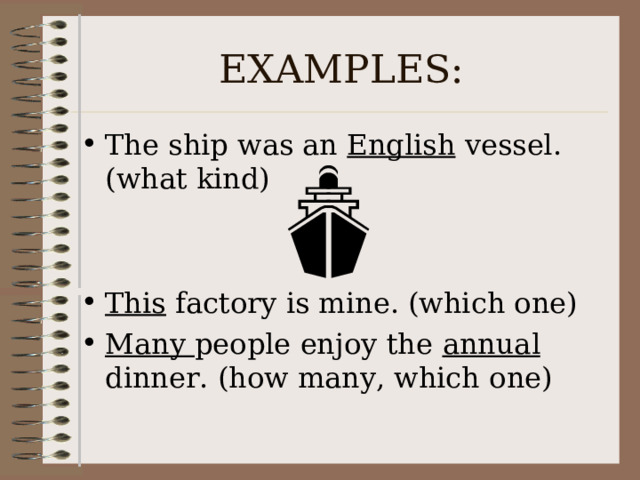
EXAMPLES:
- The ship was an English vessel. (what kind)
- This factory is mine. (which one)
- Many people enjoy the annual dinner. (how many, which one)

AN ADVERB:
- Modifies an active verb or a verb phrase by expressing manner, place, time, degree, or number.
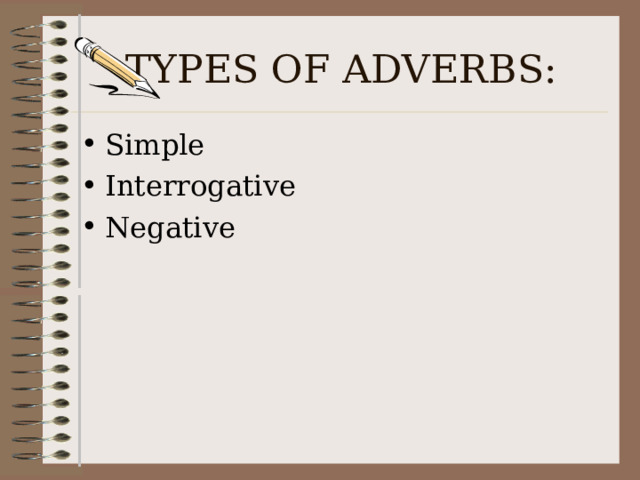
TYPES OF ADVERBS:
- Simple
- Interrogative
- Negative

EXAMPLES:
- SIMPLE:
- She moved quietly . (Manner and tell how) I waited there for an hour. (Place and tell where) You may leave soon . (Time, tells when) I called you once . (Number, tells how many) He sat very still. (Degree, tells how much)
- She moved quietly . (Manner and tell how)
- I waited there for an hour. (Place and tell where)
- You may leave soon . (Time, tells when)
- I called you once . (Number, tells how many)
- He sat very still. (Degree, tells how much)

Interrogative Adverb
- Introduces a sentence that asks a question
- where, when, why and how

EXAMPLES:
- Interrogative:
- When will you return? How is the trunk being sent?
- When will you return?
- How is the trunk being sent?

Negative Adverb
- Denies or contradicts a statement
- no, not , never, only, scarcely and hardly
Note: two negative adverbs should not be used together.

EXAMPLES:
- Negative
- - I can scarcely believe my eyes. ( correct)
- - I haven’t no more sea shells. (incorrect)

Familiar Adverbs to Know
- almost finally seldom unusually certainly hardly
quite so usually just rather
very rather fairly nearly too
scarcely well








Вебинар для учителей
Свидетельство об участии БЕСПЛАТНО!