
СДЕЛАЙТЕ СВОИ УРОКИ ЕЩЁ ЭФФЕКТИВНЕЕ, А ЖИЗНЬ СВОБОДНЕЕ

Благодаря готовым учебным материалам для работы в классе и дистанционно

Скидки до 50 % на комплекты
только до

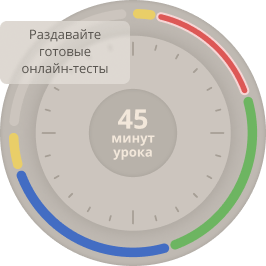
Готовые ключевые этапы урока всегда будут у вас под рукой

Организационный момент

Проверка знаний

Объяснение материала

Закрепление изученного

Итоги урока
How to be a good teacher?

Нажмите, чтобы узнать подробности

Разработка мастер-класса регионального семинара учителей английского языка 

Просмотр содержимого документа
«How to be a good teacher?»
A GOOD TEACHER:
  • Makes his/her lessons interesting so students don’t fall asleep in them.
  • Must love his/her job. If he/she really enjoys his/her job that’ll make the lessons more interesting.
  • Even if he/she is feeling terrible, he/she puts on a good “teacher’s face” when enters the classroom (Teachers who look unhappy have a negative effect on their students).
  • Has his own personality and doesn’t hide it from the students so that he is not a teacher but a person as well (Teachers who share their personality with the their classes often have better results than those who don’t).
  • Has lots of knowledge, not only of his subject (Teachers shouldn’t be afraid to bring their own interests and lives into the classroom).
  • Is an entertainer (Students enjoy being entertained and amused).
  • Has a good relationship with students.
  • Is a person whom you can talk to when you have problems and don’t get along with the subject.
  • Is a someone who has an affinity with the students that they are teaching.
  • Should try and draw out the quiet ones and control the more talkative ones (ensure that the quiet, shyer students also get a chance to speak, not frustrated).
  • Should be able to correct people without offending them (It has to be done with tact. The teacher has to measure what is appropriate for a particular student in a particular situation).
  • Cares more about students’ learning than he does about his own teaching.
  • Has a dress sense (not always the same old suit).
  • Uses the appropriate level of language/speaking style for the audience he is addressing.
  • Uses gestures, expressions and mime to show his feelings.
  • Gives simple as possible and logical instructions not to waste time. Before giving instructions teachers should ask themselves the following questions: What must the students know if they are to complete this activity successfully? Which information do they need? Which should come next?
  • Maximizes STT(student talking time) and minimizes TTT(teacher talking time)
  • Breaks the rules (students frequently know what is gong to happen in class because it was always the same) which is a perfect starting point for student involvement. Teacher normally wears casual clothes – wears a suit; normally noisy and energetic – behaves calmly and slowly.
  • Always stays flexible (can change the pre-arranged plan if sees that something is gong wrong).
  • Sets high goals.
  • Keeps going on CPD(continuous personal development).
  • Knows how to encourage and motivate his students.
  • Always cares about his students.
  • Uses students’ time wisely.
  • IS SOMEONE WHO HELPS RATHER THAN SHOUTS.
  • IS SOMEONE WHO KNOWS STUDENTS’ NAMES.
  • IS ALMOST ALWAYS TALKS ABOUT WHAT HIS STUDENTS (NOT HE) ARE DOING.
  • IS A GOOD EXAMPLE FOR HIS STUDENTS.
  • BELIEVES IN HIS STUDENTS.


10 things you shouldn’t say in the classroom.

1. “Shut up!” or even “Be quiet!” The first is rude; the second illogical. Students should be making a noise if they are engaged in pair or group work.
2. “Get out!” Some teachers use the “sin bin” approach to misbehaviour. If a student is so penalized, he (and it is usually a he) is given the attention of the class as he leaves (something he probably wanted), which distracts from the task the rest of the class is working on. What happens if the student refuses to leave?
3. “That’s wrong!” If you ask a question and the student’s reply is wrong, give them the chance to self correct or ask another student to provide the correct answer. Then go back to the original student to give the correct answer. If peer correction doesn’t work, provide the answer yourself, then invite the student to repeat. What’s important is that the student succeeds.
4. “Why didn’t you do your homework, John?” This embarrasses John. He either has to lie or tell a truth which will diminish him. If a student hasn’t done their homework, talk to them about it in the break.
5. “Do you understand?” Students will usually say yes even if they don’t. Better to get them to do something to show you they understand.
6. “If you do that again, I’ll….” Do what? Don’t make threats you won’t keep.
7. “You at the back!” Learn and use students’ names.
8. “Talk about it.” Specify who should talk to whom. In a discussion, task based activities often work better than topic based ones. Give a time limit and have an outcome.
9. “Don’t be silly!” Respect please.
10. “What do you call this?” Teacher holds up a one line composition from a student. The student is embarrassed.


10 things you shouldn’t do in the classroom.

1. Pretend you don’t understand the students’ mother tongue, especially if it’s yours. If you teach a monolingual class, translate and explain in your shared mother tongue. As long as the tasks are done in English, there’s no problem.
2. Write extensively on the board. Your back will be turned to the students. (They may be more interested in your bottom than the bottom line of what you are trying to explain). Use a prepared OHT or computer projection.
3. Sit at your desk for the whole lesson. You know why.
4. Point at the students. Use their names. Use an inviting gesture.
5. Get the students to answer questions in seating / alphabetical turns in a large class. Once a student has answered, they can disengage. Keep them on their toes.
6. Teach to the “good” students.
7. Confiscate students’ property. Mobile phones and chewing gum belong to them. Make sure they are in their bags.
8. Be knocked out by the bell. Allow enough time for activities to be completed and homework tasks given.
9. Apply double standards. I can be late, drink coffee, not correct homework on time, but you …
10. This is for you. What have you done with a class that you regret? Send any anecdotes or additions to the list to the web site.