Казахстан, Есик

СДЕЛАЙТЕ СВОИ УРОКИ ЕЩЁ ЭФФЕКТИВНЕЕ, А ЖИЗНЬ СВОБОДНЕЕ
Благодаря готовым учебным материалам для работы в классе и дистанционно
Скидки до 50 % на комплекты
только до
Готовые ключевые этапы урока всегда будут у вас под рукой
Организационный момент
Проверка знаний
Объяснение материала
Закрепление изученного
Итоги урока
Была в сети 08.02.2017 20:00

Смагулова Жадыра Сумбебаевна
Учитель английского языка
36 лет
 893
893
 71 698
Местоположение
LESSON:10 Unit2 MY SCHOOL
Категория:
Английский язык
08.02.2017 19:51

Просмотр содержимого документа
«LESSON:10 Unit2 MY SCHOOL»
| LESSON:10 Unit2 MY SCHOOL Classroom objects Ss-Tt | School: named after O Zhandosov | |||||
| Date: 12.10.16 | Teacher name: Smagulova Zhadyra | |||||
| CLASS: 1 Б,В | Number present: | absent: | ||||
| Learning objectives(s) that this lesson is contributing to | 1.L1 recognise short instructions for basic classroom routines spoken slowly and distinctly 1.L9 recognise the names of letters of the alphabet 1.S1 make basic personal statements about people, objects and classroom routines 1.UE4 use determiners a, an, this, these to indicate what something is | |||||
| Lesson objectives | All learners will be able to: Talk about people, objects and classroom routines. Recognize teacher’s instructions | |||||
| Most learners will be able to: Talk about people, Say topic words with clear pronunciation | ||||||
| Some learners will be able to: to be able to identify some important classroom objects, recognize and name sounds without mistakes. | ||||||
| Language objective | Learners can: | |||||
| Key words and phrases: | ||||||
| Useful classroom language for dialogue/writing: | ||||||
| Discussion points: | ||||||
|
| ||||||
| Writing prompts: | ||||||
| Previous learning 5 minutes |
| |||||
| Plan
| ||||||
| Planned timing | Planned activities (replace the notes below with your planned activities) | Resources | ||||
| Start 5 minutes
| ORGANIZATIONAL MOMENT Prior Knowledge- Pupils recognize simple greetings Let's sing a song! Hello, hello, hello How are you? Hello, hello, hello How are you? I'm good I'm great I'm wonderful Hello, hello, hello How are you? I'm tired I'm hungry I'm not so good I'm tired I'm hungry I'm not so good Hello, hello, hello How are you? | Song “Hello” https://www.youtube.com/watch?v=tVlcKp3bWH8
| ||||
| Middle 25 minutes
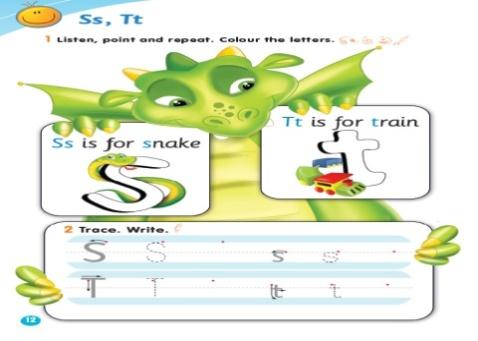
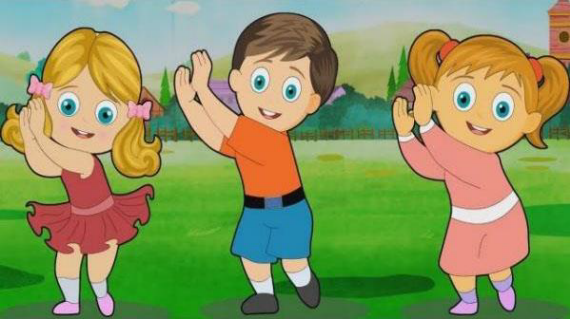
| Presentation and practice Listen, point and repeat. Colour the letters. Pupils ' books closed. Put the My ABC poster up on the board. Point to the letter Ss say : Ss /s/ The pupils repeat after you. Point to the letter and ask the pupils to say the sound. Follow the same procedure with Tt-train Say a letter ( Ss-Tt ). The pupils say the corresponding word. If you wish, you can revise the previous letters, too. Note: Leave the My ABC poster on the board for the duration of the lesson. In this way, you can refer to it every time you need it and the pupils can always have it as a point of reference. Pupils ' books open. Point to and elicit the letters and the words. Play the CD. The pupils listen, point to and repeat the letters and the words. The pupils then colour in the letters. Refer the pupils to the letters. Hold up your book and demonstrate how to write the letters by drawing imaginary letters over the examples. Explain the activity. The pupils first trace then write the letters. Allow the pupils some time to complete the activity. Go around the class, providing any necessary help. Provide each pupil with a sheet of paper. Ask the pupils to draw and colour a picture of a snake or train. Tell them they can use the pictures in their books as a model. After the pupils have completed their drawings, they can decorate the classroom with them. Listen and do. Repeat after your teacher. Stand up and look around. Shake your head and turn around. Stamp your feet upon the ground. Clap your hands and then sit down.
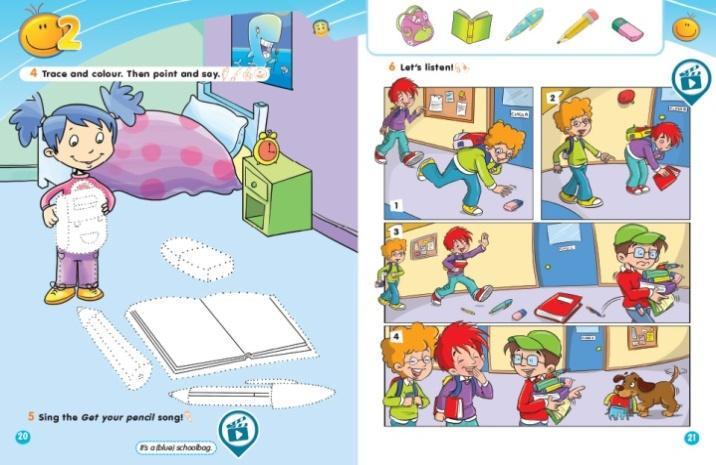
Descriptor: A learner follows instructions; repeats the rhyme. 1 Listen and point Write to number 1 to 5 on slips of paper. Hand out a slip of paper to each pupil. Explain the activity. The pupils move around the classroom, trying to find their classmates with the same number. They ask and answer without showing their slip of paper. Demonstrate the following exchange: e.g. Pupil 1: What’s your number? Pupil2: (three) What’s your number? Pupil 1: (Four). Etc The pupils get into groups according to the number of their slip of paper. When all the groups have been formed, check that the pupils are in the correct group. Play the numbers song from the previous lesson. Encourage the pupils to sing along. Presentation and practice. Listen, point and repeat. Pupil’s books closed. Put of the flashcards, one at a time, and say the corresponding words. The pupils repeat, chorally and/or individually. Point to each flashcard in random order. Ask individual pupils to say the word. Ask the rest of the class for verification. Name a school item, e.g. book. Ask a pupil to show you a book. Repeat with the rest of the items. Pupil’s book open. Play the CD. The pupils listen, point to the pictures and repeat the words. Play the CD again pausing after each word. The pupils repeat, chorally and or individually. AUDIO SCRIPT Schoolbag, book, pen, pencil, rubber Trace and colour. Then point and say.
Refer the pupils to the picture and elicit the school items. Revise the colours by pointing to different items around the classroom and eliciting the colours. Ask the pupils to trace and colour the school items. Allow the pupils some time to complete the activity. Then call out an item and ask from individual pupils to point to it and say what colour it is. It’s a blue schoolbag It’s a yellow rubber It’s a red pencil It’s a purple pen It’s a green book Sing the get your pencil song! Pickup a pencil and a pen, point to them and say: Get your pencil! Get your pen! The pupils repeat after me. Follow the same procedure and present the rest of the song. Play the CD. The pupils listen to the song. Divide the class into two groups and assign a verse to each group. Ask them to have the corresponding school items at hand. Play the song again. The groups listen to the song and hold up the items every time they are heard. Play the song a third time. The groups sing the assigned verses. AUDIOSCRIPT Get your pencil! Get your pen! Get your book, It’s school again Get your rubber, Your schoolbag, too Get your things And go to school! Let’s listen!
Set the scene by asking the pupils question about what they can see in the pictures. e.g. Teacher: (pointing to picture 1) where are Liam and Andy? At… Class: school! Teacher: what’s this? Class: I’t a rubber! Teacher: Yes! (Pointing to the book picture 2) And what’s this? Class: It’s a book! Play the CD. The pupils listen and follow the dialogue in their books. AUDIOSCRIPS Liam: What’s this? Andy: It’s a rubber Liam: What’s this? Andy: It’s a book! Liam: Hey, wait! Boy: Oh, dear! Thanks! I’m Walter and this is Waggy! Play the CD again with pauses for the pupils to repeat, chorally and or individually. Hold up book to the class say the dialogue and point to the pictures in turn. Repeat this time inviting the pupils to complete my sentences. e.g. Teacher:What’s … Class: this? Etc… | Activity book «Express publishing» 2016 Track 45 CD2 Poster FLASHCARDS
Track 45 CD2
SD «Express publishing» 2016
(Track 19CD1)
Flashcards 7-11 (Track 21 CD1)
Flashcards
Track 22 CD1
Track 23 CD1
| ||||
| End 10 minutes
| ENDING THE LESSON Chinese whispers! Explain the game. You whisper a school item to the first child, who whispers it to the child sitting next him / her and so on. The last child calls out the world. -Goodbye!! |
Flashcards | ||||
| Additional information | ||||||
| Differentiation – how do you plan to give more support? How do you plan to challenge the more able learners? | Assessment – how are you planning to check learners’ learning? | Cross-curricular links Health and safety check ICT links Values links | ||||
| For stronger classes: Select a short exchange from the dialogue for the pupils to act out in pairs. Allow them some time to rehearse their exchanges. Have some pairs come to the front of the class and perform their exchanges. For weaker classes: Ask some pupils to take out their story cutouts. Ask them to shuffle them. Play the dialogue with pauses. The pupils listen and hold up the corresponding cutouts.
|
|
| ||||
| Reflection Were the lesson objectives/learning objectives realistic? What did the learners learn today? What was the learning atmosphere like? Did my planned differentiation work well? Did I stick to timings? What changes did I make from my plan and why? | Use the space below to reflect on your lesson. Answer the most relevant questions from the box on the left about your lesson. “Traffic lights”: Who understand more shows – red color Who understand a bit shows – green color Who doesn’t understand shows– yellow color | |||||
|
| ||||||
Вебинар для учителей

Свидетельство об участии БЕСПЛАТНО!