Россия, Симферополь


СДЕЛАЙТЕ СВОИ УРОКИ ЕЩЁ ЭФФЕКТИВНЕЕ, А ЖИЗНЬ СВОБОДНЕЕ
Благодаря готовым учебным материалам для работы в классе и дистанционно
Скидки до 50 % на комплекты
только до
Готовые ключевые этапы урока всегда будут у вас под рукой
Организационный момент
Проверка знаний
Объяснение материала
Закрепление изученного
Итоги урока

Была в сети 14.01.2026 15:42

Булейко Виктория Викторовна
Учитель английского языка
31 год
 59
59
 244 840
Местоположение
Специализация
Презентация Spotlight 9 Module 1c (Present Tenses)
Категория:
Английский язык
14.01.2026 15:35

Просмотр содержимого документа
«Презентация Spotlight 9 Module 1c (Present Tenses)»
Spotlight 9 Module 1 Present Tenses
Булейко Виктория Викторовна
учитель английского языка
Муниципальное бюджетное общеобразовательное учреждение
«Трехпрудненская школа-гимназия им К. Д. Ушинского»

Present Simple
Question
Do I/you play?
Does he/she/it play?
Do we/you/they play?
Affirmative
I/you play
he/she/it plays
we/you/they play
Negative
I/you do not play
he/she/it does not play
we/you/they do not play
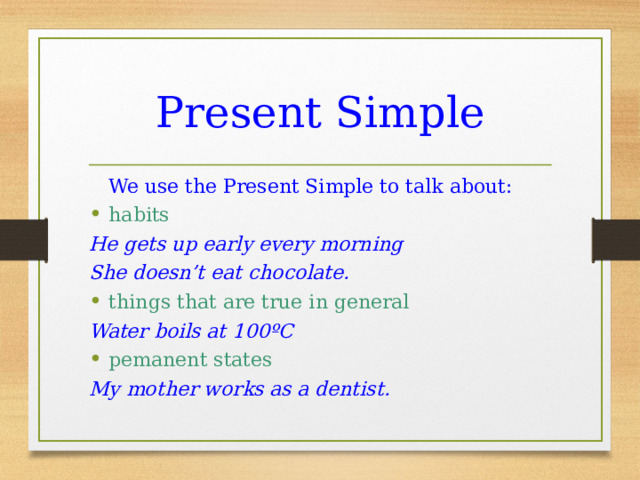
Present Simple
We use the Present Simple to talk about:
- habits
He gets up early every morning
She doesn’t eat chocolate.
- things that are true in general
Water boils at 100 º C
- pemanent states
My mother works as a dentist.
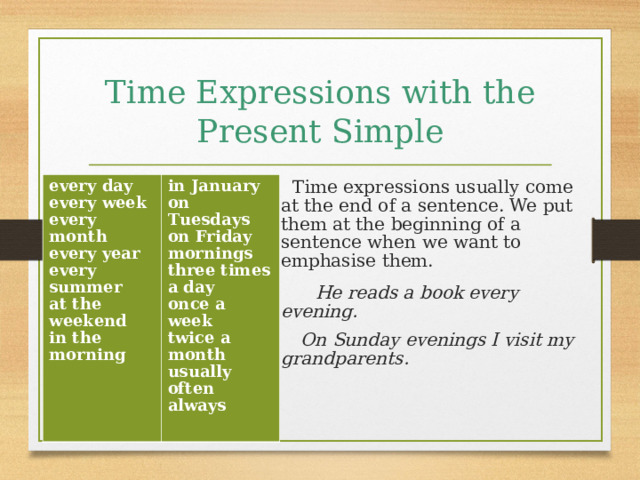
Time Expressions with the Present Simple
Time expressions usually come at the end of a sentence. We put them at the beginning of a sentence when we want to emphasise them.
He reads a book every evening.
On Sunday evenings I visit my grandparents.
every day
every week
every month
every year
every summer
at the weekend
in the morning
in January
on Tuesdays
on Friday mornings
three times a day
once a week
twice a month
usually
often
always
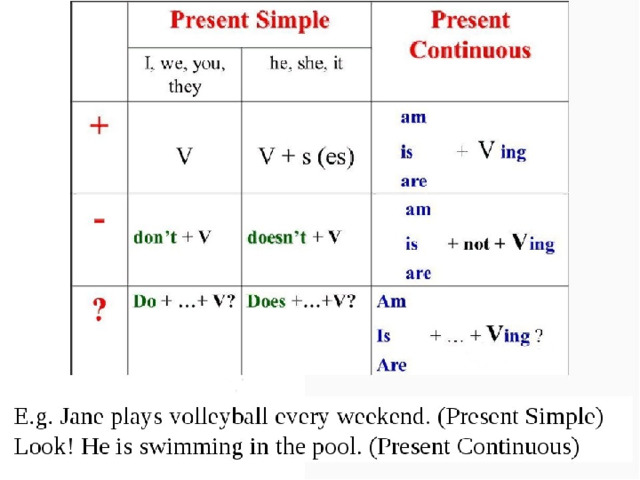

Present Continuous
Affirmative
I am playing
you are playing
he/she/it is playing
we/you/they are playing
Question
Am I playing?
Are you playing?
Is he/she/it playing?
Are we/you/they playing?
Negative
I am not playing
you are not playing
he/she/it is not playing
we/you/they are not playing
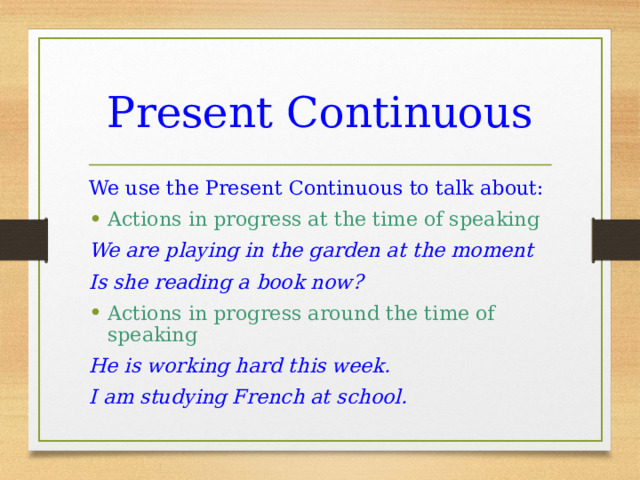
Present Continuous
We use the Present Continuous to talk about:
- Actions in progress at the time of speaking
We are playing in the garden at the moment
Is she reading a book now?
- Actions in progress around the time of speaking
He is working hard this week.
I am studying French at school.
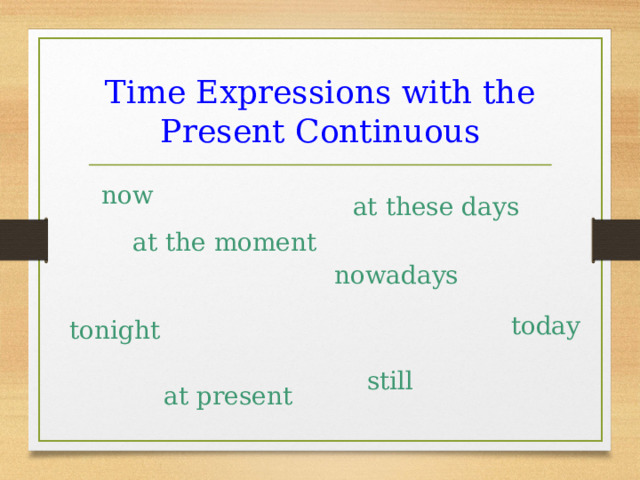
Time Expressions with the Present Continuous
now
at these days
at the moment
nowadays
today
tonight
still
at present
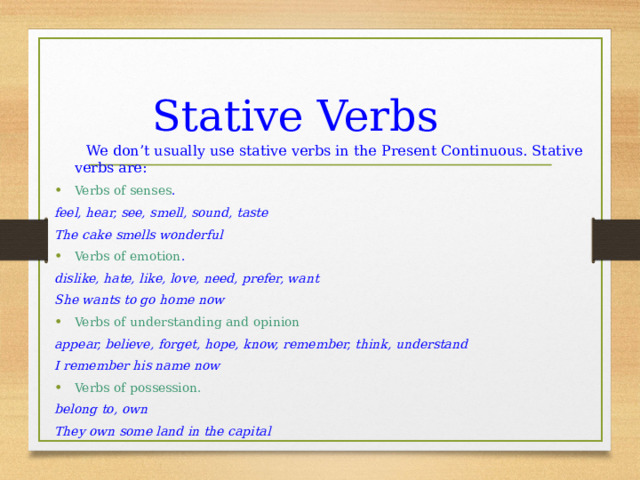
Stative Verbs
We don’t usually use stative verbs in the Present Continuous. Stative verbs are:
- Verbs of senses .
feel, hear, see, smell, sound, taste
The cake smells wonderful
- Verbs of emotion .
dislike, hate, like, love, need, prefer, want
She wants to go home now
- Verbs of understanding and opinion
appear, believe, forget, hope, know, remember, think, understand
I remember his name now
- Verbs of possession.
belong to, own
They own some land in the capital

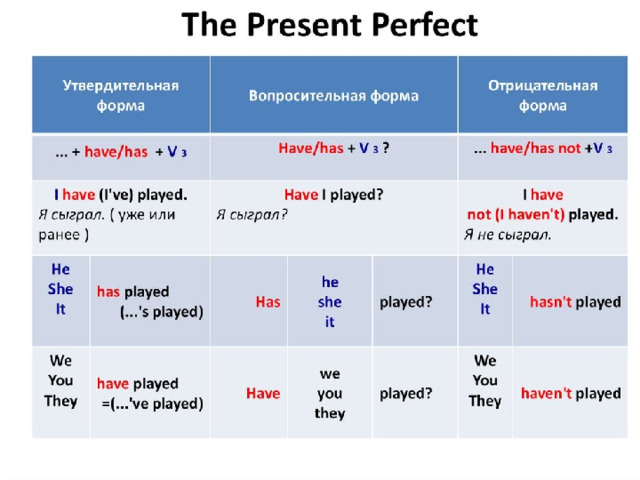
Present Perfect Simple
Affirmative
I/you have played
he/she/it has played
we/you/they have played
Question
Have I/you played?
Has he/she/it played?
Have we/you/they played?
Negative
I/you have not played
he/she/it has not played
we/you/they have not played
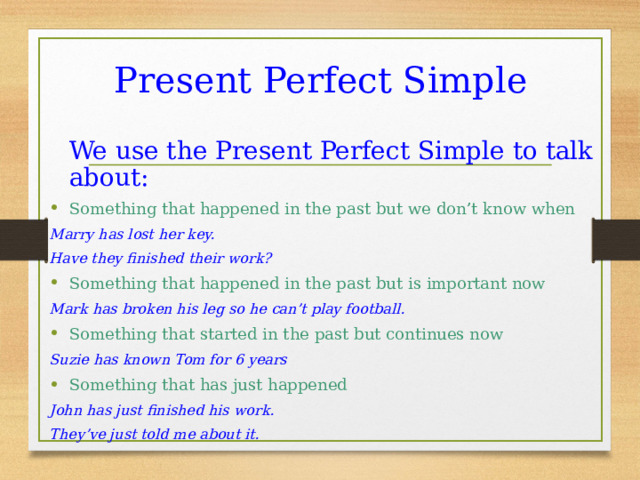
Present Perfect Simple
We use the Present Perfect Simple to talk about:
- Something that happened in the past but we don’t know when
Marry has lost her key.
Have they finished their work?
- Something that happened in the past but is important now
Mark has broken his leg so he can’t play football.
- Something that started in the past but continues now
Suzie has known Tom for 6 years
- Something that has just happened
John has just finished his work.
They’ve just told me about it.
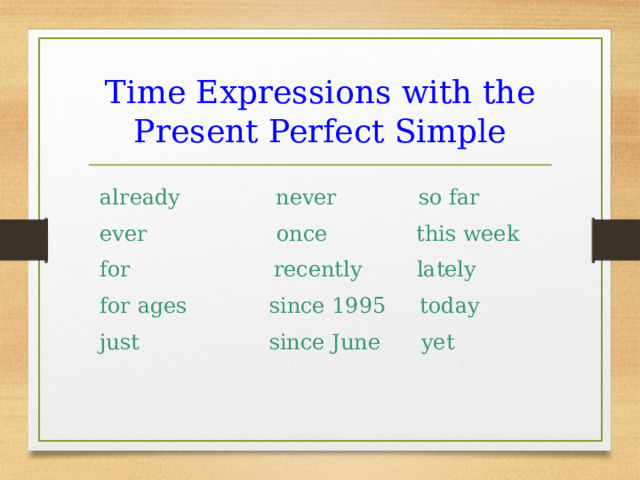
Time Expressions with the Present Perfect Simple
already never so far
ever once this week
for recently lately
for ages since 1995 today
just since June yet
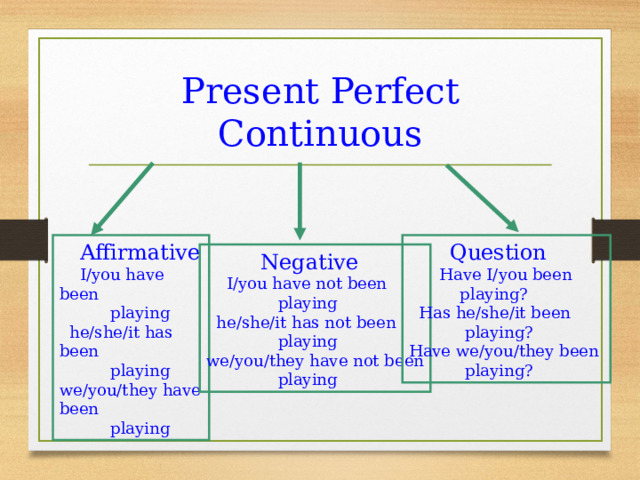
Present Perfect Continuous
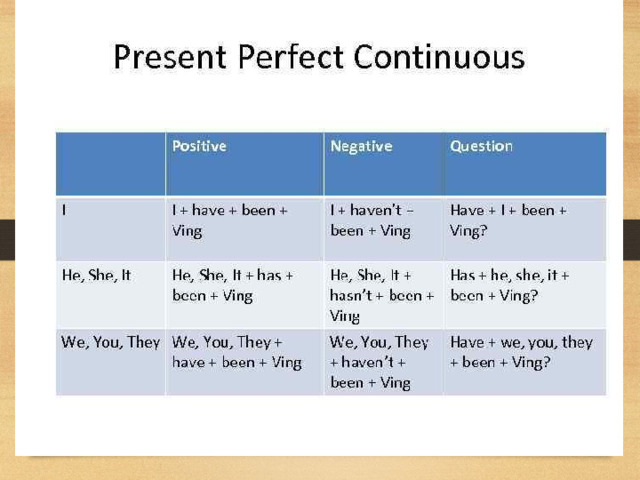
Affirmative
I/you have been
playing
he/she/it has been
playing
we/you/they have been
playing
Question
Have I/you been
playing?
Has he/she/it been
playing?
Have we/you/they been
playing?
Negative
I/you have not been
playing
he/she/it has not been
playing
we/you/they have not been
playing
Present Perfect Continuous
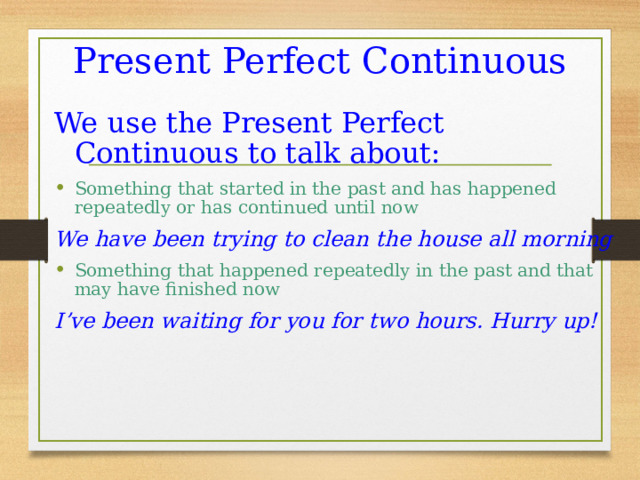
We use the Present Perfect Continuous to talk about:
- Something that started in the past and has happened repeatedly or has continued until now
We have been trying to clean the house all morning
- Something that happened repeatedly in the past and that may have finished now
I’ve been waiting for you for two hours. Hurry up!
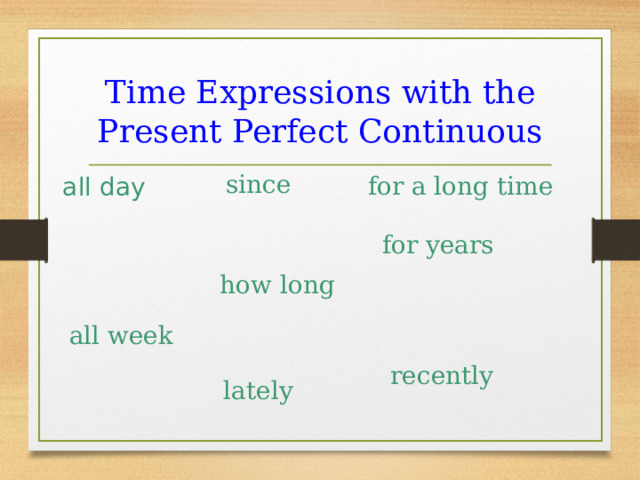
Time Expressions with the Present Perfect Continuous
since
for a long time
all day
for years
how long
all week
recently
lately
Thank you for attention!


Вебинар для учителей

Свидетельство об участии БЕСПЛАТНО!