Россия, Южноуральск

СДЕЛАЙТЕ СВОИ УРОКИ ЕЩЁ ЭФФЕКТИВНЕЕ, А ЖИЗНЬ СВОБОДНЕЕ
Благодаря готовым учебным материалам для работы в классе и дистанционно
Скидки до 50 % на комплекты
только до
Готовые ключевые этапы урока всегда будут у вас под рукой
Организационный момент
Проверка знаний
Объяснение материала
Закрепление изученного
Итоги урока
Была в сети 02.04.2026 16:52
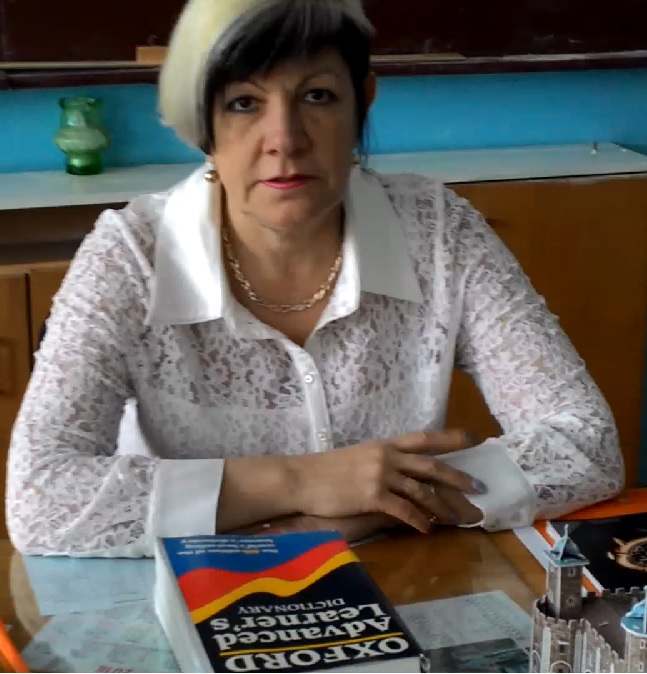
Платова Александра Борисовна
Учитель английского и немецкого языка высшей квалификационной категории
 14 824
 2 806
2 806 
Местоположение
Специализация
Российская Федерация
Категория:
Английский язык
07.04.2019 08:36

Просмотр содержимого документа
«Российская Федерация»
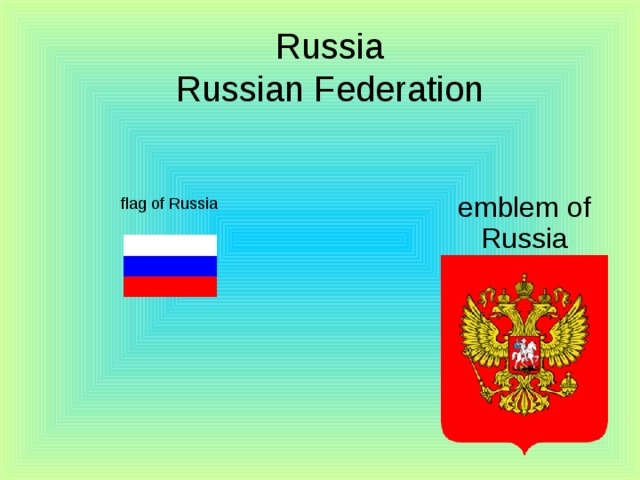
Russia Russian Federation
emblem of Russia
flag of Russia
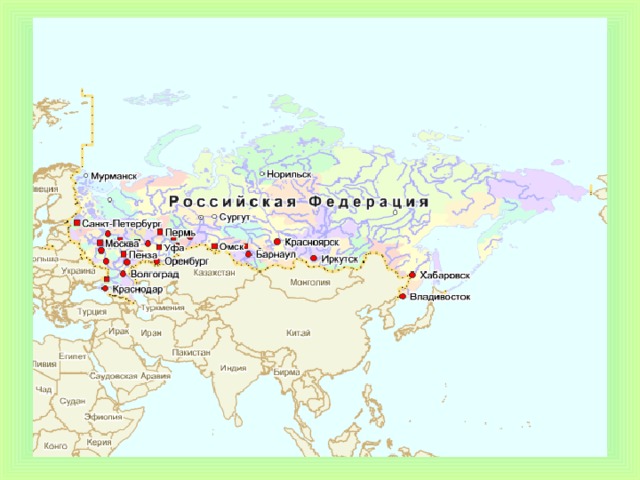
- The state occupies the main part of Eastern Europe and Northern Asia. Russia is the largest country in the world, its area is 17,075 million km2, which is almost twice as much as that of Canada, which occupies the second place.
- Russia has a population of 142.4 million (as of July 1, 2006), with 4/5 of its inhabitants living in the European part of Russia. Russia ranks eighth in the world . Most of the population lives in cities - more than 73%. Russia's population is multi-ethnic: besides the Russian, constituting 79.8 per cent, the country is home to more than 180 other people. The official language of Russia is Russian.
- Russia borders with sixteen countries, by land it is: Norway, Finland, Estonia, Latvia, Lithuania, Poland, Belarus, Ukraine, Georgia, Azerbaijan, Kazakhstan, China, Mongolia, North Korea, by sea it is: Japan and the United States that allows it to play a significant role in Europe and Asia. Being a political and legal successor of the Russian Empire and the USSR, Russia is one of the key participants in international relations. The capital of Russia is Moscow.
nature of Russia
- Russia is located in the Northern hemisphere, in the North of Eurasia. Its territory is washed by the waters of the Pacific and Arctic oceans, as well as the Baltic, Black, Azov seas. Ural divides Russia into European and Asian parts, the latter includes Siberia and the far East.
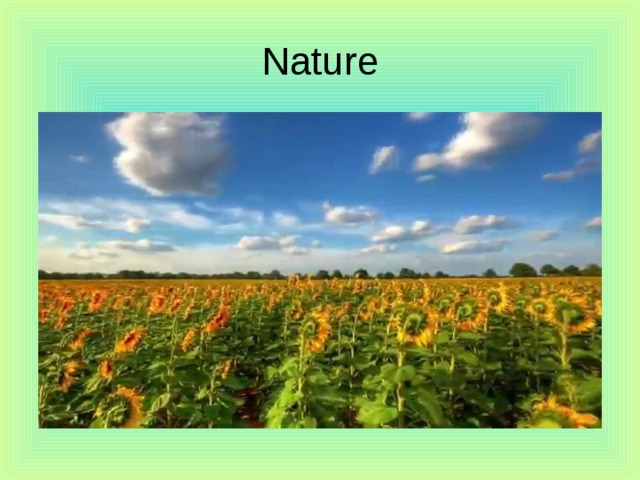
Nature
- The territory of Russia is characterized by a variety of relief. In Russia, in particular, there are mountain ranges (Caucasus, Ural, Altai, Sayan), as well as vast plains (East European and West Siberian).
The territory
- The territory of Russia is diverse from the climatic point of view. It includes (from North to South) the following climatic zones: Arctic desert, tundra, forest-tundra, forest-steppe, steppe, semi-desert (Caspian lowland). Most of the territory of Russia is located in the continental and Arctic climate, due to which Russia is the coldest country in the world. The average annual temperature is -5,5 °C.
Rivers
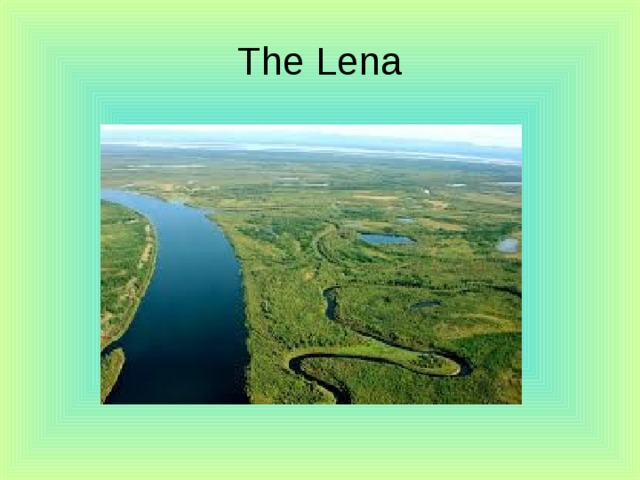
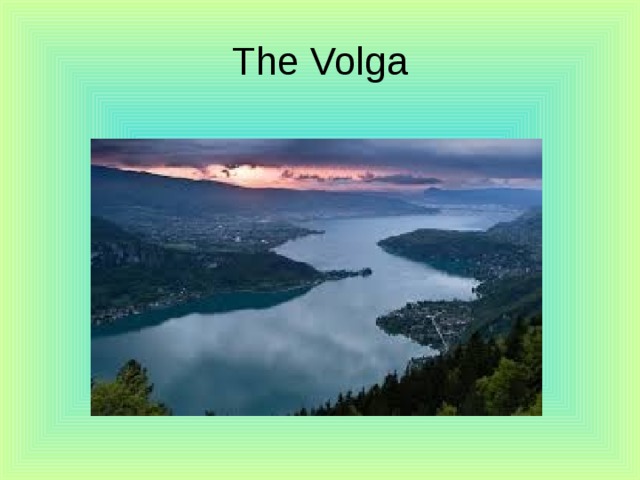
The largest rivers: Lena, Irtysh, Yenisei, Ob, Volga, Amur; the largest lakes are Caspian (sea), Baikal, Ladoga, Onega.More than 70% of the Russian territory is a zone of risky agriculture
The Lena
The Volga

- Forests cover more than 1/2 of the territory. Russia has one fifth of the world's forests and one half of the world'siferous forests. Russia has 25
national park
84 nature reserves
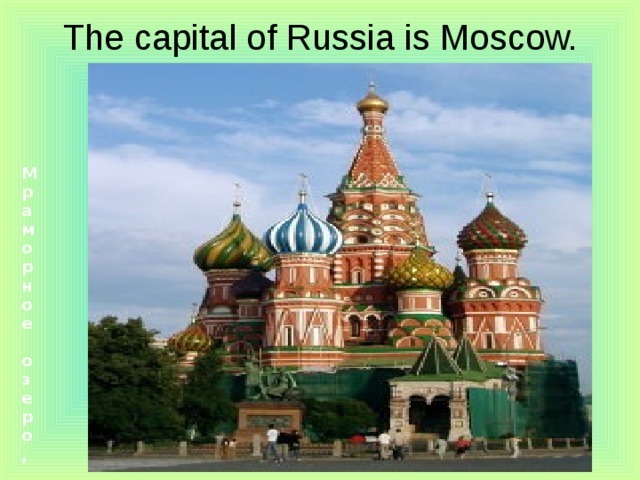
The capital of Russia is Moscow.
Мраморное озеро, Карелия
гейзер, Камчатка
озеро Байкал
Соловецкий монастырь
Собор Василия Блаженного, Москва
Эрмитаж, Санкт-Петербург
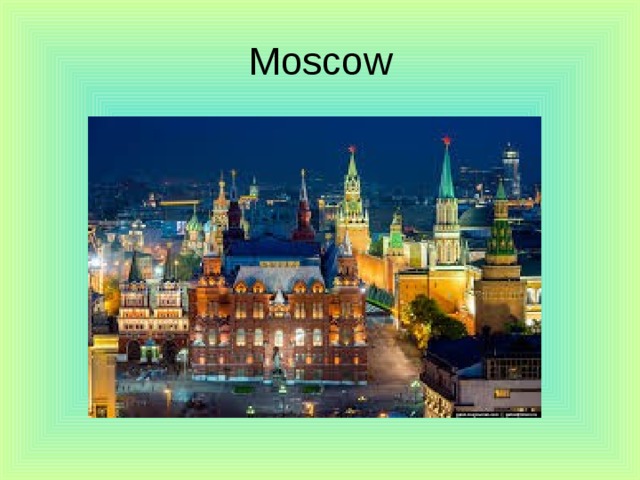
Moscow
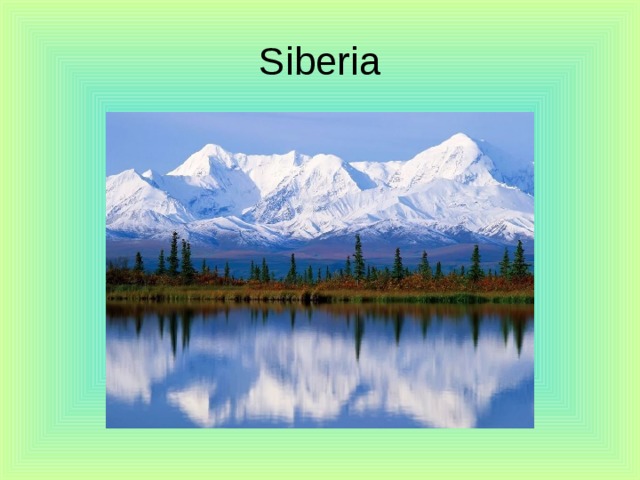
Siberia
Siberia
Siberia is a region in Northern Asia, bounded from the West by the Ural mountains, from the East by the Pacific ocean, from the North by the Arctic ocean and from the South by Kazakhstan, Mongolia and China. Is divided into Western Siberia, Eastern Siberia and the far East. In the narrowest sense includes the West Siberian plain and the East Siberian plateau.
In Siberia, the population is concentrated along the route of the TRANS-Siberian railway, which is located and its largest cities-Novosibirsk, Omsk, Krasnoyarsk and Irkutsk. Russia has 12 cities with a population of more than 1 million people: Moscow, St. Petersburg, Novosibirsk, Yekaterinburg, Nizhny Novgorod, Samara, Omsk, Kazan, Chelyabinsk, Rostov-on-don, Ufa, Volgograd.
- In Siberia, the population is concentrated along the route of the TRANS-Siberian railway, which is located and its largest cities-Novosibirsk, Omsk, Krasnoyarsk and Irkutsk. Russia has 12 cities with a population of more than 1 million people: Moscow, St. Petersburg, Novosibirsk, Yekaterinburg, Nizhny Novgorod, Samara, Omsk, Kazan, Chelyabinsk, Rostov-on-don, Ufa, Volgograd.
- In Siberia, the population is concentrated along the route of the TRANS-Siberian railway, which is located and its largest cities-Novosibirsk, Omsk, Krasnoyarsk and Irkutsk. Russia has 12 cities with a population of more than 1 million people: Moscow, St. Petersburg, Novosibirsk, Yekaterinburg, Nizhny Novgorod, Samara, Omsk, Kazan, Chelyabinsk, Rostov-on-don, Ufa, Volgograd.
- In Siberia, the population is concentrated along the route of the TRANS-Siberian railway, which is located and its largest cities-Novosibirsk, Omsk, Krasnoyarsk and Irkutsk. Russia has 12 cities with a population of more than 1 million people: Moscow, St. Petersburg, Novosibirsk, Yekaterinburg, Nizhny Novgorod, Samara, Omsk, Kazan, Chelyabinsk, Rostov-on-don, Ufa, Volgograd.
- In Siberia, the population is concentrated along the route of the TRANS-Siberian railway, which is located and its largest cities-Novosibirsk, Omsk, Krasnoyarsk and Irkutsk. Russia has 12 cities with a population of more than 1 million people: Moscow, St. Petersburg, Novosibirsk, Yekaterinburg, Nizhny Novgorod, Samara, Omsk, Kazan, Chelyabinsk, Rostov-on-don, Ufa, Volgograd.
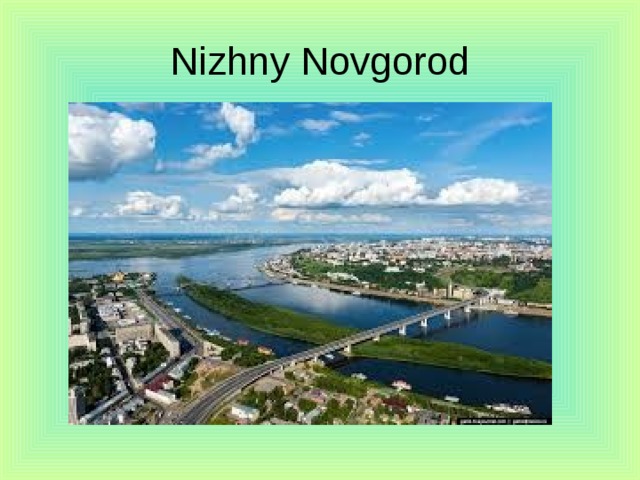
Nizhny Novgorod
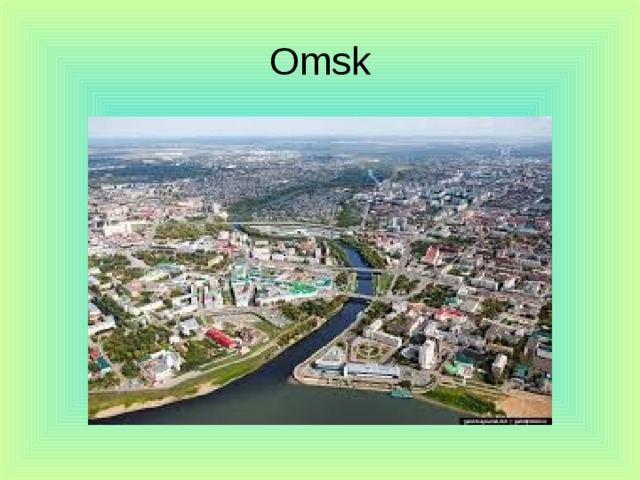
Omsk
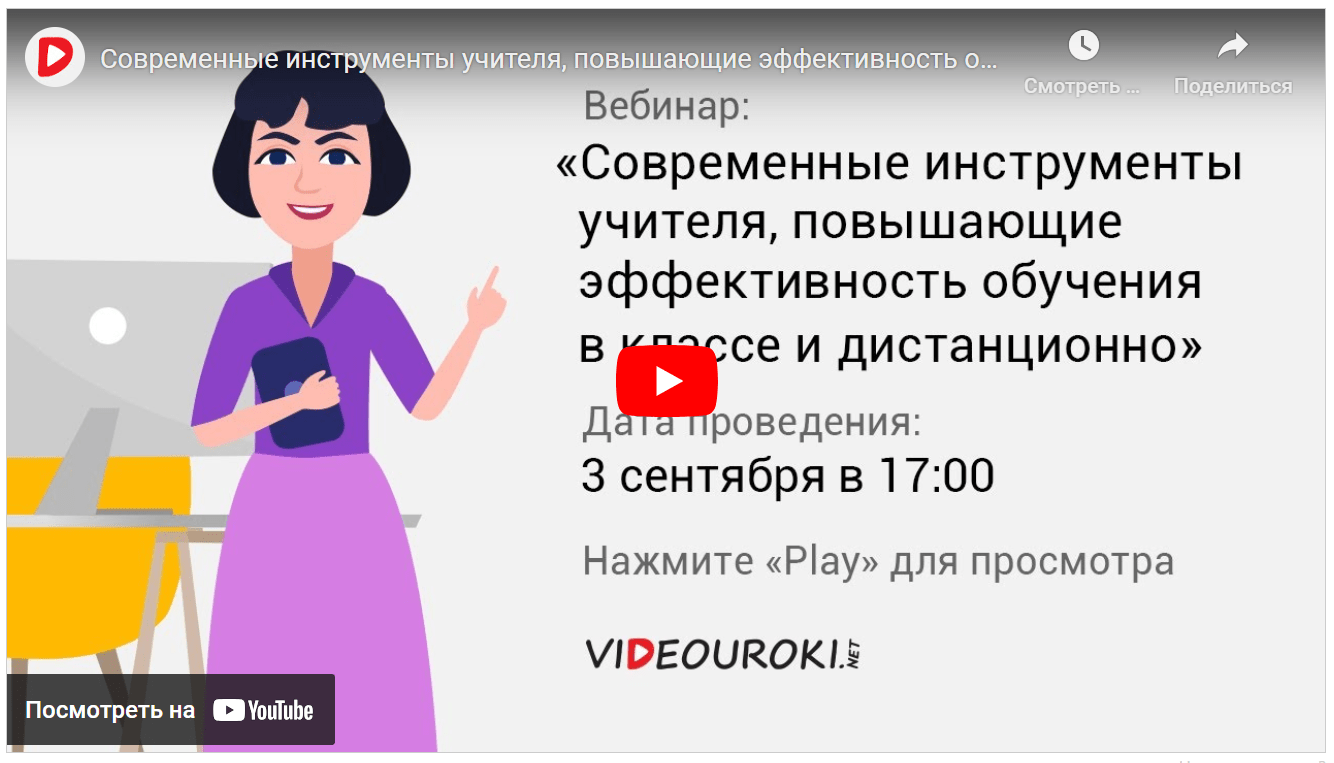
Вебинар для учителей
Свидетельство об участии БЕСПЛАТНО!