Россия, Пермь

СДЕЛАЙТЕ СВОИ УРОКИ ЕЩЁ ЭФФЕКТИВНЕЕ, А ЖИЗНЬ СВОБОДНЕЕ
Благодаря готовым учебным материалам для работы в классе и дистанционно
Скидки до 50 % на комплекты
только до
Готовые ключевые этапы урока всегда будут у вас под рукой
Организационный момент
Проверка знаний
Объяснение материала
Закрепление изученного
Итоги урока

Была в сети 11.04.2026 05:35

Лузина Алёна Сергеевна
учитель английского языка, русского языка и литературы, советник директора по воспитанию и взаимодействию с детскими общественными объединениями
35 лет
 352
352
 131 377
Местоположение
Специализация
Смысловое чтение текста "King Arthur: The Legend of the Once and Future King"
Категория:
Английский язык
12.11.2025 20:07

Просмотр содержимого документа
«Смысловое чтение текста "King Arthur: The Legend of the Once and Future King"»
King Arthur: The Legend of the Once and Future King
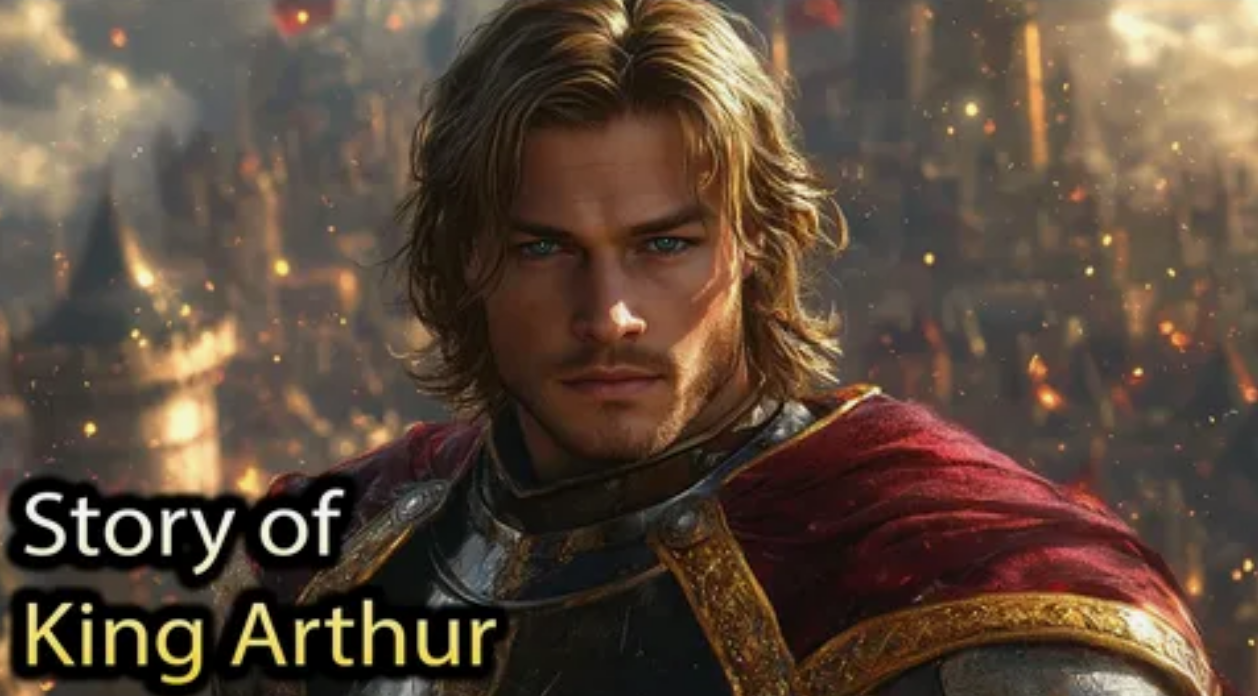
In the misty hills of ancient Britain, where oak forests whispered secrets and rivers sang of old magic, a legend was born — the tale of King Arthur, the sovereign who would become the heart of a thousand stories.
Long ago, when warring tribes and invading Saxons threatened the land, a wise wizard named Merlin saw a path to unity. He concealed the infant Arthur, son of King Uther Pendragon, raising him in secret until the time was ripe. That moment came when a mysterious sword appeared embedded in a stone, with words inscribed upon it: “Whoso pulleth out this sword from this stone and anvil is rightwise king born of all England.”
Young Arthur, unknowing of his royal blood, pulled the sword free with ease. The people marveled; the lords balked. But Merlin revealed the truth: Arthur was the rightful heir. Crowned king, he vowed to rule with justice and mercy.
At his stronghold of Camelot, Arthur established the Round Table — a circle where no knight sat above another. Here gathered the bravest and noblest: Lancelot, Gawain, Galahad, and others whose names echo through time. They sought not glory alone, but the ideals of chivalry: honor, courage, truth, and the protection of the weak.
Arthur’s queen, Guinevere, brought grace and wisdom to Camelot. Yet shadows gathered. Lancelot’s deep love for Guinevere sowed the seeds of betrayal. And Mordred, Arthur’s treacherous nephew (or, in some tales, his illegitimate son), plotted to tear the kingdom apart.
The end came in a storm of steel and sorrow. At the battlefield of Camlann, Arthur and Mordred met in mortal combat. They struck each other down: Mordred died, and Arthur, gravely wounded, was carried away by ladies in a black barge. Some say he lies sleeping beneath the hills, waiting for Britain’s hour of greatest need. Others believe he will return when the land calls him once more.
Thus endures the legend: Arthur, not merely a king of the past, but the Once and Future King — a symbol of hope, justice, and the eternal struggle between light and shadow.
Word count: 320
Questions
I. Comprehension (True/False)
Mark each statement T (True) or F (False).
Merlin raised Arthur in full view of the public.
The sword in the stone had an inscription saying who could pull it out.
The Round Table was designed so that all knights were equal.
Lancelot never felt any affection for Queen Guinevere.
Mordred was Arthur’s loyal supporter and advisor.
The final battle between Arthur and Mordred took place at Camlann.
According to the legend, Arthur died immediately after the battle.
The title “Once and Future King” suggests Arthur might return.
II. Short‑Answer Questions
Answer in 1–2 sentences.
Who was Merlin, and what was his role in Arthur’s life?
What did the inscription on the sword in the stone say?
Why was the Round Table significant?
Name two knights who sat at the Round Table.
What conflict arose between Lancelot, Guinevere, and Arthur?
Who was Mordred, and what did he do?
Where did the final battle between Arthur and Mordred take place?
What are the two main versions of what happened to Arthur after the battle?
III. Vocabulary and Context
Match the word with its meaning as used in the text.
concealed
balked
vowed
chivalry
sowed
mortal
a) made a serious promise
b) hidden, kept secret
c) showed reluctance or refusal
d) code of honor and courtesy among knights
e) planted the seeds of (something negative)
f) causing death, fatal
(Key: 1–b, 2–c, 3–a, 4–d, 5–e, 6–f)
IV. Cause and Effect
Explain each relationship in 2–3 sentences.
Why did Merlin hide Arthur’s identity, and what changed when Arthur pulled the sword from the stone?
How did the Round Table reflect Arthur’s ideals of kingship?
What led to the downfall of Camelot? Name two key causes.
Why does the legend say Arthur might return one day?
V. Analytical and Discussion Questions
Answer in 3–5 sentences.
What values does the legend of King Arthur promote? Give examples from the text.
Is Mordred purely evil, or does the story suggest he has a complex motive? Support your view.
How does the image of the Round Table still resonate in modern ideas about leadership and equality?
Why do you think the legend of Arthur has endured for so many centuries? What makes it timeless?
VI. Creative Tasks
Choose one task to complete.
Write a 6–8‑line monologue from Arthur’s perspective the night before the battle of Camlann. Include his hopes, fears, and sense of duty.
Compose a short (50–70‑word) news bulletin as if reporting on Arthur pulling the sword from the stone. Use a modern journalistic tone but keep the medieval setting.
Imagine you are a young knight being invited to sit at the Round Table. Write a 5–7‑sentence letter home describing the ceremony and your feelings.
Design a coat of arms for Arthur. Describe its symbols and colors (4–5 sentences), explaining what each element represents about his character and rule.






Вебинар для учителей
Свидетельство об участии БЕСПЛАТНО!