Հայաստան, Չարենցավան

СДЕЛАЙТЕ СВОИ УРОКИ ЕЩЁ ЭФФЕКТИВНЕЕ, А ЖИЗНЬ СВОБОДНЕЕ
Благодаря готовым учебным материалам для работы в классе и дистанционно
Скидки до 50 % на комплекты
только до
Готовые ключевые этапы урока всегда будут у вас под рукой
Организационный момент
Проверка знаний
Объяснение материала
Закрепление изученного
Итоги урока
Была в сети 07.07.2020 17:43

Պողոսյան Սոսե Մարտինի
Անգլերենի ուսուցչուհի
36 лет
 96
96
 221 527
Местоположение
The Present Perfect Simple Tense
Категория:
Английский язык
10.05.2020 10:36

Просмотр содержимого документа
«The Present Perfect Simple Tense»
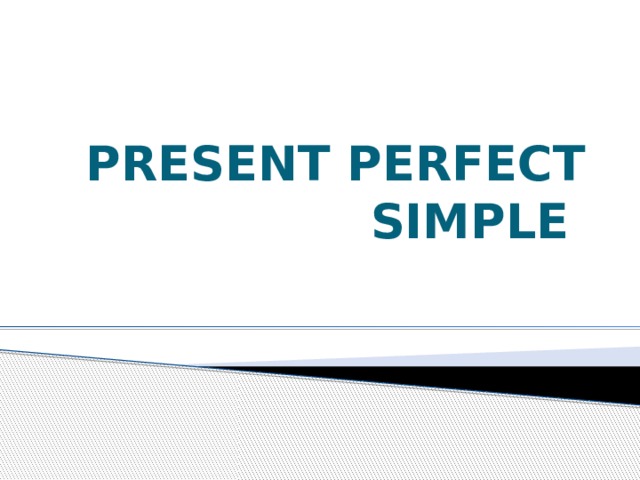
PRESENT PERFECT SIMPLE
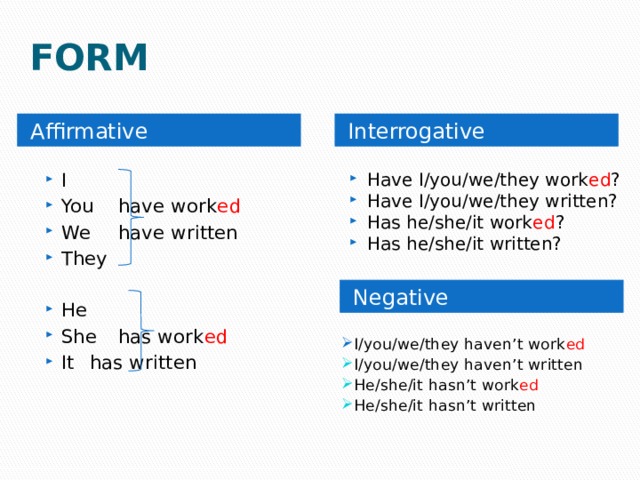
FORM
Affirmative
Interrogative
- I
- You have work ed
- We have written
- They
- Have I/you/we/they work ed ?
- Have I/you/we/they written?
- Has he/she/it work ed ?
- Has he/she/it written?
- He
- She has work ed
- It has written
Negative
- I/you/we/they haven’t work ed
- I/you/we/they haven’t written
- He/she/it hasn’t work ed
- He/she/it hasn’t written
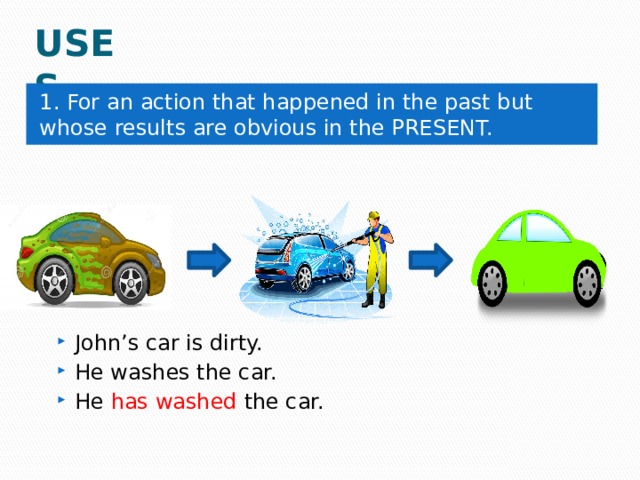
USES
1. For an action that happened in the past but whose results are obvious in the PRESENT.
- John’s car is dirty.
- He washes the car.
- He has washed the car.
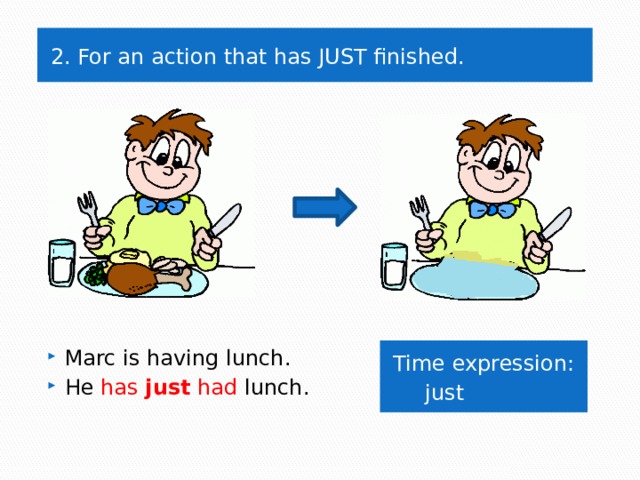
2. For an action that has JUST finished.
Time expression:
- Marc is having lunch.
- He has just had lunch.
just
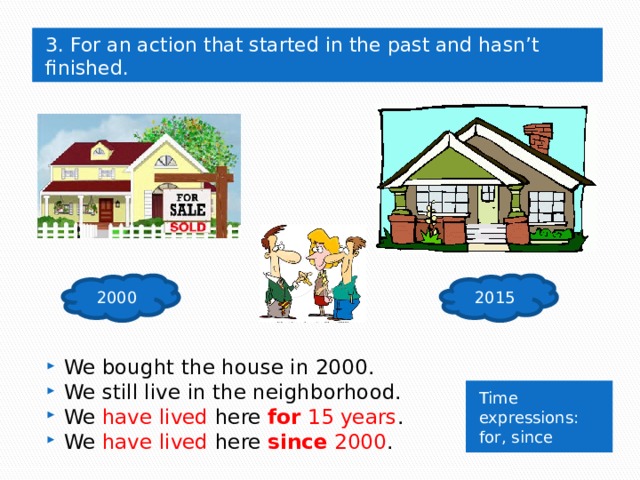
3. For an action that started in the past and hasn’t finished.
2000
2015
- We bought the house in 2000.
- We still live in the neighborhood.
- We have lived here for 15 years .
- We have lived here since 2000 .
Time expressions: for, since
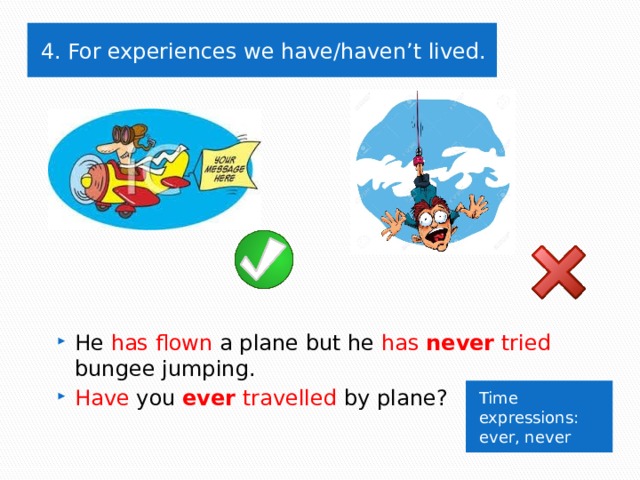
4. For experiences we have/haven’t lived.
- He has flown a plane but he has never tried bungee jumping.
- Have you ever travelled by plane?
Time expressions: ever, never
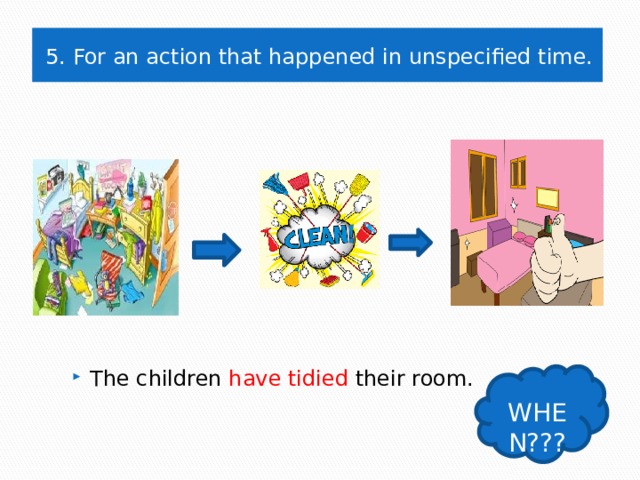
5. For an action that happened in unspecified time.
- The children have tidied their room.
WHEN???
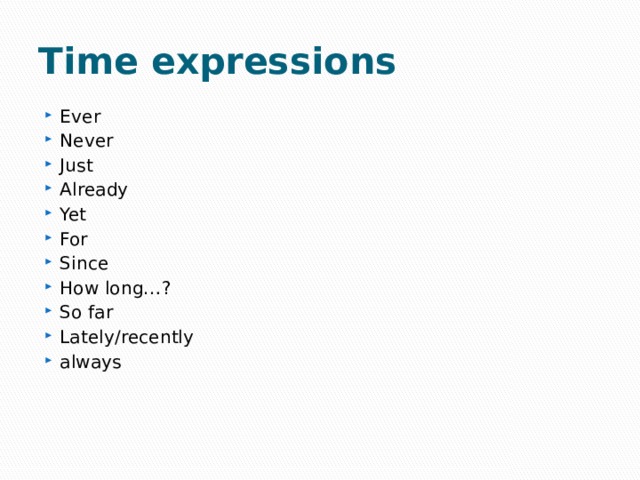
Time expressions
- Ever
- Never
- Just
- Already
- Yet
- For
- Since
- How long…?
- So far
- Lately/recently
- always
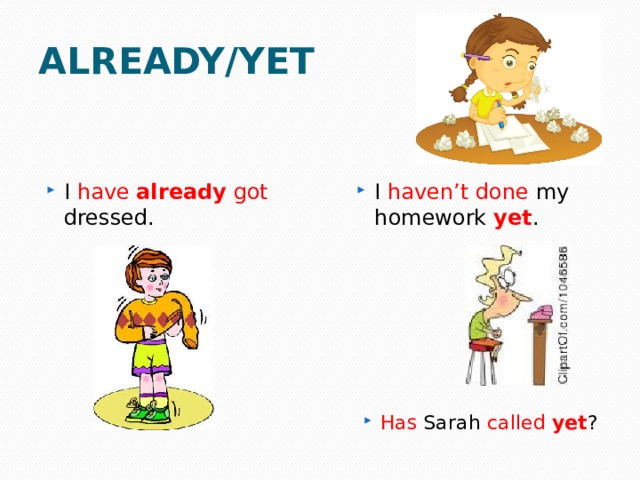
ALREADY/YET
- I have already got dressed.
- I haven’t done my homework yet .
- Has Sarah called yet ?
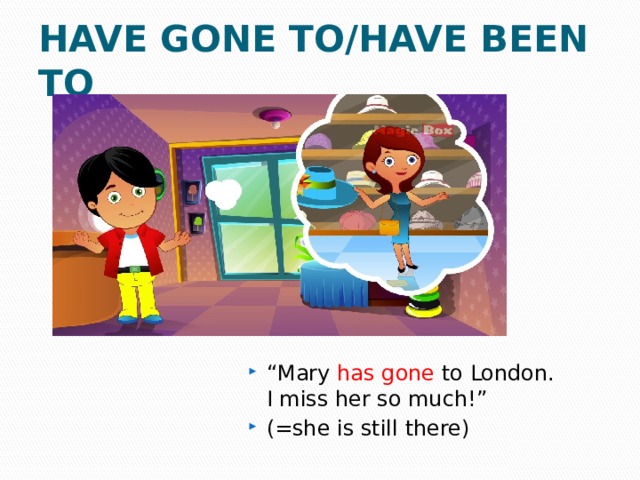
HAVE GONE TO/HAVE BEEN TO
- “ Mary has gone to London. I miss her so much!”
- (=she is still there)
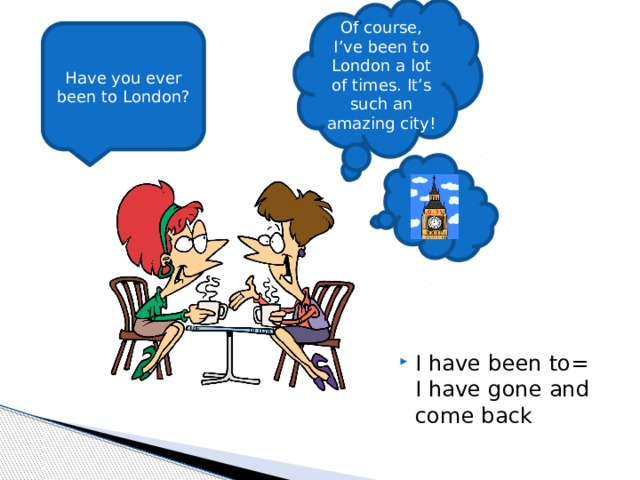
Of course, I’ve been to London a lot of times. It’s such an amazing city!
Have you ever been to London?
- I have been to= I have gone and come back

THE END



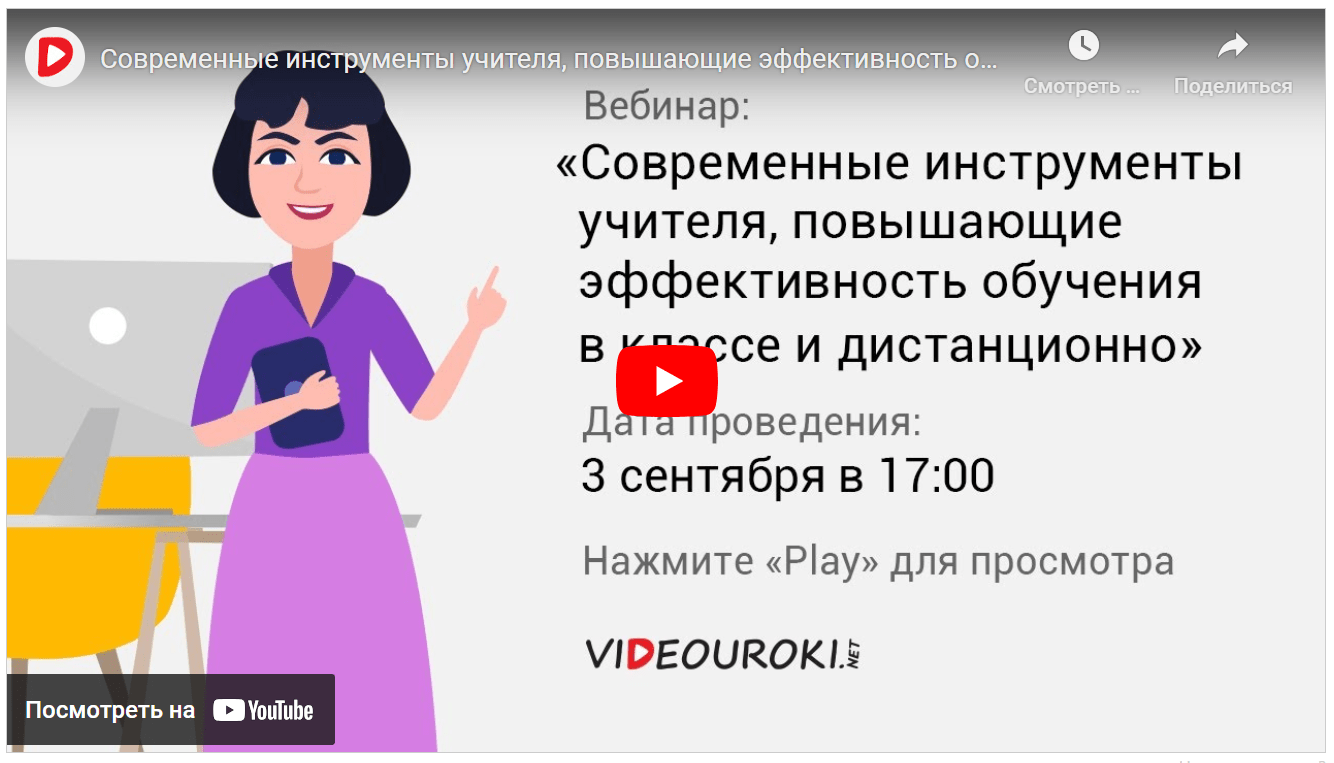
Вебинар для учителей
Свидетельство об участии БЕСПЛАТНО!