

Россия, Саратов


СДЕЛАЙТЕ СВОИ УРОКИ ЕЩЁ ЭФФЕКТИВНЕЕ, А ЖИЗНЬ СВОБОДНЕЕ
Благодаря готовым учебным материалам для работы в классе и дистанционно
Скидки до 50 % на комплекты
только до
Готовые ключевые этапы урока всегда будут у вас под рукой
Организационный момент
Проверка знаний
Объяснение материала
Закрепление изученного
Итоги урока

Была в сети 29.03.2023 09:15

Юрьева Яна Геннадьевна
учитель английского языка
59 лет
 607
607
 94 695
Местоположение
Специализация
Употребление Past Continuous
Категория:
Английский язык
10.08.2021 07:48

Просмотр содержимого документа
«Употребление Past Continuous»

Past Continuous
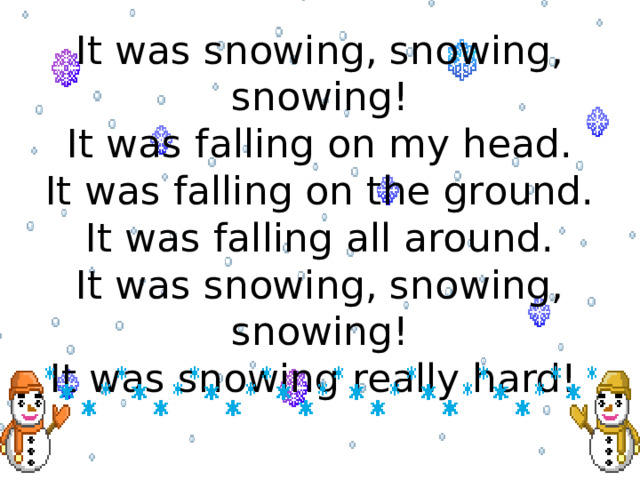
It was snowing, snowing, snowing! It was falling on my head. It was falling on the ground. It was falling all around. It was snowing, snowing, snowing! It was snowing really hard!

Past Continuous
Прошедшее продолженное время
Образование
Past Continuous
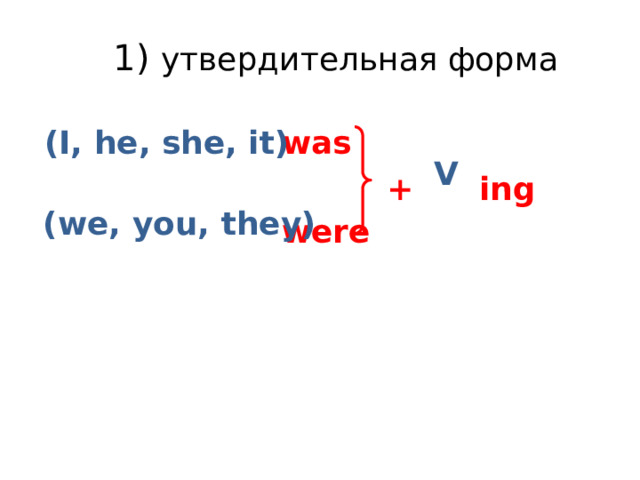
1) утвердительная форма
was
(I, he, she, it)
V
+
ing
(we, you, they)
were
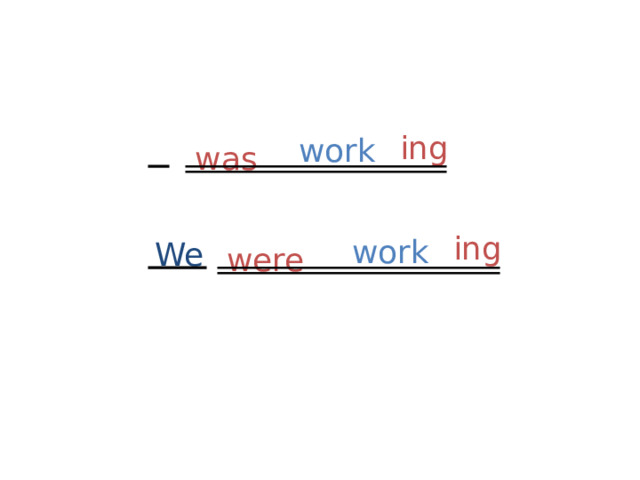
I
ing
work
was
ing
work
We
were
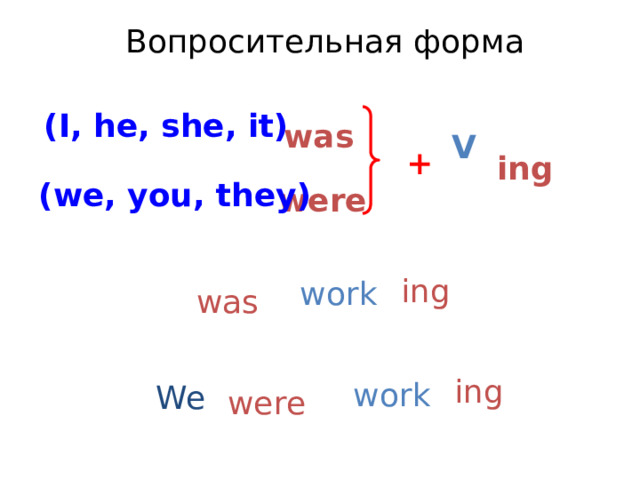
Вопросительная форма
(I, he, she, it)
was
V
+
ing
(we, you, they)
were
I
ing
work
was
ing
work
We
were
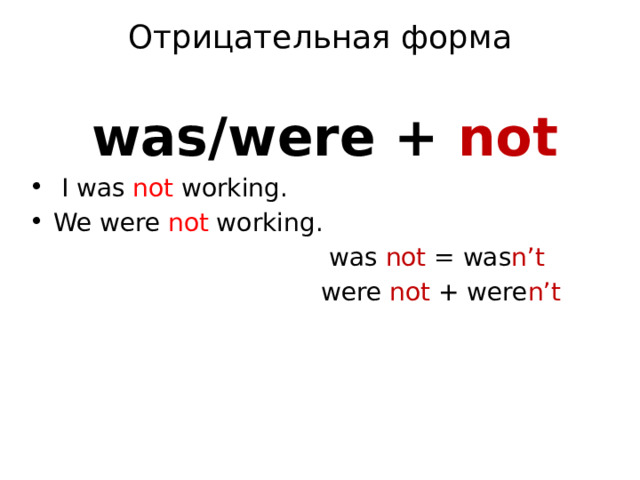
Отрицательная форма
was/were + not
- I was not working.
- We were not working.
was not = was n’t
were not + were n’t
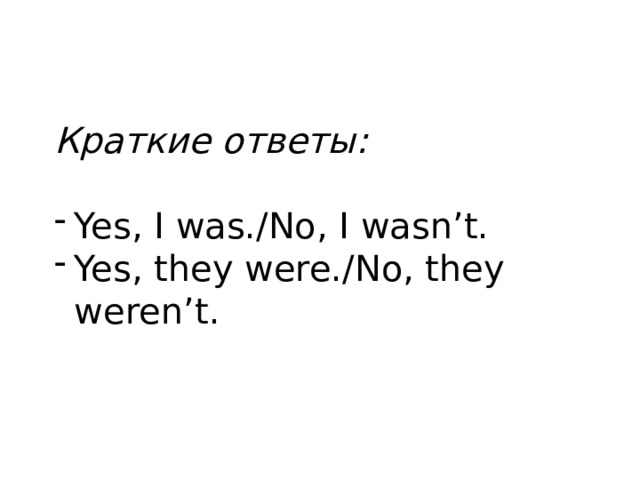
Краткие ответы:
- Yes, I was./No, I wasn’t.
- Yes, they were./No, they weren’t.
Употребление
1. Для описания действий в развитии/в процессе, которые происходили в прошлом.
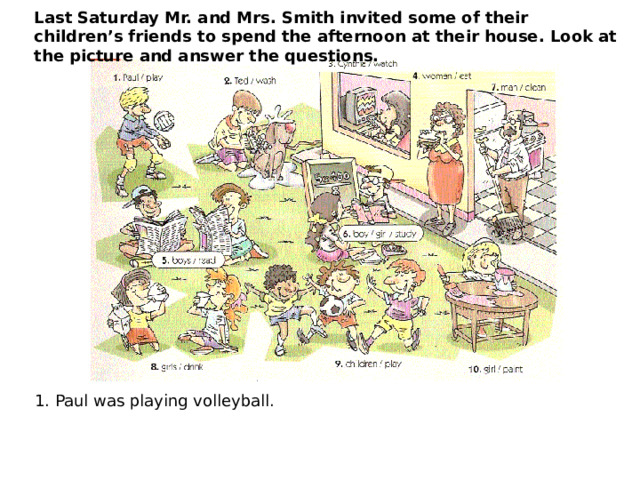
Last Saturday Mr. and Mrs. Smith invited some of their children’s friends to spend the afternoon at their house. Look at the picture and answer the questions.
1. Paul was playing volleyball.
Past Continuous употребляется:
- для описания действия, которое происходило в прошлом и которое было прервано другим действием. Past Continuous употребляется для описания действия в развитии/процессе (длительное действие), a Past Simple – для описания действия, которое прервало его (краткое действие)
They were playing football when their mother called them. – Они играли футбол, когда мама позвала их.
Past Continuous употребляется:
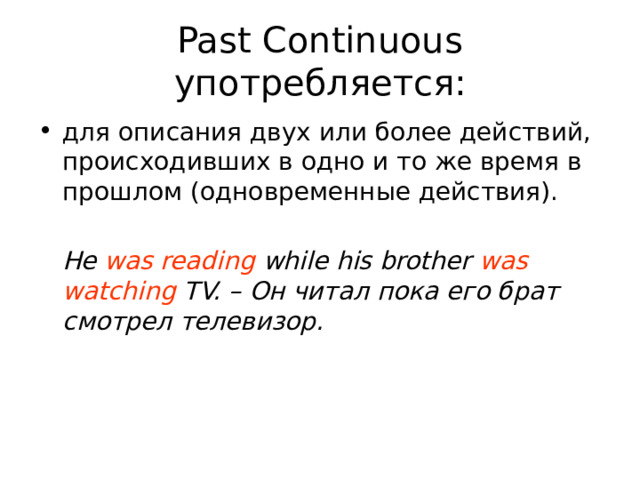
- для описания двух или более действий, происходивших в одно и то же время в прошлом (одновременные действия).
He was reading while his brother was watching TV. – Он читал пока его брат смотрел телевизор.
Past Continuous употребляется:
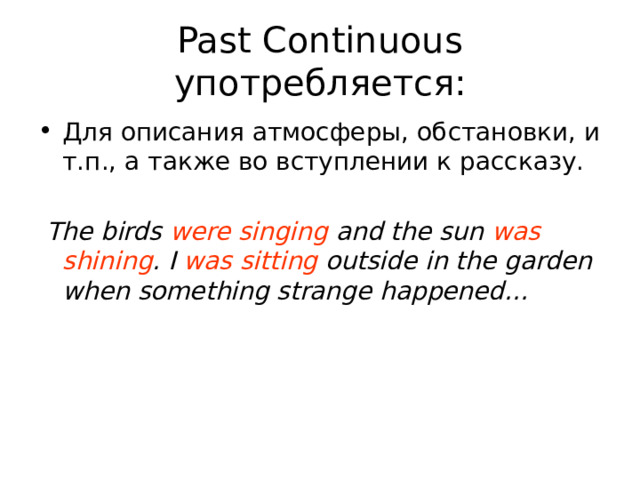
- Для описания атмосферы, обстановки, и т.п., а также во вступлении к рассказу.
The birds were singing and the sun was shining . I was sitting outside in the garden when something strange happened…
Примечание:
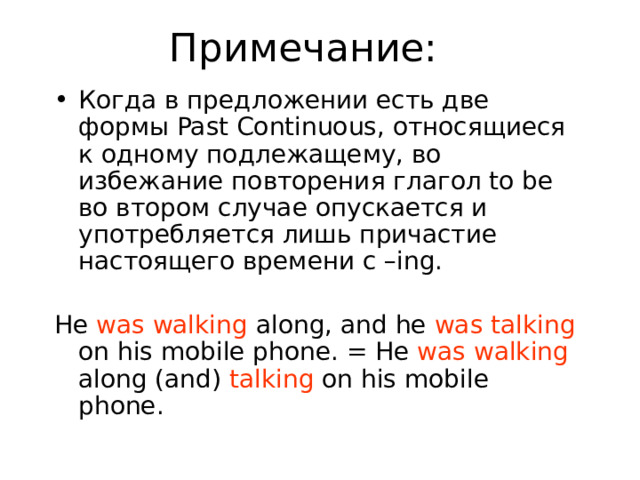
- Когда в предложении есть две формы Past Continuous, относящиеся к одному подлежащему, во избежание повторения глагол to be во втором случае опускается и употребляется лишь причастие настоящего времени с –ing.
He was walking along, and he was talking on his mobile phone. = He was walking along (and) talking on his mobile phone.
Указатели времени (сигналы), употребляемые с Past Continuous :
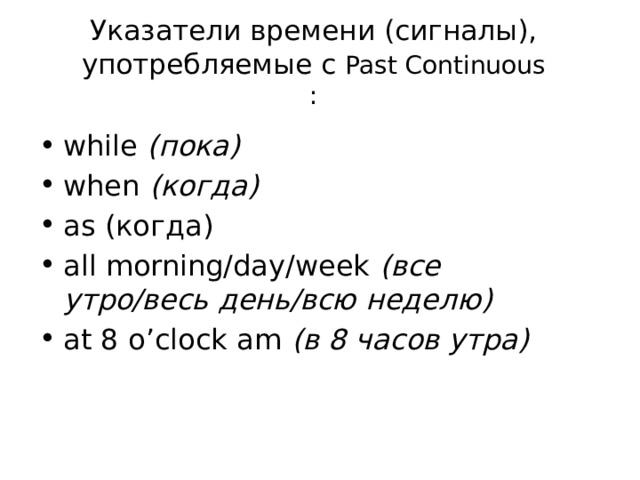
- while (пока)
- when (когда)
- as (когда)
- all morning/day/week (все утро/весь день/всю неделю)
- at 8 o’clock am (в 8 часов утра)
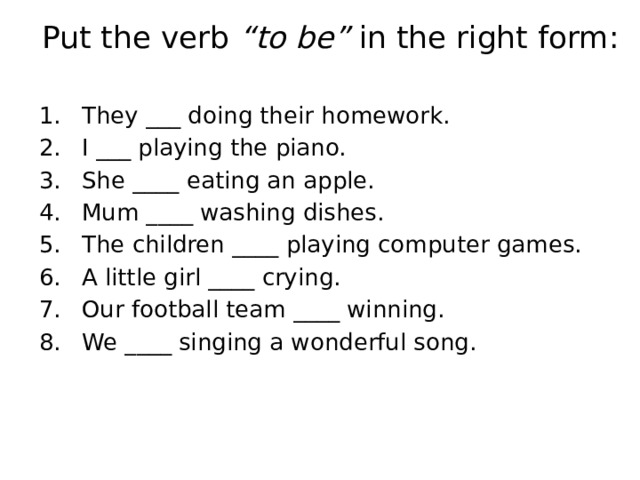
Put the verb “to be” in the right form:
- They ___ doing their homework.
- I ___ playing the piano.
- She ____ eating an apple.
- Mum ____ washing dishes.
- The children ____ playing computer games.
- A little girl ____ crying.
- Our football team ____ winning.
- We ____ singing a wonderful song.
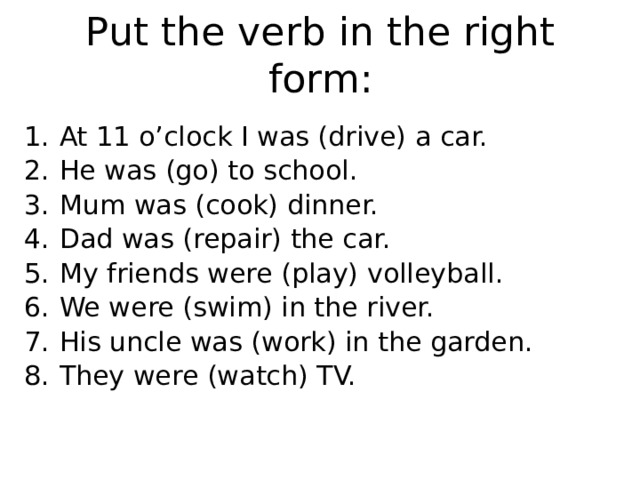
Put the verb in the right form:
- At 11 o’clock I was (drive) a car.
- He was (go) to school.
- Mum was (cook) dinner.
- Dad was (repair) the car.
- My friends were (play) volleyball.
- We were (swim) in the river.
- His uncle was (work) in the garden.
- They were (watch) TV.
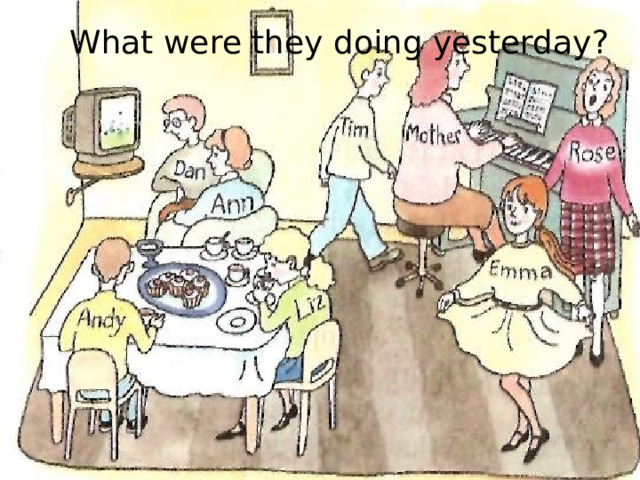
What were they doing yesterday?
Answer the questions:
- What were you doing at 2 o’clock yesterday morning?
- What were you doing at 3 o’clock last Sunday?
- What was your mother doing at 12 o’clock last Monday?
- What were your friends doing at 6 o’clock yesterday evening?
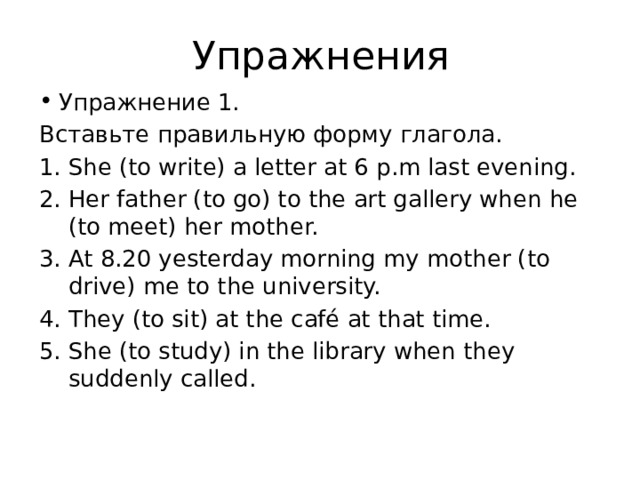
Упражнения
- Упражнение 1.
Вставьте правильную форму глагола.
- She (to write) a letter at 6 p.m last evening.
- Her father (to go) to the art gallery when he (to meet) her mother.
- At 8.20 yesterday morning my mother (to drive) me to the university.
- They (to sit) at the café at that time.
- She (to study) in the library when they suddenly called.
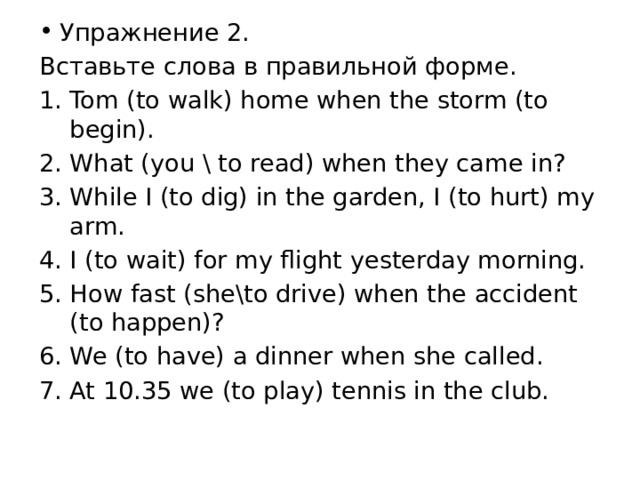
- Упражнение 2.
Вставьте слова в правильной форме.
- Tom (to walk) home when the storm (to begin).
- What (you \ to read) when they came in?
- While I (to dig) in the garden, I (to hurt) my arm.
- I (to wait) for my flight yesterday morning.
- How fast (she\to drive) when the accident (to happen)?
- We (to have) a dinner when she called.
- At 10.35 we (to play) tennis in the club.




Вебинар для учителей

Свидетельство об участии БЕСПЛАТНО!



