Россия, Буйнакск

СДЕЛАЙТЕ СВОИ УРОКИ ЕЩЁ ЭФФЕКТИВНЕЕ, А ЖИЗНЬ СВОБОДНЕЕ
Благодаря готовым учебным материалам для работы в классе и дистанционно
Скидки до 50 % на комплекты
только до
Готовые ключевые этапы урока всегда будут у вас под рукой
Организационный момент
Проверка знаний
Объяснение материала
Закрепление изученного
Итоги урока
Была в сети 03.04.2026 13:34

Атаева Шагризат Мухудиновна
учитель информатики
56 лет
 38 758
 652
652 
Местоположение
Группа 2-7 Английский язык
Категория:
Английский язык
26.03.2020 13:36

Просмотр содержимого документа
«Группа 2-7 Английский язык»
УРОК № 53-54
ПРЕДМЕТ: ИН.ЯЗ
ДАТА ПРОВЕДЕНИЯ : 26.03.2020
ГРУППА 2-7
ТЕМА УРОКА: “АВТОМОБИЛЬ. САЛОН АВТОМОБИЛЯ”.
СПЕЦИАЛЬНОСТЬ: АВТОМЕХАНИК
ФОРМА УРОКА: КОМБИНИРОВАННЫЙ
ПРЕПОДАВАТЕЛЬ: Джалилова Н.М
Цели:
I. Образовательная
1 - расширить словарный запас по теме “Автомобиль. Салон автомобиля”.
2 - совершенствовать:
ранее сформированные знания по теме “Автомобиль” и “Средства передвижения”;
умения и навыки аудирования текста;
умения и навыки говорения при обсуждении вопросов, связанных с темой.
II. развивающая
развивать:
умение извлекать необходимую информацию при прослушивании текста;
мышление: учить опровергать, отвечать на вопросы.
III. воспитательная
развивать коммуникативную культуру, толерантность, интерес к профессии.
Оборудование :компьютер,
Количество часов: 2
Тип занятия: Усвоение знаний на основе имеющихся, совершенствования и закрепления знаний.
Вид занятия: Практическое занятие
Методы обучения: коммуникативный, репродуктивный, частично-поисковый
Форма организации деятельности: дистанционная
Межпредметные связи: Устройство автомобиля, дорожные машины.
План занятия:
I.Организационный момент.
1.1. Проверка посещаемости и готовности к занятию
1.2. Целеполагание и мотивация обучения.
Сообщение плана занятия.
II. Актуализация опорных знаний.
2.1. Проверка домашнего задания
2.2 . Краткие сведения из истории автомобиля
III. Формирование и применение новых знаний.
Задание 1. Посмотрите на автомобили и запомните их составные части.
Задание 2. Прочтите и переведите новые слова по теме
Задание 3. Выпишите из правой колонки русские слова, соответствующие английским из левой колонки.
Задание 4. Выпишите из правой колонки русские словосочетания, соответствующие английским из левой колонки
Task 1.
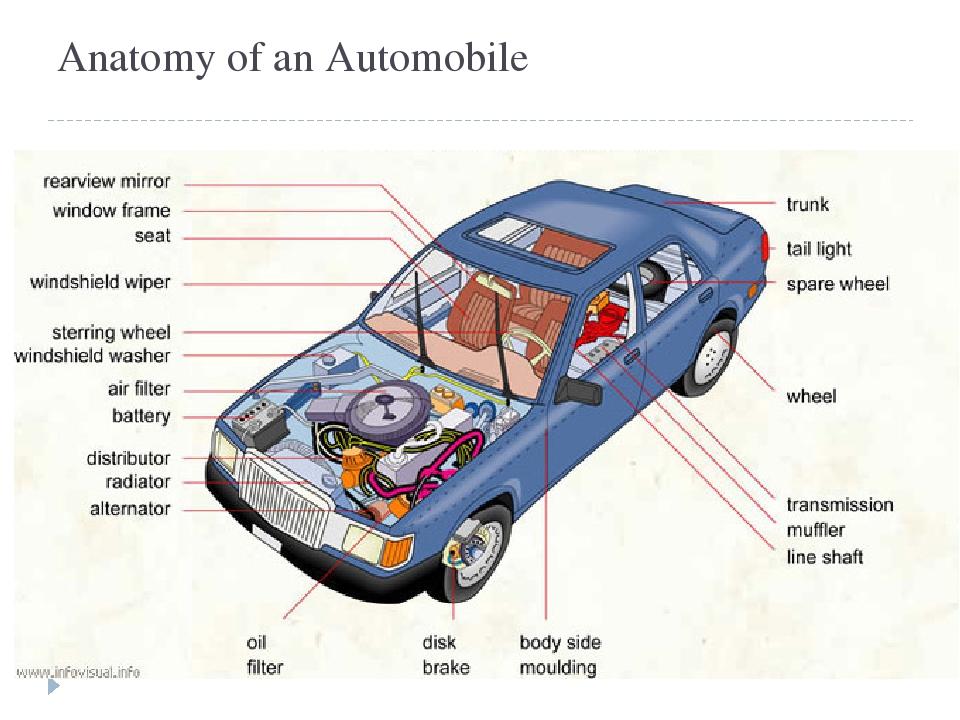
Task 3. Translate the following words from the text. Match a word in A with a word in B.
| A | B |
| 1.car 2.seat 3.windscreen 4 windscreen wipers 5. steering wheel 6. engine 7. brake 8. passengers 9. driver 10. clutch | a.руль b.пассажиры c.тормоз d.мотор e.водитель f.сцепление g.дворники h.лобовое стекло i.сиденье j.автомобиль |
Task 4. Translate the following word combinations from the text. Match a line in A with a line in B.
| A | B |
| 1.to sweep the rain off the windscreen; 2. to steer the car; 3. to brake the car; 4.gear lever; 5.to start the engine; 6. to switch on the ignition; 7. to press the starter, 8. foot-pedal; 9. steering wheel; 10.to change direction | a.сменить направление b.руль c. ножная педаль d. нажать на стартёр e. включить зажигание f.завести мотор g.рычаг переключения передач h.тормозить автомобиль i. управлять автомобилем j.очистить от дождя ветровое стекло |
Task 5. Read the text “INSIDE THE CAR” (2 раза)
Чтение текста: “ В машине”
Задание 5. Прочтите текст (2 раза). Переведите.
The use of motor-cars changes the life. People like to drive by car and cover long distances with comfort. If you are thinking of taking your car to England yon should be familiar with the vocabulary of motoring and you should know about motoring regulations in England.
Let's have a look at the car. We are inside the car. There is a seat for the driver in the front and five seats for passengers in the back. All round the car are windows to see out - except in the front. This is the windscreen and there are also things to sweep rain off it. We call them the windscreen wipers.
When we drive the car we steer with the steering wheel. If there are obstacles in the way, we stop the cars with the brake we brake the car. When the way is clear to go again we accelerate to help us move off. The car has a gear box and five gears. There is also a gear lever. We change gears by pushing the gear lever from one gear to the next. To help us to do this we have a foot-pedal. We call it the clutch.
We put the clutch out to disengage the engine and we put the clutch in to make it drive again. When we want to stop the car we put on the hand-brake. To start the engine we switch on the ignition and press the starter. And lastly to change direction we signal with the indicators. With our hands we steer with the steering wheel, change gear with the gear lever and put on the hand-brake. With our feet we accelerate by using the accelerator, slop by using the foot brake and change gear by using the clutch.
Now let us look round the outside of the car. Front and rear come the bumper to protect the bodywork. In the four corners are the wheels. The bonnet covers the engine. There is also the compartment to contain your luggage, the tools for the car and the spare wheel. We call this compartment the- boot. But why do we need a spare wheel? When a tyre goes flat all the air comes out of it because it has a puncture. So we lift the car on a jack, change the wheel and drive on.
The main part of the engine consists of the cylinders and the valves. Air and petrol go into the engine by means of the carburetor. The petrol reaches the carburetor from the petrol tank through the action of the petrol pump. The mixture is ignited by an electric spark from one of the “plugs”. The electricity is stored in the battery and the battery is charged by the dynamo. The engine is often cooled by water from the radiator and lubricated by oil. The exhaust gases from the engine go away through a pipe. To control the operation of the engine we have a speedometer and an oil pressure gauge, a thermometer and an ammeter to see if the dynamo charges the battery or not. These are the basic instruments.
At last what do we get? We get a lot of things. We have the steering – how to keep the car straight or make it turn. We have the brakes- how to stop the car; and the engine how to make it go.
Выполнение заданий на проверку понимания текста:
Task 6. Are the sentences true or false? Correct the false sentences.
1. We are inside the car.
2. There is a seat for the passenger in the front. (T- There is a seat for the driver in the front).
3. When we drive the car we steer with the steering wheel.
4. The car has a gearbox and two gears. (T- The car has a gearbox and four gears.).
5. To change direction we signal with the indicators.
Task 7. Match a line in A with a line in B. Закончите предложения, выбрав соответствующее по смыслу окончание.
| A | B |
| 1 We are inside... 2.There is a seat for the driver in the front ... 3.This is the windscreen and there are also things... 4.We call them the ... 5.We steer with the ... 6.We stop the car with... 7. The car has a gear-box and... 8.There is also a gear... 9.To start the engine we switch on... 10.To change direction we signal... | a). with the indicators b). and four seats for passengers in the back c). to sweep rain off it d). steering wheel e). windscreen wipers f). the brake g). four gears h). lever i). the ignition and press the starter j). the car |
V. Hometask .
Task 8. Do the test.
1.The pedal which is used to stop the car.
a). clutch; b). brake; c). gearbox.
2.The top part of a car seat that you lean on.
a). headrest; b). armrest c). dashboard
3.The pedal which is used to change the speed of the car.
a). clutch; b). brakes; c). accelerator.
4.Mechanism which is used to guide the car in one or the other directions.
a). clutch; b). brakes; c). steering system.
5.Device which is designed to measure the speed of the car.
a). heater; b). windscreen; c). speedometer.
6).The small cupboard in front of the passenger seat of a car.
a). glove compartment; b). dashboard; c). horn.
7.The part of a door or a window that you use for opening it.
a). armrest; b). handle; c). safety belt.
IV. Подведение итогов занятия.
Вебинар для учителей

Свидетельство об участии БЕСПЛАТНО!