
Россия, Саранск

СДЕЛАЙТЕ СВОИ УРОКИ ЕЩЁ ЭФФЕКТИВНЕЕ, А ЖИЗНЬ СВОБОДНЕЕ
Благодаря готовым учебным материалам для работы в классе и дистанционно
Скидки до 50 % на комплекты
только до
Готовые ключевые этапы урока всегда будут у вас под рукой
Организационный момент
Проверка знаний
Объяснение материала
Закрепление изученного
Итоги урока
Была в сети 16.03.2026 11:02

Проказова Светлана Петровна
Учитель немецкого и английского языков
30 лет
 1 861
1 861
 37 740
Местоположение
Специализация
Present Perfect and Past Simple
Категория:
Английский язык
04.08.2019 18:37

Просмотр содержимого документа
«Present Perfect and Past Simple»
Present Perfect and Past Simple
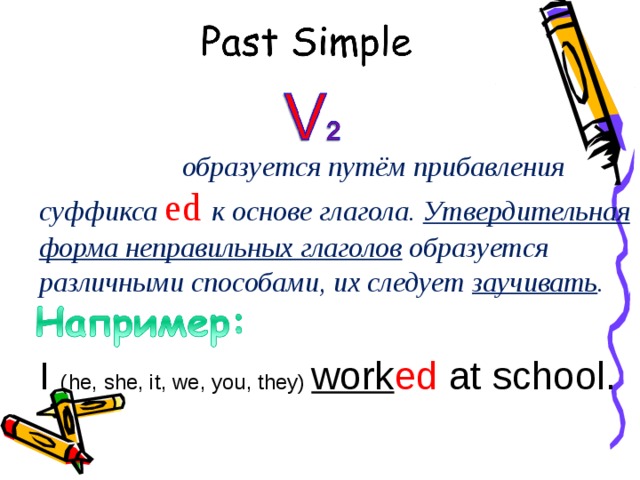
P as t Simple образуется путём прибавления суффикса ed к основе глагола. Утвердительная форма неправильных глаголов образуется различными способами, их следует заучивать .
I ( he, she, it, we, you, they) work ed at school .
at school . (last year)
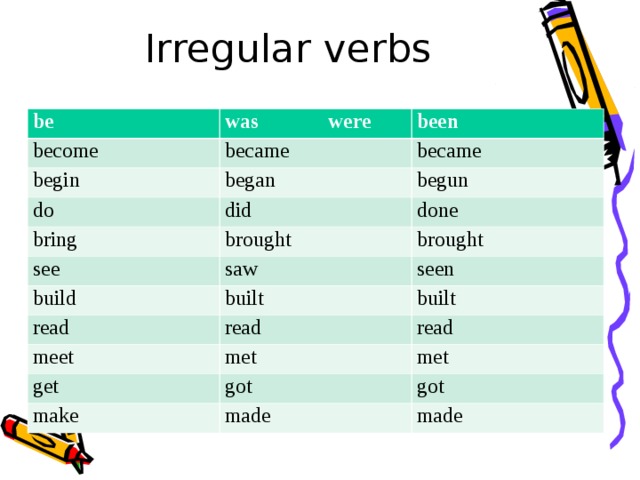
Irregular verbs
be
was were
become
begin
been
became
began
became
do
begun
did
bring
brought
done
see
build
saw
brought
built
seen
read
built
read
meet
met
read
get
met
got
make
made
got
made
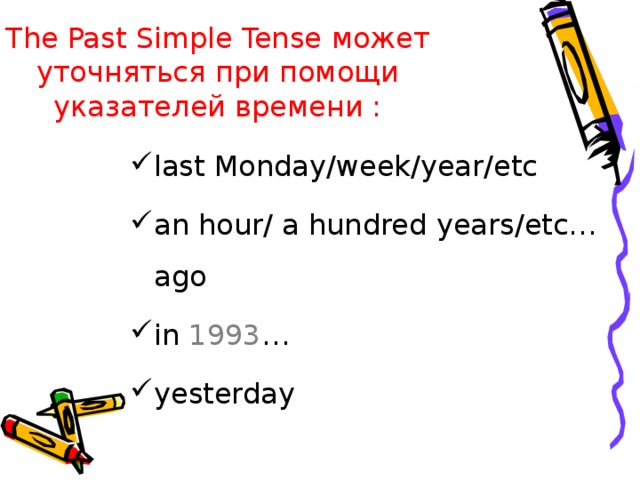
The Past Simple Tense может уточняться при помощи указателей времени :
- last Monday/week/year/etc
- an hour/ a hundred years/etc… ago
- in 1993 …
- yesterday
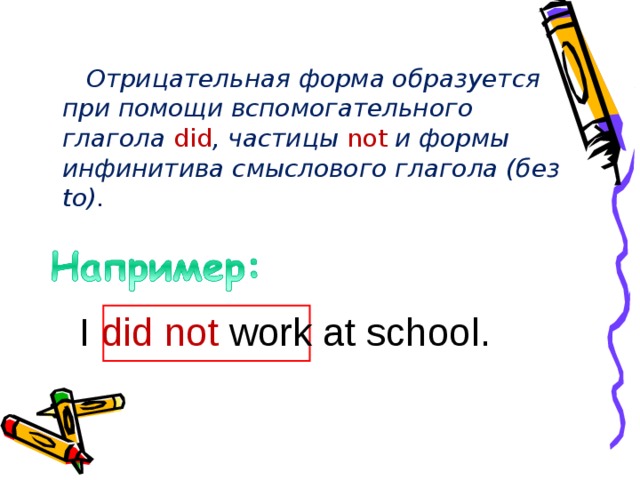
Отрицательная форма образуется при помощи вспомогательного глагола did , частицы not и формы инфинитива смыслового глагола (без to) .
I d id not work at school.
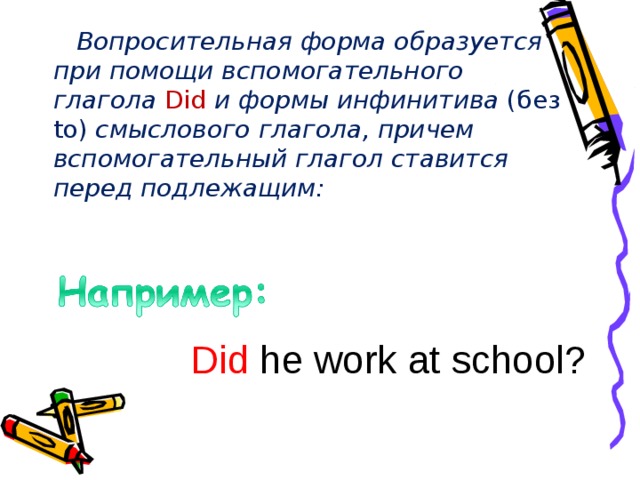
Вопросительная форма образуется при помощи вспомогательного глагола Did и формы инфинитива (без to) смыслового глагола, причем вспомогательный глагол ставится перед подлежащим:
D id he work at school ?
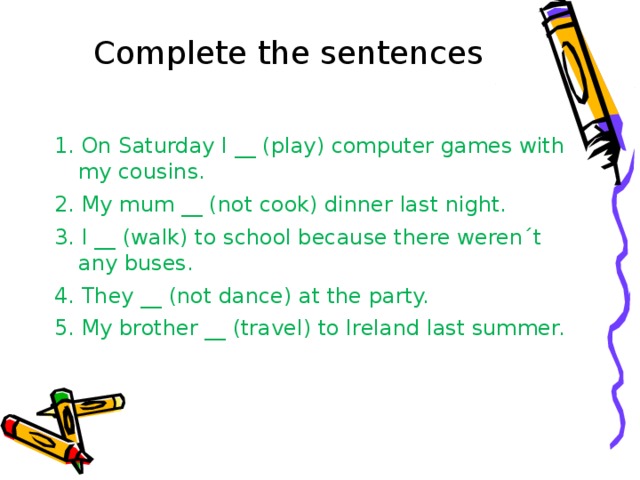
Complete the sentences
1. On Saturday I __ (play) computer games with my cousins.
2. My mum __ (not cook) dinner last night.
3. I __ (walk) to school because there weren´t any buses.
4. They __ (not dance) at the party.
5. My brother __ (travel) to Ireland last summer.
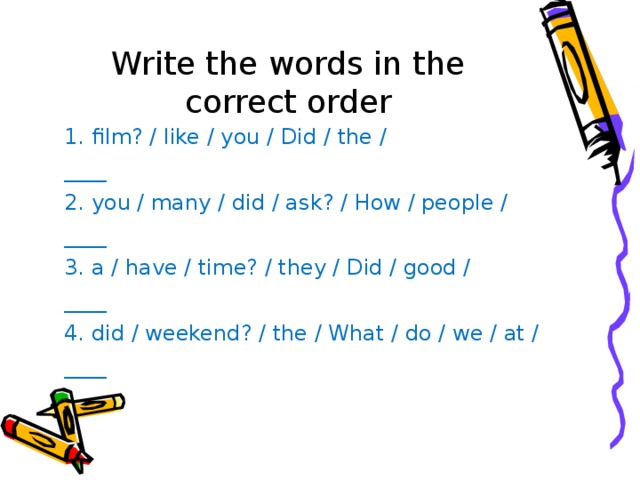
Write the words in the correct order
1. film? / like / you / Did / the /
____
2. you / many / did / ask? / How / people /
____
3. a / have / time? / they / Did / good /
____
4. did / weekend? / the / What / do / we / at /
____
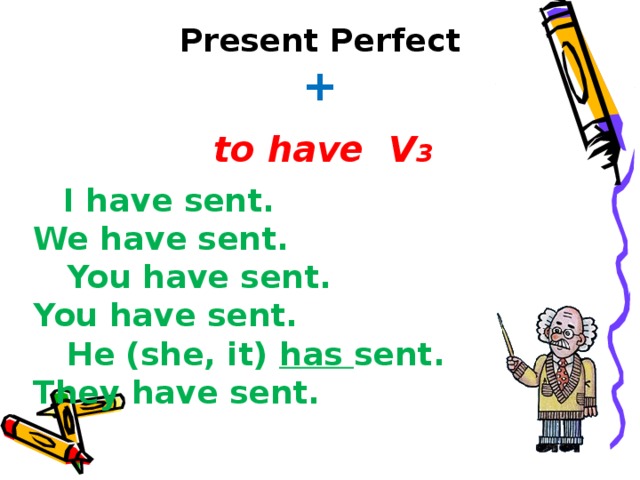
Present Perfect
+
to have V 3
I have sent. We have sent.
You have sent. You have sent.
He (she, it) has sent. They have sent.
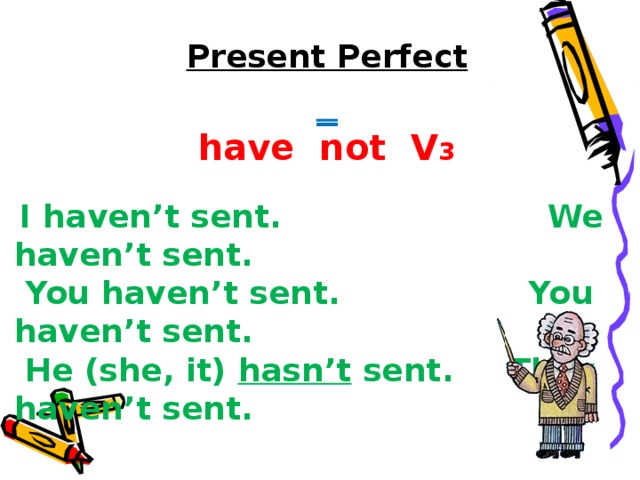
Present Perfect
_
have not V 3
I haven’t sent. We haven’t sent.
You haven’t sent. You haven’t sent.
He (she, it) hasn’t sent. They haven’t sent.
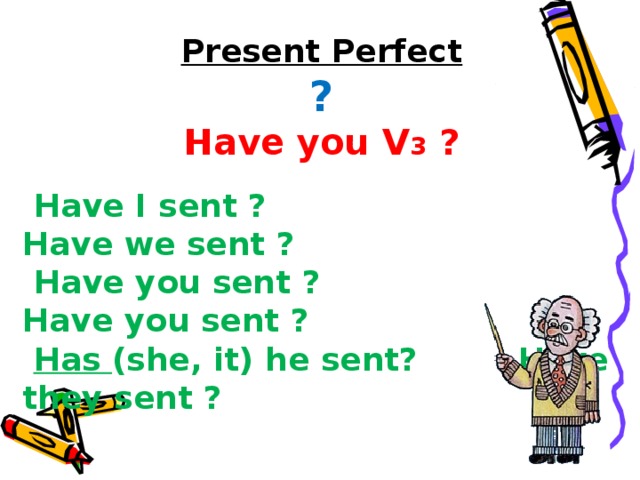
Present Perfect
?
Have you V 3 ?
Have I sent ? Have we sent ?
Have you sent ? Have you sent ?
Has (she, it) he sent? Have they sent ?
![Основной глагол бери , в третью форму возводи. Если правильный глагол окончание ED , а неправильный глагол- ты в таблицу посмотри. [ t ] [ d ] [ id ] work ed play ed skat ed stopp ed smil ed want ed walk ed liv ed paint ed look ed studi ed collect ed talk ed tri ed need ed](https://static.multiurok.ru/multiurok/html/2019/08/04/s_5d46fb9a1cd0a/img11.jpg)
Основной глагол бери ,
в третью форму возводи. Если правильный глагол окончание ED , а неправильный глагол- ты в таблицу посмотри.
[ t ] [ d ] [ id ]
work ed play ed skat ed
stopp ed smil ed want ed
walk ed liv ed paint ed
look ed studi ed collect ed
talk ed tri ed need ed
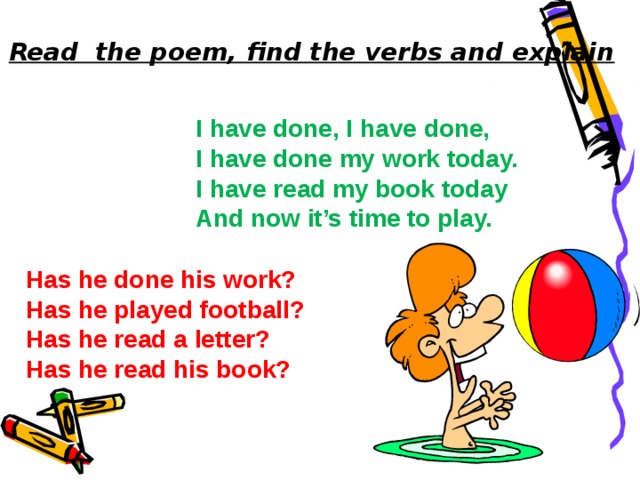
Read the poem, find the verbs and explain
Translate.
I have done, I have done,
I have done my work today.
I have read my book today
And now it’s time to play.
Answer the questions:
Has he done his work?
Has he played football?
Has he read a letter?
Has he read his book?
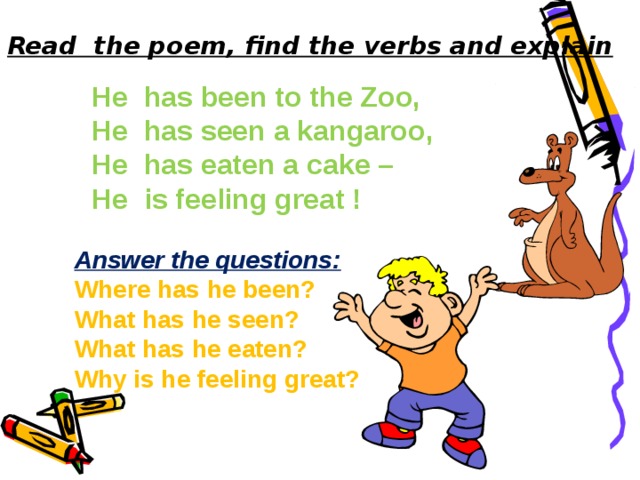
Read the poem, find the verbs and explain
He has been to the Zoo,
He has seen a kangaroo,
He has eaten a cake –
He is feeling great !
Answer the questions:
Where has he been?
What has he seen?
What has he eaten?
Why is he feeling great?
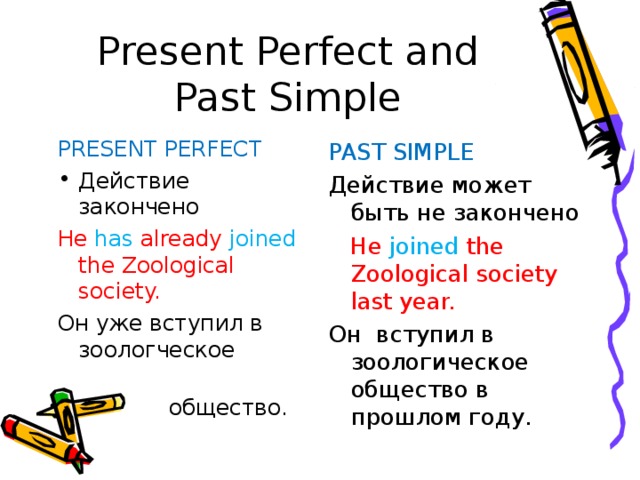
Present Perfect and Past Simple
PRESENT PERFECT
- Действие закончено
He has already joined the Zoological society.
Он уже вступил в зоологческое
общество.
PAST SIMPLE
Действие может быть не закончено
He joined the Zoological society last year.
Он вступил в зоологическое общество в прошлом году.
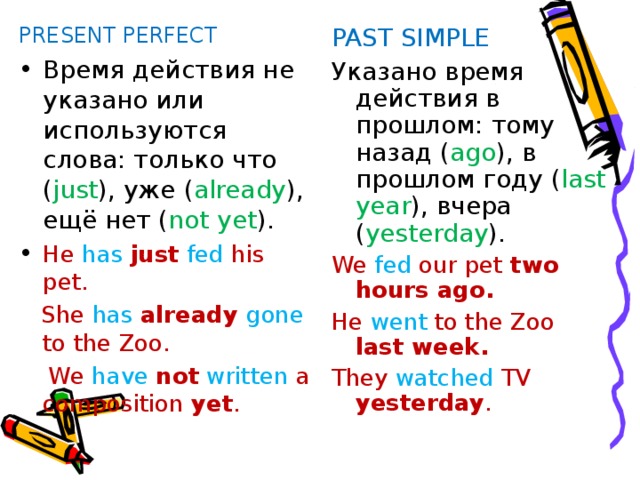
PRESENT PERFECT
PAST SIMPLE
- Время действия не указано или используются слова: только что ( just ) , уже ( already ) , ещё нет ( not yet ).
- He has just fed his pet.
Указано время действия в прошлом: тому назад ( ago ) , в прошлом году ( last year ) , вчера ( yesterday ).
She has already gone to the Zoo.
We have not written a composition yet .
We fed our pet two hours ago.
He went to the Zoo last week.
They watched TV yesterday .
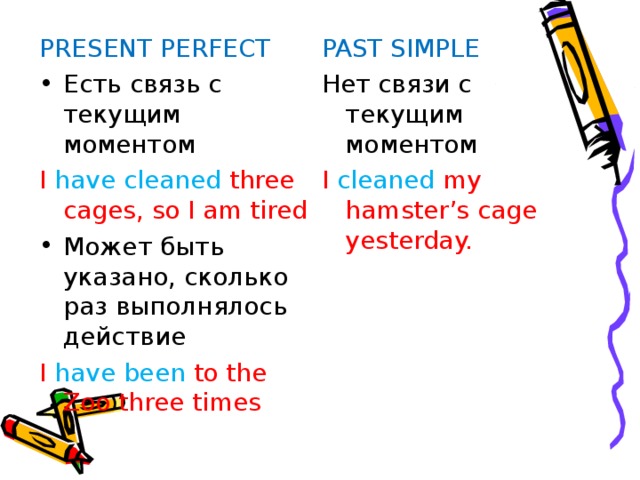
PAST SIMPLE
PRESENT PERFECT
- Есть связь с текущим моментом
Нет связи с текущим моментом
I have cleaned three cages, so I am tired
I cleaned my hamster’s cage yesterday.
- Может быть указано, сколько раз выполнялось действие
I have been to the Zoo three times
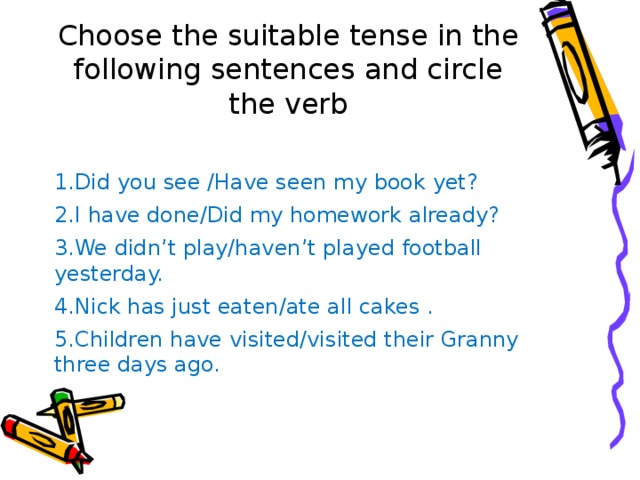
Choose the suitable tense in the following sentences and circle the verb
1.Did you see /Have seen my book yet?
2.I have done/Did my homework already?
3.We didn’t play/haven’t played football yesterday.
4.Nick has just eaten/ate all cakes .
5.Children have visited/visited their Granny three days ago.
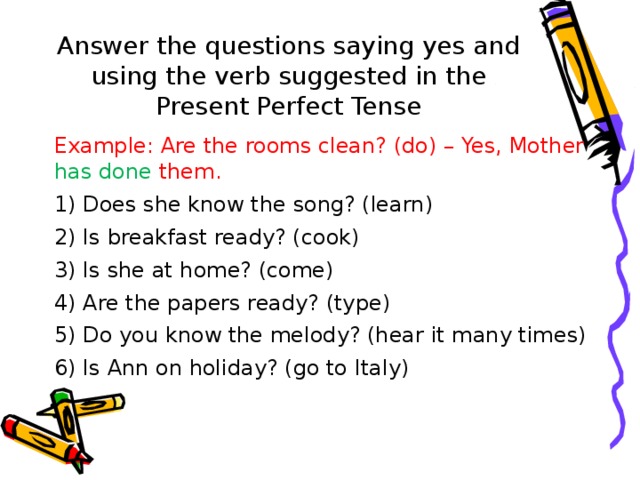
Answer the questions saying yes and using the verb suggested in the Present Perfect Tense
Example: Are the rooms clean? (do) – Yes, Mother has done them.
1) Does she know the song? (learn)
2) Is breakfast ready? (cook)
3) Is she at home? (come)
4) Are the papers ready? (type)
5) Do you know the melody? (hear it many times)
6) Is Ann on holiday? (go to Italy)
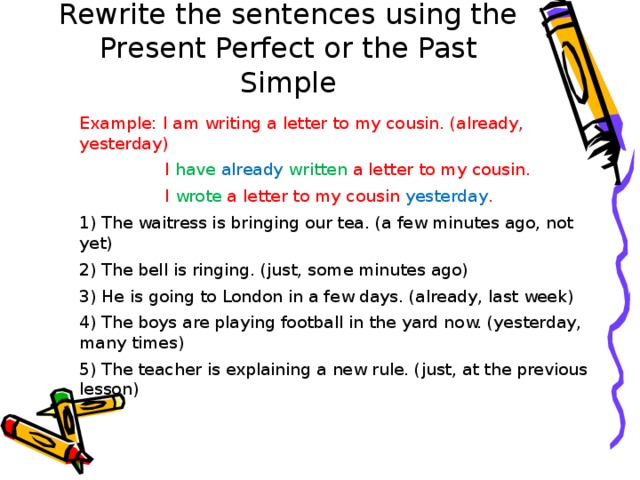
Rewrite the sentences using the Present Perfect or the Past Simple
Example: I am writing a letter to my cousin. (already, yesterday)
I have already written a letter to my cousin.
I wrote a letter to my cousin yesterday .
1) The waitress is bringing our tea. (a few minutes ago, not yet)
2) The bell is ringing. (just, some minutes ago)
3) He is going to London in a few days. (already, last week)
4) The boys are playing football in the yard now. (yesterday, many times)
5) The teacher is explaining a new rule. (just, at the previous lesson)

Вебинар для учителей

Свидетельство об участии БЕСПЛАТНО!