Россия, Воронеж

СДЕЛАЙТЕ СВОИ УРОКИ ЕЩЁ ЭФФЕКТИВНЕЕ, А ЖИЗНЬ СВОБОДНЕЕ
Благодаря готовым учебным материалам для работы в классе и дистанционно
Скидки до 50 % на комплекты
только до
Готовые ключевые этапы урока всегда будут у вас под рукой
Организационный момент
Проверка знаний
Объяснение материала
Закрепление изученного
Итоги урока
Была в сети 25.03.2020 13:28

Кабанцова Наталия Васильевна
Учитель английского языка
67 лет
 2 004
2 004
 35 112
Местоположение
Специализация
Презентация к урокам 10 класс
Категория:
Английский язык
21.06.2019 11:41

Просмотр содержимого документа
«Презентация к урокам 10 класс»
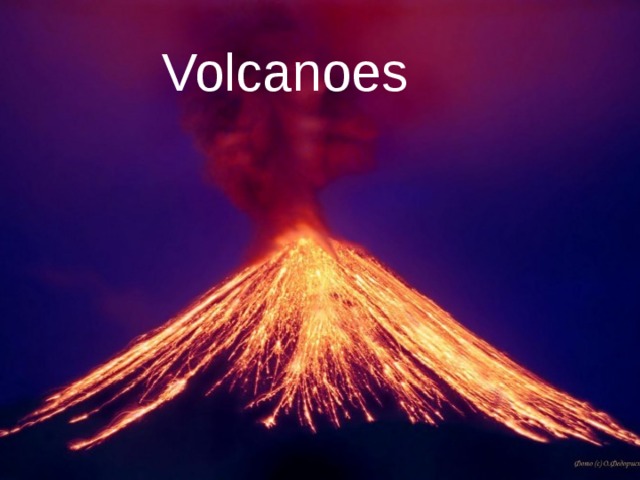
Volcanoes
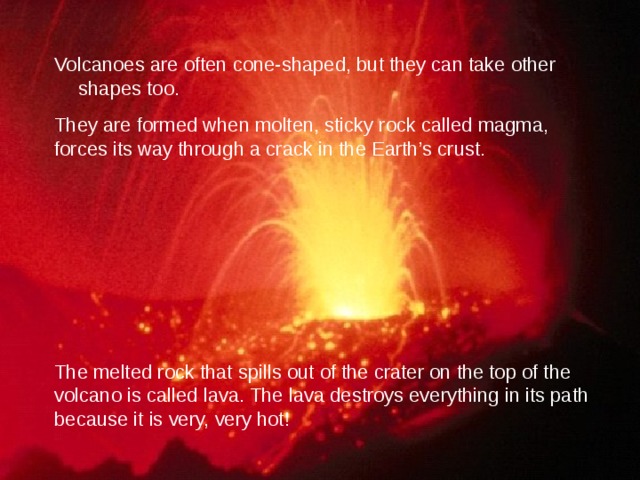
Volcanoes are often cone-shaped, but they can take other shapes too.
They are formed when molten, sticky rock called magma, forces its way through a crack in the Earth’s crust.
The melted rock that spills out of the crater on the top of the volcano is called lava. The lava destroys everything in its path because it is very, very hot!
Where do volcanoes happen?
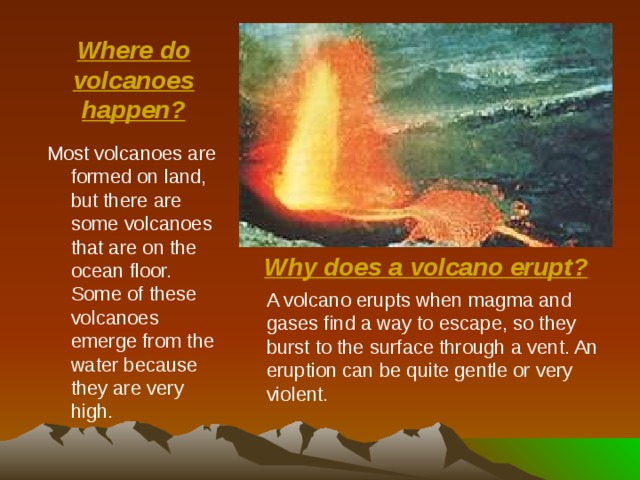
Most volcanoes are formed on land, but there are some volcanoes that are on the ocean floor. Some of these volcanoes emerge from the water because they are very high.
Why does a volcano erupt?
A volcano erupts when magma and gases find a way to escape, so they burst to the surface through a vent. An eruption can be quite gentle or very violent.
Types of volcano
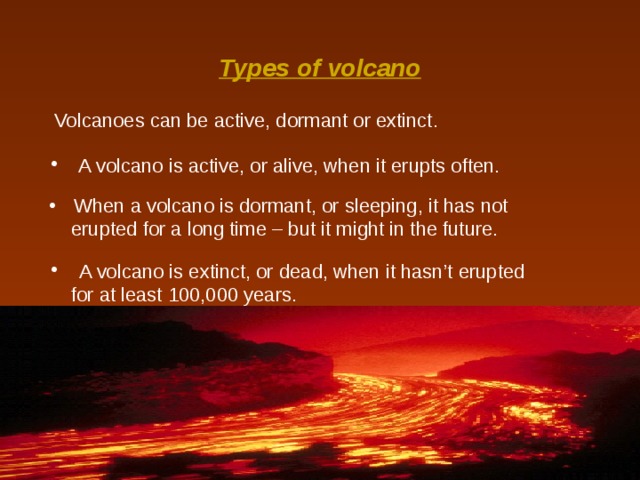
Volcanoes can be active, dormant or extinct.
- A volcano is active, or alive, when it erupts often.
- When a volcano is dormant, or sleeping, it has not
erupted for a long time – but it might in the future.
- A volcano is extinct, or dead, when it hasn’t erupted
for at least 100,000 years.
Eruption patterns
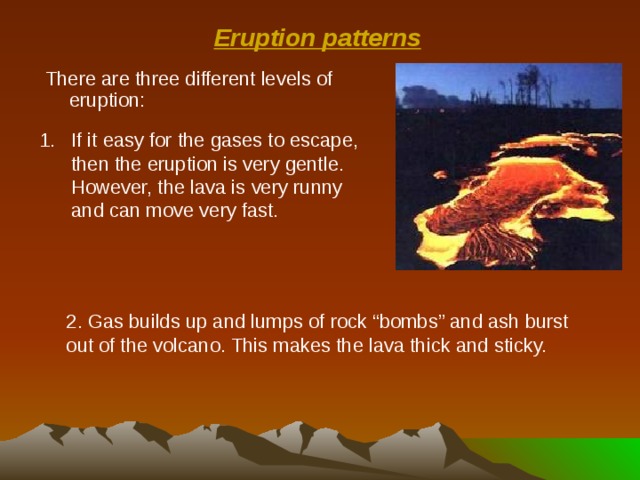
There are three different levels of eruption:
- If it easy for the gases to escape, then the eruption is very gentle. However, the lava is very runny and can move very fast.
2. Gas builds up and lumps of rock “bombs” and ash burst out of the volcano. This makes the lava thick and sticky.
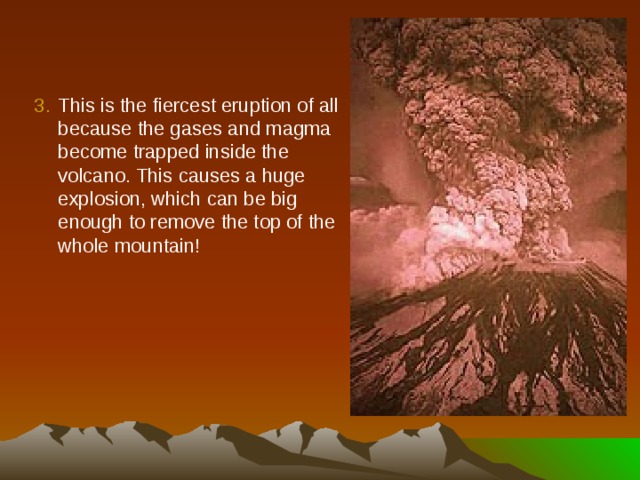
- This is the fiercest eruption of all because the gases and magma become trapped inside the volcano. This causes a huge explosion, which can be big enough to remove the top of the whole mountain!
Did you know?
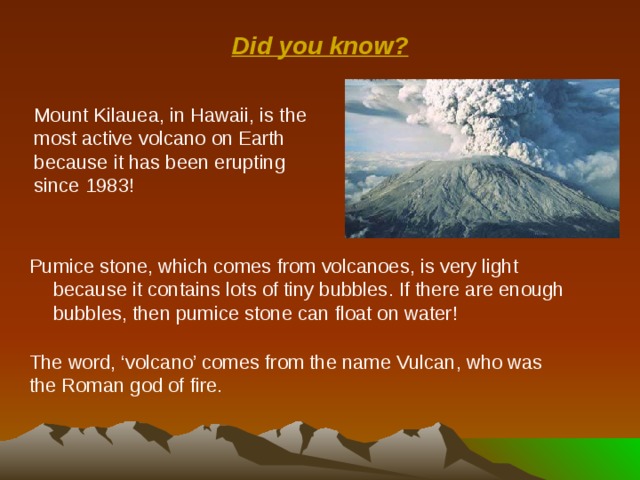
Mount Kilauea, in Hawaii, is the most active volcano on Earth because it has been erupting since 1983!
Pumice stone, which comes from volcanoes, is very light because it contains lots of tiny bubbles. If there are enough bubbles, then pumice stone can float on water!
The word, ‘volcano’ comes from the name Vulcan, who was the Roman god of fire.

Вебинар для учителей
Свидетельство об участии БЕСПЛАТНО!