Россия, Воронеж


СДЕЛАЙТЕ СВОИ УРОКИ ЕЩЁ ЭФФЕКТИВНЕЕ, А ЖИЗНЬ СВОБОДНЕЕ
Благодаря готовым учебным материалам для работы в классе и дистанционно
Скидки до 50 % на комплекты
только до
Готовые ключевые этапы урока всегда будут у вас под рукой
Организационный момент
Проверка знаний
Объяснение материала
Закрепление изученного
Итоги урока
Была в сети 30.06.2022 08:18

Сухомлинова Татьяна Владимировна
Учитель английского языка
 1 404
1 404
 49 245
Местоположение
Специализация
Природные катаклизмы.
Категория:
Английский язык
18.05.2022 00:23

Просмотр содержимого документа
«Природные катаклизмы.»

Climate
Natural Disasters

drought
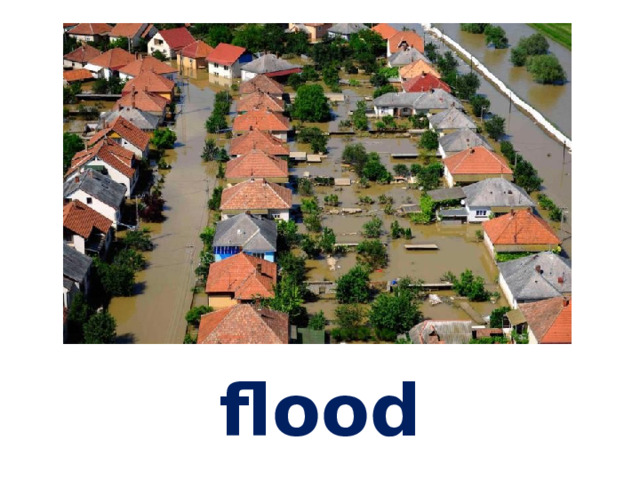
flood
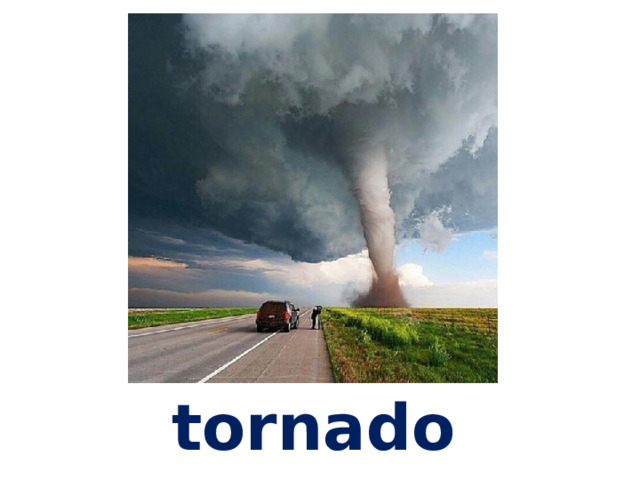
tornado

tsunami
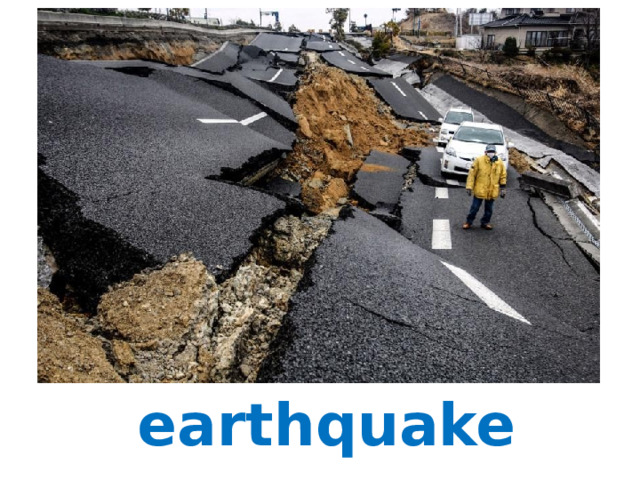
earthquake

cyclone

avalanche
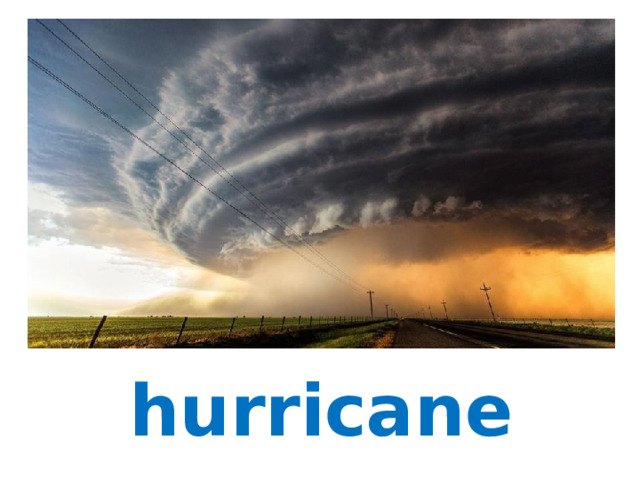
hurricane
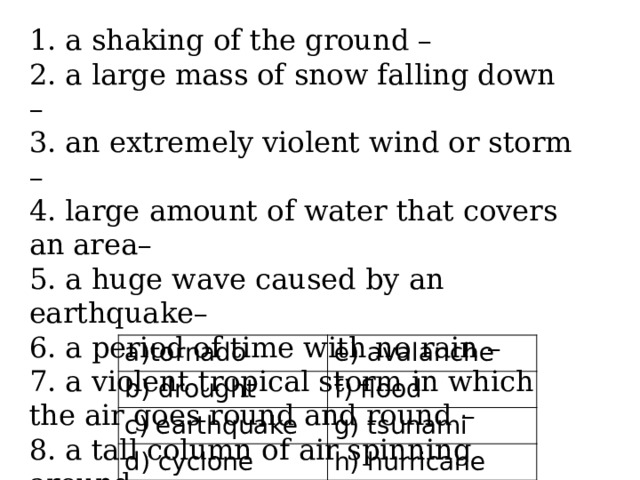
1. a shaking of the ground –
2. a large mass of snow falling down –
3. an extremely violent wind or storm –
4. large amount of water that covers an area–
5. a huge wave caused by an earthquake–
6. a period of time with no rain –
7. a violent tropical storm in which the air goes round and round –
8. a tall column of air spinning around
- tornado
b) drought
e) avalanche
c) earthquake
f) flood
g) tsunami
d) cyclone
h) hurricane
Tsunami disaster
o ccur - случаться
generated – образовывать
rescue - спасать
horrific – ужасающий
bury - хоронить
tinned fish - консервы
supplies - припасы
сrack - трескаться
collapsed - рухнувший
survivors - пережившие
pull out - вытаскивать

The Gerund
Герундий - это неличная форма глагола, выражающая название действия и обладающая как свойствами глагола так и существительного .
Формальным признаком герундия
является окончание -ing , которое
прибавляется к первой форме глагола.
read ing – чтение
swimm ing - плавание
Infinitive
Инфинитив – это неопределенная
форма глагола, которая отвечает
(Что делать? Что сделать?)
Инфинитив бывает с частицей to
(to-infinitive) и без частицы to (bare infinitive),
его еще называют «голый инфинитив».
to read
to swim
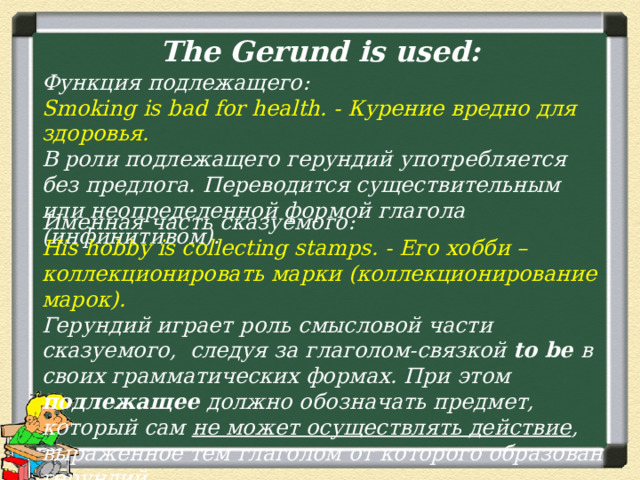
The Gerund is used:
Функция подлежащего:
Smoking is bad for health. - Курение вредно для здоровья.
В роли подлежащего герундий употребляется без предлога. Переводится существительным или неопределенной формой глагола (инфинитивом).
Именная часть сказуемого:
His hobby is collecting stamps. - Его хобби – коллекционировать марки (коллекционирование марок).
Герундий играет роль смысловой части сказуемого, следуя за глаголом-связкой to be в своих грамматических формах. При этом подлежащее должно обозначать предмет, который сам не может осуществлять действие , выраженное тем глаголом от которого образован герундий.
![Глаголы, после которых в качестве прямого дополнения употребляется только герундий to admit – допускать, признавать to avoid – избегать to anticipate – ожидать, to appreciate [ əˈpriːʃɪeɪt] – оценивать to consider – рассматривать to continue – продолжать to delay – откладывать to deny – отрицать, отвергать to discuss – обсуждать to enjoy – наслаждаться, нравиться to escape – убегать to excuse – извинять(ся) to fancy - нравиться to finish – закончить to forgive – прощать, извинять to imagine – воображать to involve – предполагать, вовлекать to mention – упоминать to mind – возражать (в вопросах и отрицаниях) to miss – упустить to postpone – откладывать to prevent – предотвращать, предупреждать to quit – бросать, покидать to recall – вспоминать to resist - противодействовать to risk – рисковать to stop - прекращать to suggest – предлагать to understand – понимать](https://static.multiurok.ru/multiurok/html/2022/05/18/s_628411e6f12a8/img14.jpg)
Глаголы, после которых в качестве прямого дополнения употребляется только герундий
to admit – допускать, признавать
to avoid – избегать
to anticipate – ожидать,
to appreciate [ əˈpriːʃɪeɪt] – оценивать
to consider – рассматривать
to continue – продолжать
to delay – откладывать
to deny – отрицать, отвергать
to discuss – обсуждать
to enjoy – наслаждаться, нравиться
to escape – убегать
to excuse – извинять(ся)
to fancy - нравиться
to finish – закончить
to forgive – прощать, извинять
to imagine – воображать
to involve – предполагать, вовлекать
to mention – упоминать
to mind – возражать (в вопросах и отрицаниях)
to miss – упустить
to postpone – откладывать
to prevent – предотвращать, предупреждать
to quit – бросать, покидать
to recall – вспоминать
to resist - противодействовать
to risk – рисковать
to stop - прекращать
to suggest – предлагать
to understand – понимать

После следующих составных глаголов употребляется только герундий
to burst out - разразиться
to give up – прекращать
to go on – продолжать
to keep (on) – продолжать
to put off – отложить
can’t help – не могу не, нельзя не…
can’t stand – не могу терпеть …
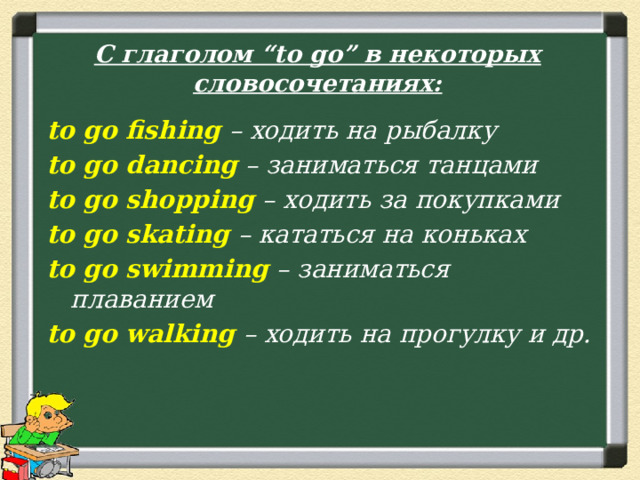
С глаголом “to go” в некоторых словосочетаниях:
to go fishing – ходить на рыбалку
to go dancing – заниматься танцами
to go shopping – ходить за покупками
to go skating – кататься на коньках
to go swimming – заниматься плаванием
to go walking – ходить на прогулку и др.
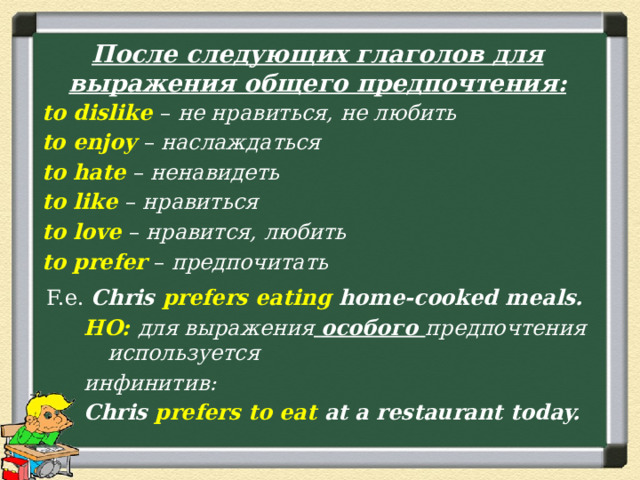
После следующих глаголов для выражения общего предпочтения:
to dislike – не нравиться, не любить
to enjoy – наслаждаться
to hate – ненавидеть
to like – нравиться
to love – нравится, любить
to prefer – предпочитать
F.e. Chris prefers eating home-cooked meals.
НО: для выражения особого предпочтения используется
инфинитив:
Chris prefers to eat at a restaurant today.
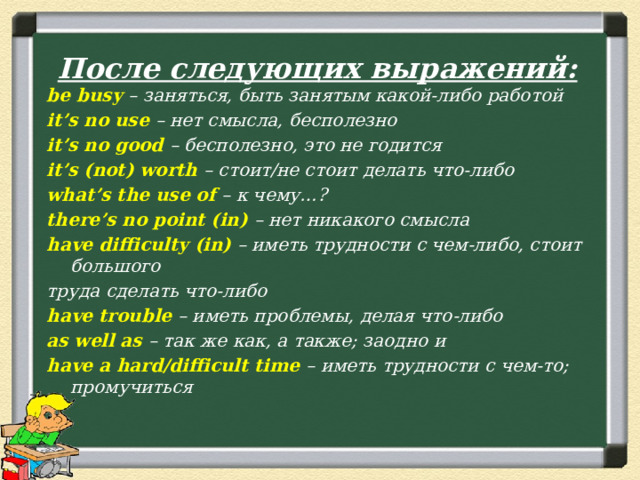
После следующих выражений:
be busy – заняться, быть занятым какой-либо работой
it’s no use – нет смысла, бесполезно
it’s no good – бесполезно, это не годится
it’s (not) worth – стоит/не стоит делать что-либо
what’s the use of – к чему…?
there’s no point (in) – нет никакого смысла
have difficulty (in) – иметь трудности с чем-либо, стоит большого
труда сделать что-либо
have trouble – иметь проблемы, делая что-либо
as well as – так же как, а также; заодно и
have a hard/difficult time – иметь трудности с чем-то; промучиться

После словосочетаний с глаголами:
spend – проводить, тратить
waste – тратить
lose – терять
F.e. He spends an hour playing the guitar every day.
После предлога to с такими глаголами и выражениями:
look forward to – с нетерпением ждать чего-либо
be get/used to
in addition to – в дополнение к, кроме того, к тому же
object to - испытывать неприязнь; не переносить; протестовать
F.e. I’m looking forward to hearing from you soon.
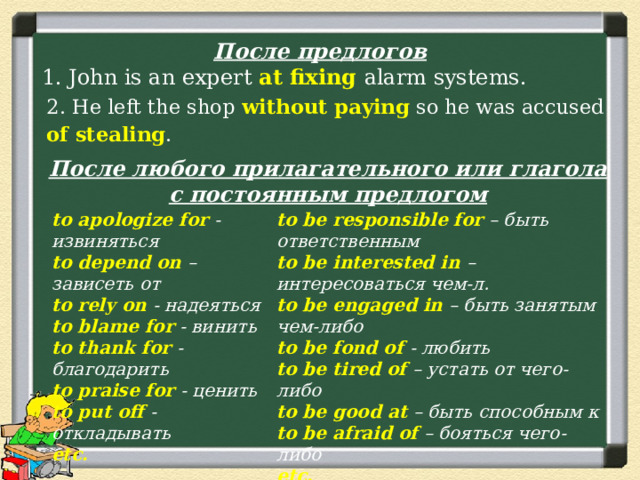
После предлогов
1. John is an expert at fixing alarm systems.
2. He left the shop without paying so he was accused
of stealing .
После любого прилагательного или глагола с постоянным предлогом
to apologize for - извиняться
to be responsible for – быть ответственным
to be interested in – интересоваться чем-л.
to depend on – зависеть от
to rely on - надеяться
to be engaged in – быть занятым чем-либо
to blame for - винить
to be fond of - любить
to be tired of – устать от чего-либо
to thank for - благодарить
to praise for - ценить
to be good at – быть способным к
to put off - откладывать
to be afraid of – бояться чего-либо
etc.
etc.
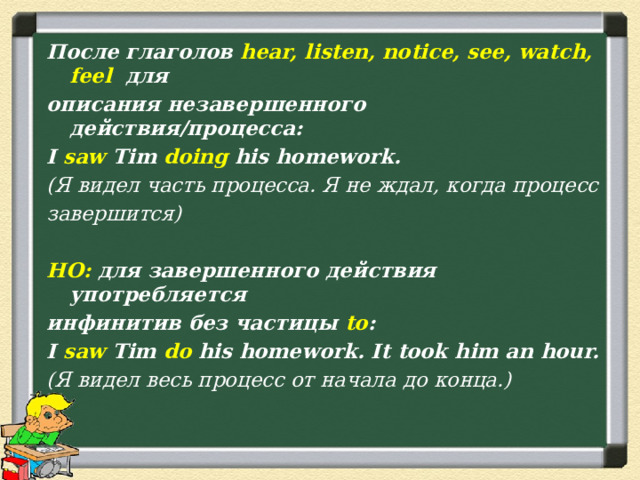
После глаголов hear, listen, notice, see, watch, feel для
описания незавершенного действия/процесса:
I saw Tim doing his homework.
(Я видел часть процесса. Я не ждал, когда процесс
завершится)
НО: для завершенного действия употребляется
инфинитив без частицы to :
I saw Tim do his homework. It took him an hour.
(Я видел весь процесс от начала до конца.)
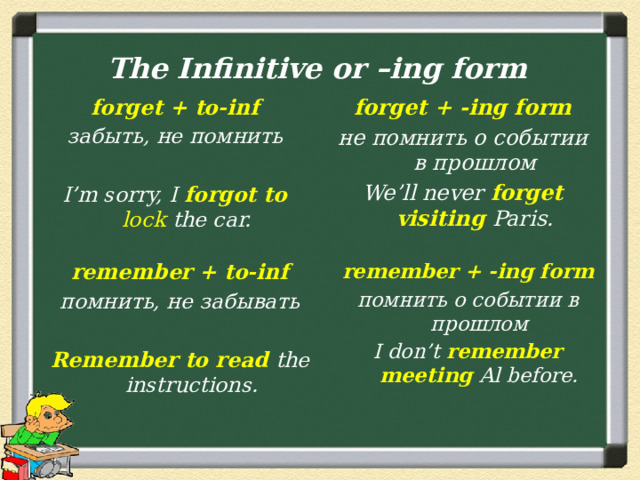
The Infinitive or –ing form
forget + -ing form
forget + to-inf
забыть, не помнить
не помнить о событии в прошлом
We’ll never forget visiting Paris.
I’m sorry, I forgot to lock the car.
remember + -ing form
remember + to-inf
помнить, не забывать
помнить о событии в прошлом
I don’t remember meeting Al before.
Remember to read the instructions.
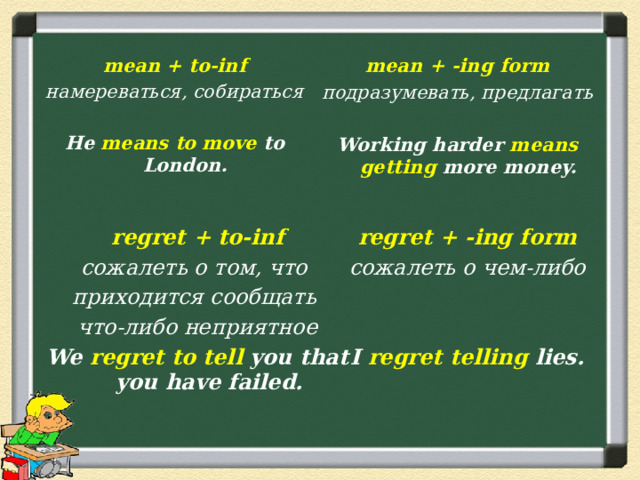
mean + to-inf
mean + -ing form
подразумевать, предлагать
намереваться, собираться
He means to move to London.
Working harder means getting more money.
regret + -ing form
regret + to-inf
cожалеть о чем-либо
сожалеть о том, что
приходится сообщать
что-либо неприятное
We regret to tell you that you have failed.
I regret telling lies.

go on + to-inf
закончить действие и приступить к новому действию
After he finished his speech he went on to answer the reporters’ questions.
go on + -ing form
продолжать делать что-либо
She went on watching TV.
try + -ing form
try + to-inf
делать что-то в качестве эксперимента
стараться, делать все возможное
She tried hard to cope with her new job.
Try adding some more sauce to your pasta.
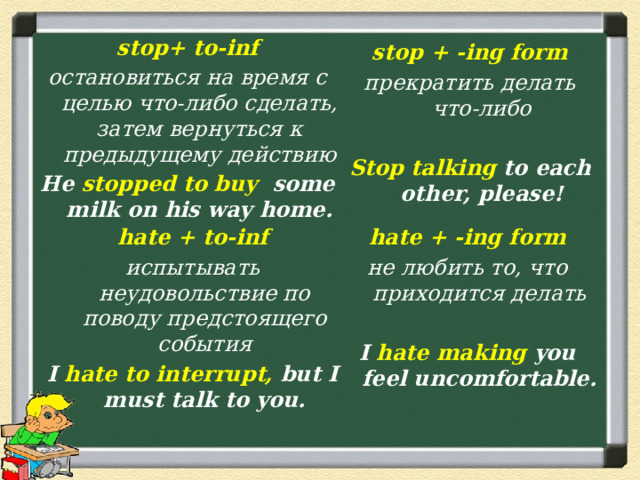
stop+ to-inf
остановиться на время с целью что-либо сделать, затем вернуться к предыдущему действию
He stopped to buy some milk on his way home.
stop + -ing form
прекратить делать что-либо
Stop talking to each other, please!
hate + -ing form
hate + to-inf
не любить то, что приходится делать
испытывать неудовольствие по поводу предстоящего события
I hate to interrupt, but I must talk to you.
I hate making you feel uncomfortable.
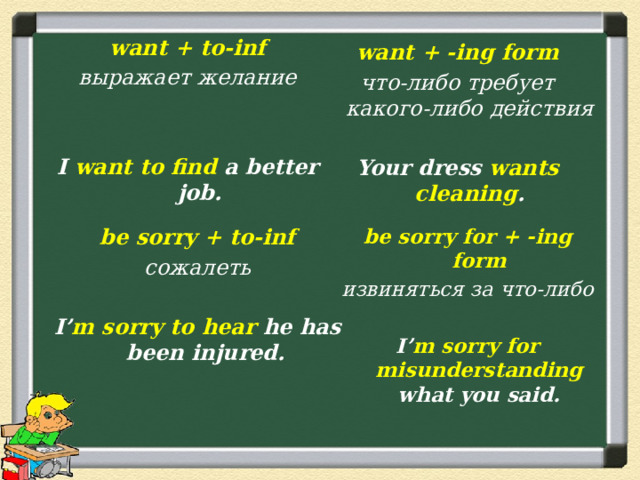
want + to-inf
выражает желание
I want to find a better job.
want + -ing form
что-либо требует какого-либо действия
Your dress wants cleaning .
be sorry for + -ing form
be sorry + to-inf
сожалеть
извиняться за что-либо
I’ m sorry to hear he has been injured.
I’ m sorry for misunderstanding what you said.
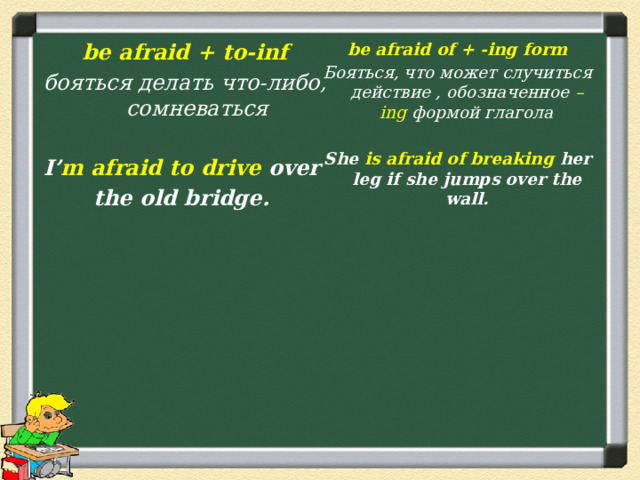
be afraid of + -ing form
Бояться, что может случиться действие , обозначенное –ing формой глагола
She is afraid of breaking her leg if she jumps over the wall.
be afraid + to-inf
бояться делать что-либо, сомневаться
I’ m afraid to drive over
the old bridge.
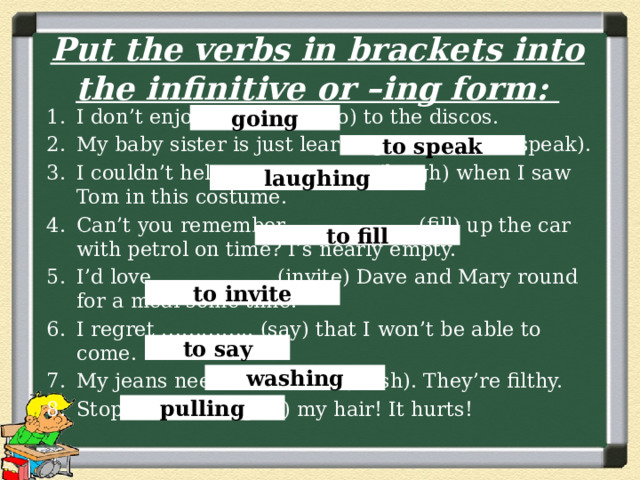
Put the verbs in brackets into the infinitive or –ing form:
- I don’t enjoy……………. (go) to the discos.
- My baby sister is just learning …………….. (speak).
- I couldn’t help ………………… (laugh) when I saw Tom in this costume.
- Can’t you remember ……………… (fill) up the car with petrol on time? I’s nearly empty.
- I’d love …………….. (invite) Dave and Mary round for a meal some time.
- I regret ………….. (say) that I won’t be able to come.
- My jeans need ……………. (wash). They’re filthy.
- Stop …………… (pull) my hair! It hurts!
going
to speak
laughing
to fill
to invite
to say
washing
pulling
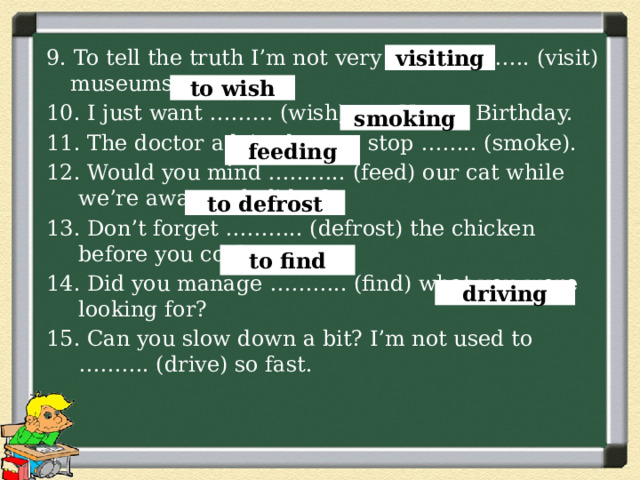
9. To tell the truth I’m not very keen on ……. (visit) museums.
10. I just want ……… (wish) you Happy Birthday.
11. The doctor advised me to stop …….. (smoke).
12. Would you mind ……….. (feed) our cat while we’re away on holiday?
13. Don’t forget ……….. (defrost) the chicken before you cook it.
14. Did you manage ……….. (find) what you were looking for?
15. Can you slow down a bit? I’m not used to ………. (drive) so fast.
visiting
to wish
smoking
feeding
to defrost
to find
driving
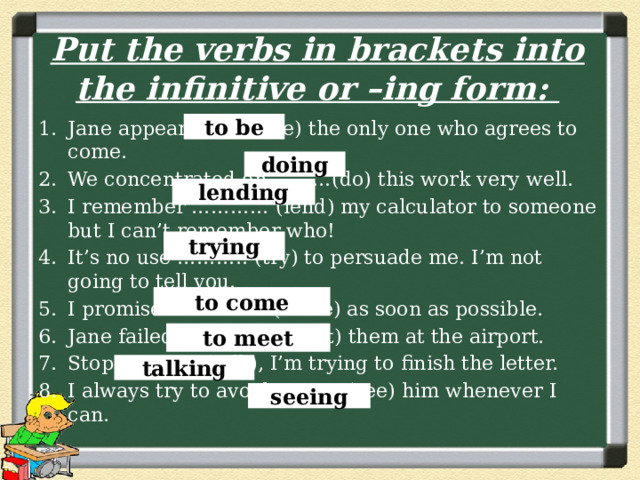
Put the verbs in brackets into the infinitive or –ing form:
- Jane appears ………(be) the only one who agrees to come.
- We concentrated on ………(do) this work very well.
- I remember ………… (lend) my calculator to someone but I can’t remember who!
- It’s no use ……….. (try) to persuade me. I’m not going to tell you.
- I promise …………… (come) as soon as possible.
- Jane failed ………….. (meet) them at the airport.
- Stop ………… (talk), I’m trying to finish the letter.
- I always try to avoid ………. (see) him whenever I can.
to be
doing
lending
trying
to come
to meet
talking
seeing
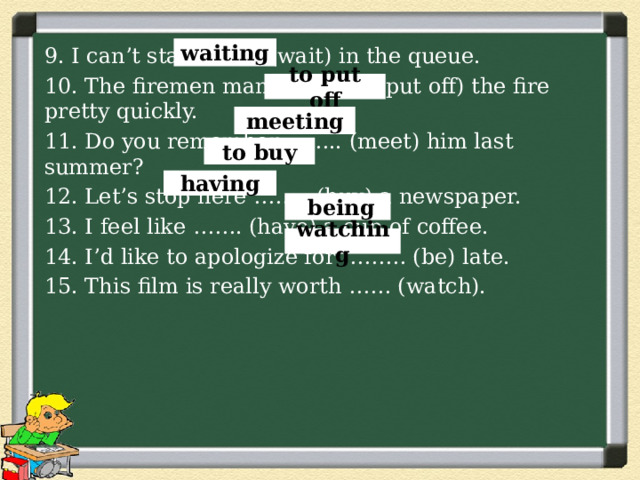
waiting
9. I can’t stand ….... (wait) in the queue.
10. The firemen managed …... (put off) the fire pretty quickly.
11. Do you remember …….. (meet) him last summer?
12. Let’s stop here …….. (buy) a newspaper.
13. I feel like ……. (have) a cup of coffee.
14. I’d like to apologize for ……… (be) late.
15. This film is really worth …… (watch).
to put off
meeting
to buy
having
being
watching
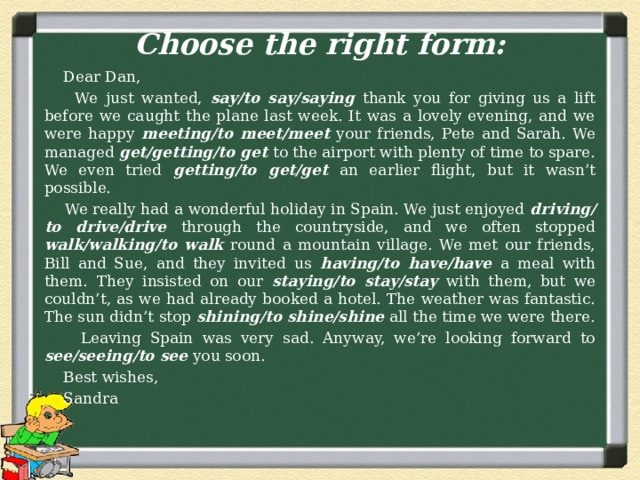
Choose the right form:
Dear Dan,
We just wanted, say/to say/saying thank you for giving us a lift before we caught the plane last week. It was a lovely evening, and we were happy meeting/to meet/meet your friends, Pete and Sarah. We managed get/getting/to get to the airport with plenty of time to spare. We even tried getting/to get/get an earlier flight, but it wasn’t possible.
We really had a wonderful holiday in Spain. We just enjoyed driving/to drive/drive through the countryside, and we often stopped walk/walking/to walk round a mountain village. We met our friends, Bill and Sue, and they invited us having/to have/have a meal with them. They insisted on our staying/to stay/stay with them, but we couldn’t, as we had already booked a hotel. The weather was fantastic. The sun didn’t stop shining/to shine/shine all the time we were there.
Leaving Spain was very sad. Anyway, we’re looking forward to see/seeing/to see you soon.
Best wishes,
Sandra
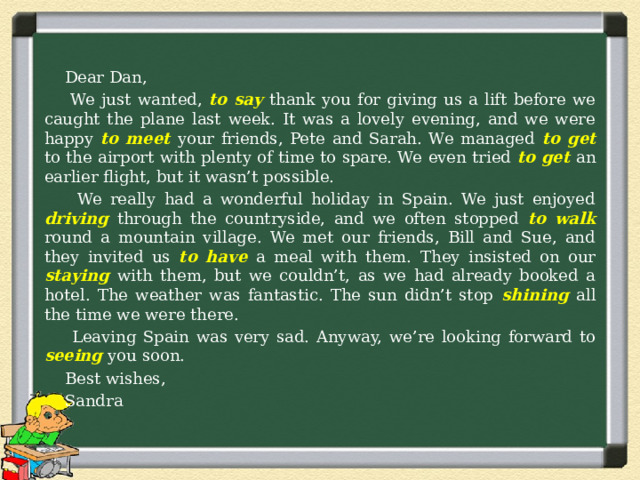
Dear Dan,
We just wanted, to say thank you for giving us a lift before we caught the plane last week. It was a lovely evening, and we were happy to meet your friends, Pete and Sarah. We managed to get to the airport with plenty of time to spare. We even tried to get an earlier flight, but it wasn’t possible.
We really had a wonderful holiday in Spain. We just enjoyed driving through the countryside, and we often stopped to walk round a mountain village. We met our friends, Bill and Sue, and they invited us to have a meal with them. They insisted on our staying with them, but we couldn’t, as we had already booked a hotel. The weather was fantastic. The sun didn’t stop shining all the time we were there.
Leaving Spain was very sad. Anyway, we’re looking forward to seeing you soon.
Best wishes,
Sandra
Комплекты видеоуроков для учителей





Скачать
© 2022, Сухомлинова Татьяна Владимировна 456 2
Похожие файлы
Вебинар для учителей

Свидетельство об участии БЕСПЛАТНО!