Россия, Kaliningrad

СДЕЛАЙТЕ СВОИ УРОКИ ЕЩЁ ЭФФЕКТИВНЕЕ, А ЖИЗНЬ СВОБОДНЕЕ
Благодаря готовым учебным материалам для работы в классе и дистанционно
Скидки до 50 % на комплекты
только до
Готовые ключевые этапы урока всегда будут у вас под рукой
Организационный момент
Проверка знаний
Объяснение материала
Закрепление изученного
Итоги урока
Была в сети 05.12.2024 18:01

Игнаукайте Дарья Васильевна
Преподаватель иностранного языка
24 года
 177
177
 181 233
Местоположение
Сокращения в английском языке
Категория:
Английский язык
26.11.2024 10:42

Просмотр содержимого документа
«Сокращения в английском языке»
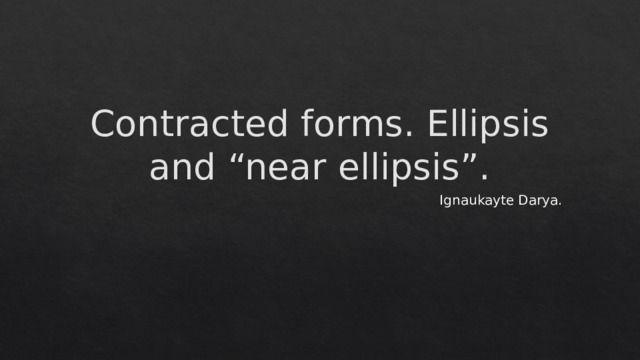
Contracted forms. Ellipsis and “near ellipsis”.
Ignaukayte Darya.
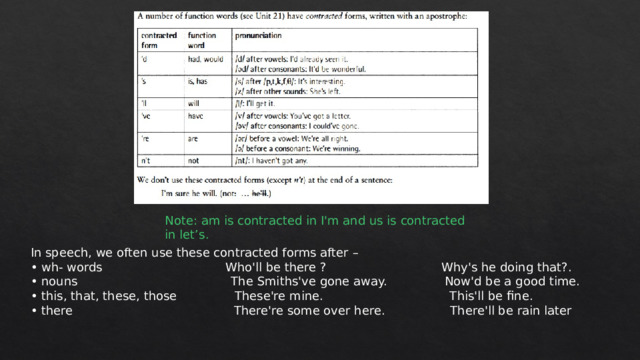
Note: am is contracted in I'm and us is contracted in let’s.
In speech, we often use these contracted forms after –
• wh- words Who'll be there ? Why's he doing that?.
• nouns The Smiths've gone away. Now'd be a good time.
• this, that, these, those These're mine. This'll be fine.
• there There're some over here. There'll be rain later
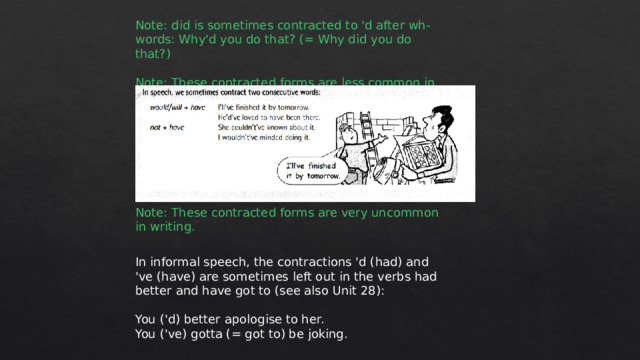
Note: did is sometimes contracted to 'd after wh- words: Why'd you do that? (= Why did you do that?)
Note: These contracted forms are less common in writing.
Note: These contracted forms are very uncommon in writing.
In informal speech, the contractions 'd (had) and 've (have) are sometimes left out in the verbs had better and have got to (see also Unit 28):
You ('d) better apologise to her.
You ('ve) gotta (= got to) be joking.
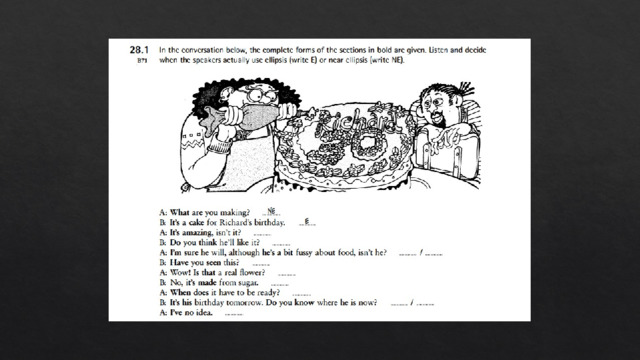
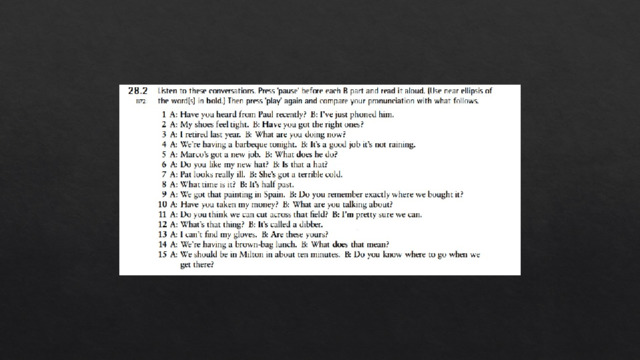
In spoken English we often leave out words when they are obvious from the context:
A: What's the matter? B: Got a headache. (= I've got a headache.)
This process is called ellipsis. Often, however, the words are not omitted completely, but a very short sound from the omitted words is left behind:
've got a headache. (/vgot.../)
We will refer to this as near ellipsis.
Being aware of ellipsis and near ellipsis can help you to understand spoken English, and using it can make you sound more natural and fluent.
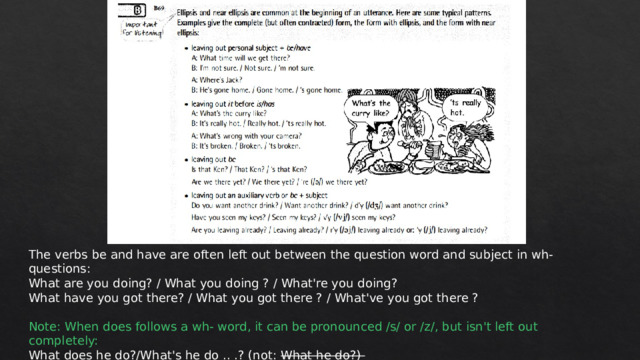
The verbs be and have are often left out between the question word and subject in wh- questions:
What are you doing? / What you doing ? / What're you doing?
What have you got there? / What you got there ? / What've you got there ?
Note: When does follows a wh- word, it can be pronounced /s/ or /z/, but isn't left out completely:
What does he do?/What's he do .. .? (not: What he do?)
When does it start?/When's it start? (not: When it start?)
Вебинар для учителей

Свидетельство об участии БЕСПЛАТНО!