

© 2019 229 2

СДЕЛАЙТЕ СВОИ УРОКИ ЕЩЁ ЭФФЕКТИВНЕЕ, А ЖИЗНЬ СВОБОДНЕЕ
Благодаря готовым учебным материалам для работы в классе и дистанционно
Скидки до 50 % на комплекты
только до
Готовые ключевые этапы урока всегда будут у вас под рукой
Организационный момент
Проверка знаний
Объяснение материала
Закрепление изученного
Итоги урока

Teaching English With Songs
Категория:
Английский язык
08.02.2019 14:30

Просмотр содержимого документа
«Teaching English With Songs»
With the help of a song, it’s simple to teach most aspects of grammar, any particular vocabulary, and even structures.
good old gap-fills. You can vary a gap-fill task a bit if you arrange students in pairs and prepare two handouts with different word sets removed. In this case, they will practise not only their listening skills, but also peer feedback strategies. Also,I sometimes like shifting responsibility of creating gap-fills onto my teenage students. They seem to enjoy the process of choosing a song and taking away the trickiest pieces of language.
spotting the mistakes. Deliberate mistakes made in texts develop both listening and attention skills.
identifying the meaning of words/expressions used in the text. Vocabulary tasks never get old, right?
ordering the jumbled sentences. If done as a pre-listening task, it trains prediction skills and the ability to see text structure and cohesion.
One of my most preferred resources is tuneintoenglish Here you will find tons of downloadable worksheets, with a different focus each, based on songs.
We usually do it while studying the topic of films and music. I tell students that they are going to be screenplay writers. All that they have is just the main song for their film. Now they have to think about the plot. The handouts for the task look like this:
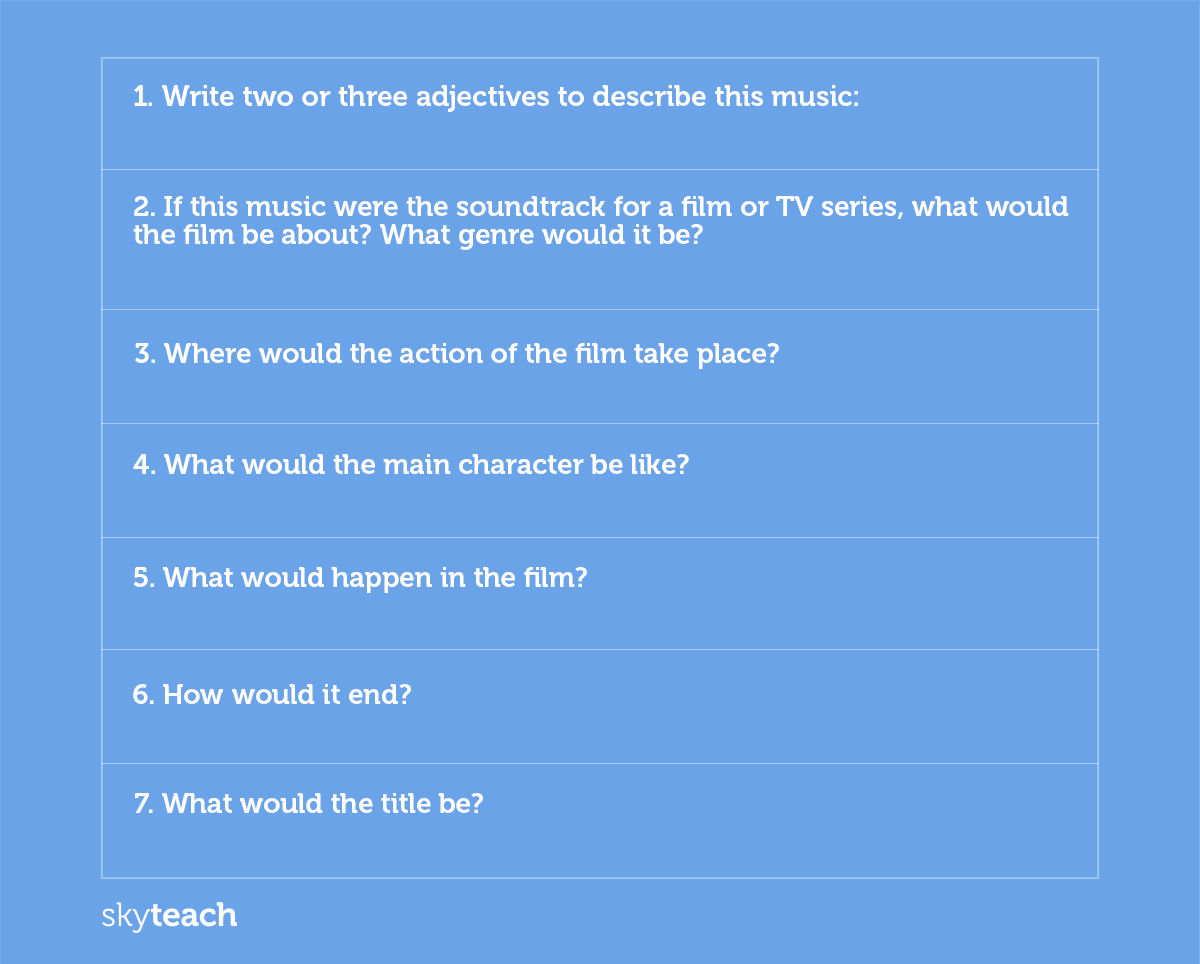
You can adapt yours according to your needs and students’ level. After giving out the papers, I switch on any song, which seems suitable and let them write. Extra 5-7 minutes are of great use when the song is over, as they help students develop their plots in a more detailed way. Then, learners work in pairs, telling each other about their films. Next, they change pairs so that they could talk to 2-3 people in the end. Finally, everyone has to tell the rest of the group about the best film they’ve heard about. Sometimes we also have a kind of ‘award ceremony’ when students vote for the best main character, the most compelling story, the most unexpected ending and so on. Everybody’s happy to get a paper Oscar.
Use songs to practice describing character and appearance. Play one and ask students to imagine someone who likes (or, possibly, hates) this song and, then, describe this person. You can develop this task in a number of ways. One option is to play a couple of tunes, one after another, and tell students A to describe the person who likes the first tune, while students B will think of the one who likes the second song. Then, they might briefly discuss their characters in pairs and make up a dialogue between them, or write a short story of what happens when the characters meet.
The whole thing
Do not forget that a song should not necessarily be a part of your class. You can easily build a whole lesson around it, including all sorts of grammar and vocabulary activities. Then, just round things off with a production activity. It might be interviewing the character of the song, writing a page of this character’s diary, roleplaying the situation…the list is endless.
One more way to spread a song over the whole lesson is to dig a bit deeper into its historical and social context. This way, you can bring into the classroom not just precious pieces of language, but also the instruments for relevant understanding and interpreting a song. Certain songs cannot but lead themselves to discussions. Have you ever heard of True Stories Behind the Songs by Sandra Heyer? Her website is definitely worth a visit, as it will provide you with lesson plans and ideas as well as with carefully made handouts to download. I particularly like the way she develops this idea of ‘a story behind every song’. It is very likely that you have teenagers who will be curious to know more about Paul McCartney’s life or one of Adele’s love stories.
Вебинар для учителей

Свидетельство об участии БЕСПЛАТНО!