

Казахстан, Кокшетау


СДЕЛАЙТЕ СВОИ УРОКИ ЕЩЁ ЭФФЕКТИВНЕЕ, А ЖИЗНЬ СВОБОДНЕЕ
Благодаря готовым учебным материалам для работы в классе и дистанционно
Скидки до 50 % на комплекты
только до
Готовые ключевые этапы урока всегда будут у вас под рукой
Организационный момент
Проверка знаний
Объяснение материала
Закрепление изученного
Итоги урока

Была в сети 24.11.2022 05:58

Жусупова Ақерке Арманқызы
учитель английского
24 года
 42
42
 258 108
Местоположение
Unit of a long term plan
Категория:
Английский язык
09.12.2021 14:53

Просмотр содержимого документа
«Unit of a long term plan»
Lesson plan
| Unit of a long term plan Module 2. Communication and Technology
|
| ||||||||
| Date: |
| ||||||||
| CLASS: 7
| Number present:
| absent:
| |||||||
| Lesson title | How do you communicate? | ||||||||
| Learning objectives(s) that this lesson is contributing to (link to the Subject programme) |
7.R2 understand specific information and detail in texts on a range of familiar general and curricular topics 7.UE7 use a variety of simple perfect forms to express recent, indefinite and unfinished past on a range of familiar general and curricular topics | ||||||||
| Lesson objectives | Apply topical vocabulary to talk about ways of communication Scan the text of online survey to answer the questions Use simple perfect forms correctly when expressing recent, indefinite and unfinished past actions | ||||||||
| Assessment criteria | Learners have met the learning objective if they can: use topic related vocabulary in speech appropriately identify particular facts about the way of communication in the text Form simple perfect forms correctly for recent, indefinite and unfinished past actions | ||||||||
| Values links | Labor and creativity, lifelong learning | ||||||||
| Cross-curricular links | Computer Science | ||||||||
| Previous learning | Communication and technology vocabulary | ||||||||
| Plan | |||||||||
| Planned timings | Planned activities (replace the notes below with your planned activities) | Resources | |||||||
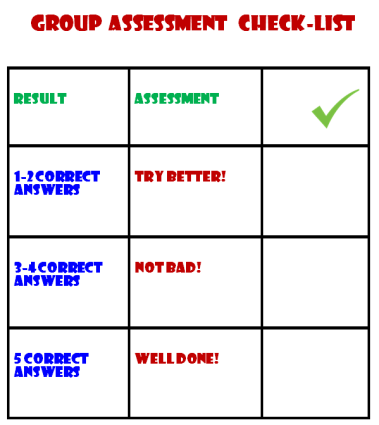
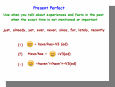
| Start 5 min | CLASS ROUTINE Teacher and learners greet each other STARTER (W) Warm up Teacher refers learners to the slide on the smartboard. One of the students reads the rhyme aloud and fills in the missing words into the gaps on the Smart board. Other students may help from their places. Interaction pattern: T-Ss, S-Ss Teacher asks the question What was his favorite means of communication? and elicits the answer (Internet) INTRODUCTION Activity 1 (W,G) What do you know about Facebook? Brainstorming. Read the word on the black board ( Facebook) Work in small groups and brainstorm everything you know about the social networking website Facebook. Try to answer all the questions(Flipchart 2) Choose one student from each group (speaker) to report back to the class Check information about Facebook (Flipchart 3). Interaction pattern: Ss-Ss Descriptor A learner: -reads the word on the backboard -distributes the roles within the groups (speaker, time-keeper, group- leader, recorder) - answers the questions about Facebook working in small groups - one student from each group (speaker) tells facts in front of the class Differentiation by roles within groups (speaker, time-keeper, group- leader, recorder). Less able learners may choose the role of a time-keeper, more able learners may choose the role of a recorder, the most able learners may choose the role of a group leader or a speaker (f) Group assessment checklist Each group is given a checklist. Learners fill in the table, and then exchange the table with other groups. Learners read information given on the smartboard and check the answers (Flipchart 4). (W)The students answer the questions: What other social networks do you know? What social networks are popular in Kazakhstan? Teacher elicits answers and shows the flipchart demonstrating social networks of the world (Flipchart 4). Interaction pattern: T-Ss, Ss-T Modelling: T:There are many other social networks in the world. They are…. The most popular networks in Kazakhstan are…. Differentiation by scaffolding. Teacher asks less able learners questions in order to direct learners’ thinking and encourage their active participation. Teacher gives weaker learners more time to think (f) Oral assessment.T: Excellent, good idea, not bad, I like the way you think After doing Activity 1 teacher asks pupils to predict the theme of the lesson. After learners guess the theme of the lesson, teacher elicits the lesson objectives and introduces them on the slide (Flipchart 5). | Flipchart 1. Videouroki.net Lesson38 “What is Internet?”https://www.youtube.com/watch?time_continue=2&v=6S2dWyLSRus&feature=emb_logo Flipchart 2.Supporting questions Flipchart 3. Flipchart 4 Social networks of the world Flipchart 5. The theme of the lesson How do you communicate? | |||||||
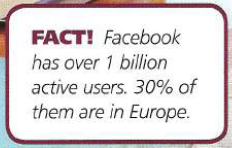
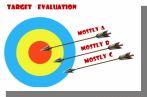
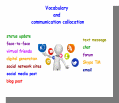
| Middle 30 min | DEVELOPMENT Activity 2. (W) Describing a photo (tuning on for the reading task) Spyglass. The students use a ‘spyglass’ to look carefully at the picture and try to make as many sentences as they can. Look at the photo. What are people doing? Is the situation familiar to you? Do you like this situation? Interaction pattern: T - Ss Descriptor A learner -Looks at the picture and answers the questions . Modelling: T: The mother is watching TV… The situation is (not) familiar to me. I like( don’t like) this situation. Differentiation by task Less able learners answer questions suggested in the task. Teacher asks more able learners Why do you like ( don’t you like) this situation? Modelling: T: I like (don’t like) this situation because the family don’t communicate with each other. (f) Self-assessment “Smiles” Every learner has two smiles on the desk. Learners who like the situation choose a smile ‘I like’ while answering. Those who don’t like the situation choose a smile ‘I don’t like’. At the end of the activity the teacher asks learners to show their smiles to see the result of the discussion clearly. Activity 3 Reading and discussing the results of the survey. Scan, answer, discuss (W) Pre-reading stage. Guess the topic of the survey Read the introduction to an online survey. What is it about? Read the information FACT! Do you have a Facebook account? Do you know anyone who doesn’t have a Facebook account? Interaction pattern: T – Ss Descriptor. A learner: -reads the texts -answers the questions Modelling: T: The text is about…I know a person/I don’t know any person who doesn’t have a Facebook account. Differentiation by task Less able learners answer questions suggested in the task. Teacher asks more able learners about additional social networks. ( I,P) During reading stage Find out the way you communicate R Interaction pattern: S – S Descriptor. A learner: -scans the survey individually -works with the partner - answers the questions of the survey -reads the results Differentiation by support. Less able students are given a list of the most difficult words from the text with their explanation (W) Post-reading stage Discussion of the survey results Teacher finds out which students are mostly A, B or C (Target evaluation) and asks questions to discuss the results of the survey. Interaction pattern: T – Ss ,Ss-T Descriptor. A learner: -puts the sticker to the place of the target according to the points -answers the teacher’s questions: Do you agree with the results of the survey? Why? Would you like to change anything in your lifestyle? In what way? Differentiation by outcome. Less able students are expected to give simpler and shorter answers while more able learners will be challenged longer and more detailed answers. (f) Self- assessment ‘Target evaluation’. Learners put the stickers to the place of the target according to their points (W)Vocabulary and communication collocations revision (Preparation for the speaking task) Teacher refers students to the words on the Smart board and drills the pronunciation (Flipchart 6). Activity 4 (I,W) Read and match. Vocabulary Stripes Read the definition on the stripe and match it with the word on the Smart board Interaction pattern: T- S – Ss Descriptor A learner -takes out a stripe of paper from a plastic glass -reads aloud the definition which is written on the stripe -matches the definition with the word or a phrase on the smartboard Differentiation by time given and peer support Less able students are given more time to think and may ask for “a help of the audience”
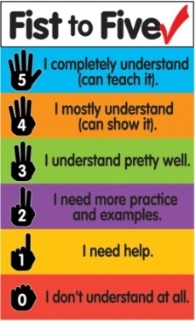
(f)Peer assessment. Mantle of the Expert. A voluntary learner puts on a mantle. Then he or she checks the answers of other learners and crosses out the words from the list on the Smartboard. In the middle of the activity teacher may ask another volunteer to wear a mantle of the expert. Activity 5 (I,W) Speaking practice : How do you and your friends communicate? Think and say. ‘Throw a ball’ strategy
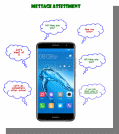
Answer the questions using prompts (Flipchart 7). -Which ways to communicate are the most popular with you and your friends? -How do your parents and grandparents communicate? Is it the same as you? Teacher gives the students some time (2-3 min) to make a sentence using prompts. Then one of the students says the sentence and throws the ball to a classmate to let him/her answer. Interaction pattern: T- S – Ss Descriptor A learner -thinks out the answers using prompts -answers the questions -throws the ball to the classmate Modelling: T: I usually use text messages on my telephone because it is a quick way to deliver information. Differentiation by type of task Less able students can use prompts not changing them. Teacher encourages higher able students to change the prompts and make their own sentences. (f) Teacher assessment “Get a Message” For each appropriate answer teacher gives a learner a sticker in the shape of a speech bubble. The learner sticks it to the blackboard in the space near the paper mobile telephone. After the activity teacher refers students to the speech bubbles to demonstrate how many sentences were made. (W)Energizer Technology Song for Kids Students sing the song and do the exercises (W) Grammar revision (D)Students look at the information about Present Perfect (Flipchart 8). One of the students reads aloud the adverbs which are used in Present Perfect. Teacher elicits the answers to the question How do we build affirmative, negative and interrogative sentences? Interaction pattern: T- Ss, Ss-T (f) Fist to five check. Teacher calls out " Fist to Five Check" to the class to have students raise their hands to quickly show their levels of understanding Activity 6 (I,P) Complete the sentences. Think-pair-share (TPS) strategy. Students think about the answers individually, then pair up and share the results. Exercise 1. Complete the sentences with the correct form of the verbs in the box. Use present perfect affirmative or negative. post join buy read speak 1. My grandparents_________me a tablet as a birthday present. 2. Facebook users _________more than 15 billion of pictures. 3. Alina _______________ any social network yet. 4. Principal ____________to the students about using telephones in classes. 5. Adil ____________ the operating manual to the camera, so he can’t use it yet. Exercise 2.Use the present perfect form of the verbs in brackets (affirmative or negative) to complete the sentence). 1. I am so happy! I __________(to find) the answers to the questions in the Internet! 2. They __________(to talk) face-to-face for ages! 3. Sophia __________(to update) her status in VK at last. 4. Tom and Ben ______________(to become) virtual friends this month. 5.We ___________(to send) an e-mail to our Granny today. For Exercise 1 teacher asks students to work in pairs .Teacher gives out colorful paper hands to learners and pairs are formed by the same color of the hand (random pairing). Before starting Exercise 2 teacher pairs more able student with less able student for the task (‘clever’ pairing). Teacher asks: Who thinks that he or she understands this grammar rather well? Who needs any support with present perfect? Interaction pattern: S-S Descriptor A learner -thinks about the task individually -works with a partner -uses simple perfect forms to open the brackets -checks the task Differentiation by support (for Exercise 1) Less able students may use the table of irregular verbs. Differentiation by roles in pairs (for Exercise 2) More able students help their partners do the exercise correctly (f)Peer assessment checklist. Each pair is given a checklist. Learners check the answers and fill in the table | https://resettips.com/wp-content/uploads/2018/10/Best-Bundle-Deals-for-TV-Internet-and-Phone.jpg https://thumbs.dreamstime.com/b/emoticon%D0%BD%D0%B5%D0%BB%D1%8E%D0%B1%D0%BE%D0%B2-21158278.jpg SB ex 2 p18 (“Eyes Open 3 Student’s Book for Kazakhstan Grade 7” by Ben Goldstein and Ceri Jones with Eoin Higgins , Cambridge 2017) SB ex 2 p18 (“Eyes Open 3 Student’s Book for Kazakhstan Grade 7” by Ben Goldstein and Ceri Jones with Eoin Higgins , Cambridge 2017) Flipchart 6 Flipchart 7  Prompts Picture of a smartphone h Technology Song for Kids https://www.youtube.com/ watch?v=JEIHogpVJ1k Flipchart 8. Present Perfect Picture Fist to Five: https://www.k12schoolsupplies.net/ Fist-To-Five-Check-Magnets-Set- Of-7-p/do-735211.htm Handouts with the exercises | |||||||
| End 5 min | PLENARY (W)Teacher elicits students’ answers What did you learn from the lesson? What did you like best? What would you like to change? Interaction pattern: T-S, S-T (f) ‘Can do’ assessment. Learners fill in the table individually Evaluation Teacher asks the students to come to the Smart board and ‘press’ the button Like or Dislike. The amount of likes demonstrates the success of the lesson. CLASS ROUTINE Teacher explains the home task. Students get individual grammar exercises according to their levels. Teacher and students say good-bye to each other. | | |||||||
| Additional information | |||||||||
| Differentiation – how do you plan to give more support? How do you plan to challenge the more able learners? | Assessment – how are you planning to check learners’ learning? | Health and safety check | |||||||
| by roles within groups by type of task by scaffolding by difficulty of task by support by outcome by time given by peer support by roles in pairs | Group assessment checklist Teacher assessment Oral assessment Teacher assessment “Smiles” Self- assessment “Target evaluation” Peer assessment “Mantle of the Expert” Teacher assessment ‘Get the Message’ Self-assessment ‘Fist to five check’ Peer assessment checklist Self –assessment ‘Can do’ | Health saving technologies. Using an energizer and activities which allow moving around the classroom. | |||||||
| Reflection | Use the space below to reflect on your lesson. Answer the most relevant questions from the box on the left about your lesson. | ||||||||
| | |||||||||
| Summary evaluation What two things went really well (consider both teaching and learning)? 1: 2: What two things would have improved the lesson (consider both teaching and learning)? 1: 2: What have I learned from this lesson about the class or individuals that will inform my next lesson? | |||||||||



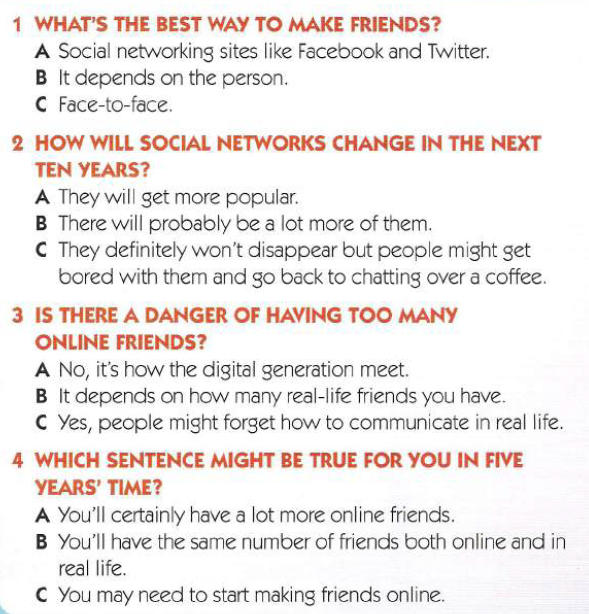 ead the survey individually. Then work with the partner, answer the questions and read the results.


 ttps://object.pscloud.io/cms/cms/Photo/img_0_77_1938_2.jpg



Вебинар для учителей

Свидетельство об участии БЕСПЛАТНО!



