Кыргызстан, Таласская область. город Талас

СДЕЛАЙТЕ СВОИ УРОКИ ЕЩЁ ЭФФЕКТИВНЕЕ, А ЖИЗНЬ СВОБОДНЕЕ
Благодаря готовым учебным материалам для работы в классе и дистанционно
Скидки до 50 % на комплекты
только до
Готовые ключевые этапы урока всегда будут у вас под рукой
Организационный момент
Проверка знаний
Объяснение материала
Закрепление изученного
Итоги урока
Была в сети 31.03.2026 14:26

Субаналиева Фарида Жолдошовна
учительница английского языка
43 года
 1 939
1 939
 36 173
Местоположение
Degrees of comparison
Категория:
Английский язык
11.12.2020 05:41

Просмотр содержимого документа
«Degrees of comparison»
Secondary school # 1 named after
Abjalbek Cholponkulov
Talas city
Subanalieva Farida Joldoshovna
Degrees of Comparison
(Сын атоочтун салыштырма даражалары)
Grade 7
Objectives:
At the end of the discussion, the students will be able to:
Describe degrees of comparison;
Identify the rules for degrees of comparison;
Point out the importance of adjectives in their daily lives;
1
2
3
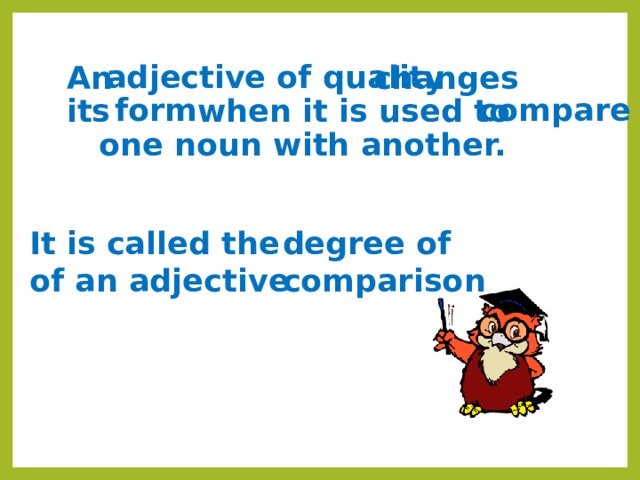
An changes its when it is used to one noun with another.
adjective of quality
form
compare
It is called the of an adjective
degree of comparison
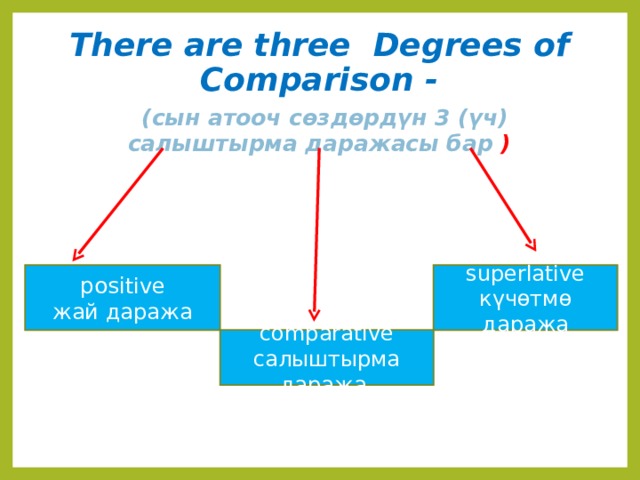
There are three Degrees of Comparison - ( сын атооч с ѳздѳрдүн 3 (үч) салыштырма даражасы бар )
posi tive
superlative
жай даража
к үчѳтмѳ даража
comparative
c алыштырма даража
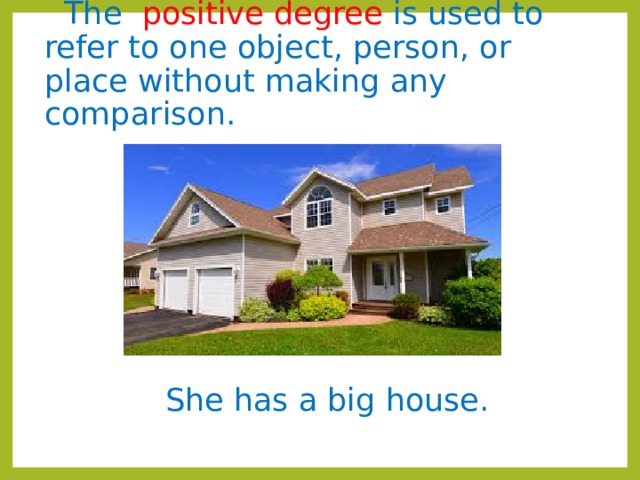
The positive degree is used to refer to one object, person, or place without making any comparison.
She has a big house.

The comparative degree refers to a greater degree of adjective as compared to the positive degree.
It is used to compare two objects, people, or places.
Her house is bigger than my house.
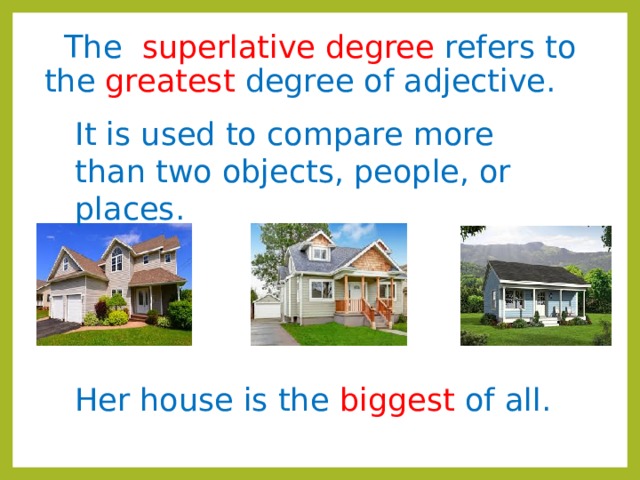
The superlative degree refers to the greatest degree of adjective.
It is used to compare more than two objects, people, or places.
Her house is the biggest of all.

We add – er and –est to most one or two syllable words that end in consonants.
The positive degree
The comparative degree
The superlative degree
+ ER
strong
strong er
(the) + EST
cold
the strong est
cold er
warm
warm er
the cold est
the warm est

When the positive is long i.e. is the word of two or more syllables, we add more and most before the adjective to form comparative and superlative degrees
The positive degree
The comparative degree
The superlative degree
more
interesting
more interesting
the most
popular
the most interesting
more popular
difficult
more difficult
the most popular
the most difficult
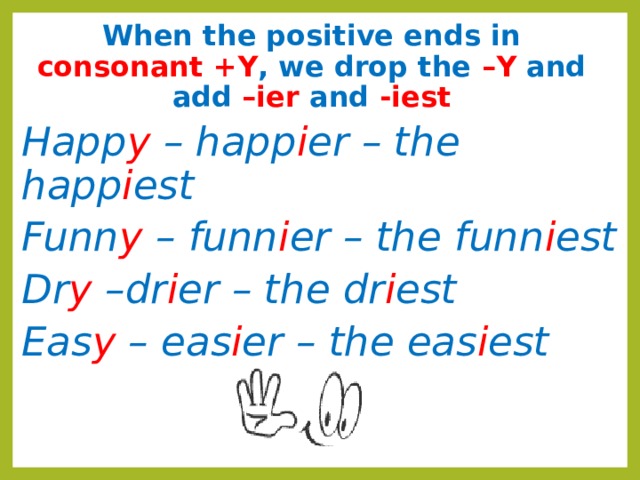
When the positive ends in consonant +Y , we drop the –Y and add –ier and -iest
Happ y – happ i er – the happ i est
Funn y – funn i er – the funn i est
Dr y –dr i er – the dr i est
Eas y – eas i er – the eas i est
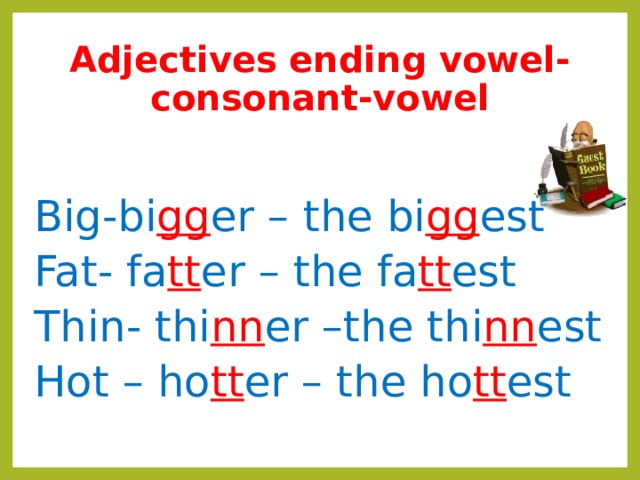
Adjectives ending vowel-consonant-vowel
Big-bi gg er – the bi gg est
Fat- fa tt er – the fa tt est
Thin- thi nn er –the thi nn est
Hot – ho tt er – the ho tt est

There are some adjectives that do not form the comparatives and superlatives from their positives. They have irregular degrees of comparison
Good – better –the best
Bad – worse – the worst
Little – less – the least
Many (much)-more –the most
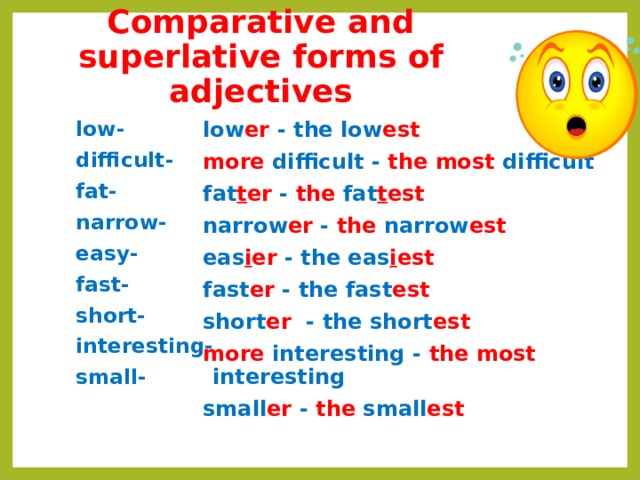
Comparative and superlative forms of adjectives
low-
difficult-
fat-
narrow-
easy-
fast-
short-
interesting-
small-
low er - the low est
more difficult - the most difficult
fat t er - the fat t est
narrow er - the narrow est
eas i er - the eas i est
fast er - the fast est
short er - the short est
more interesting - the most interesting
small er - the small est
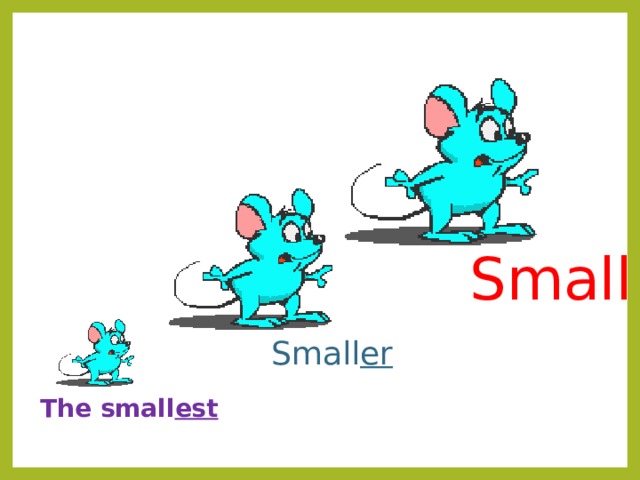
Small
Small er
The small est

Nice
Nic er
The nic est
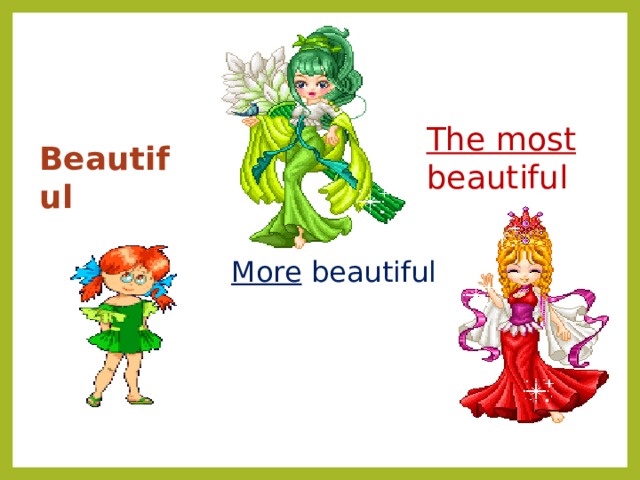
The most beautiful
Beautiful
More beautiful

Fill in the blanks
The positive degree
The comparative degree
long
The superlative degree
the longest
funnier
good
larger
wonderful
the largest
interesting
more interesting
worse
longer
funny
the funniest
better
the best
large
the most wonderful
more wonderful
the most interesting
bad
the worst

Open the brackets, put adjective into comparative or superlative form.
1.The is (big) than the
2.The is (tall) than the
3. That is the (high) in the forest .
bigger
taller
highest
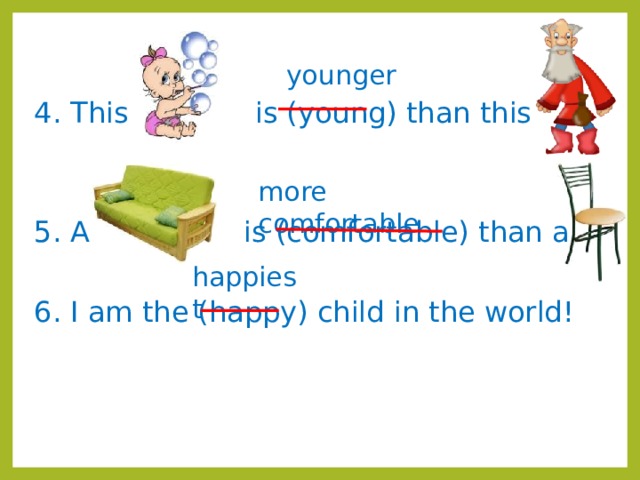
4. This is (young) than this
5. A is (comfortable) than a
6. I am the (happy) child in the world!
younger
more comfortable
happiest

nicer
7. These are (nice) than those.
8. The is (fast) than the
9. are (funny) animals.
faster
funny

Choose the right variant:
1.July is / month.
2.What is / river in Russia?
3.Jane is / than her sister.
4.Tom is a / dancer.
5.Don’t eat this salad, it is / .
6.This spring is / than last spring.
7.This is / stamp in my collection.
hotter
the hottest
long
the longest
fatter
the fattest
good
better
bad
the worst
colder
the coldest
better
the best
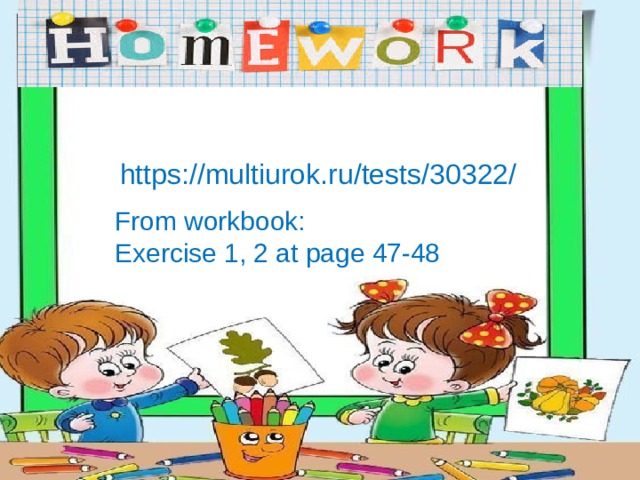
https://multiurok.ru/tests/30322/
From workbook:
Exercise 1, 2 at page 47-48

Thank you for your attention
Good bye !


Вебинар для учителей
Свидетельство об участии БЕСПЛАТНО!