
Россия, Калининград


СДЕЛАЙТЕ СВОИ УРОКИ ЕЩЁ ЭФФЕКТИВНЕЕ, А ЖИЗНЬ СВОБОДНЕЕ
Благодаря готовым учебным материалам для работы в классе и дистанционно
Скидки до 50 % на комплекты
только до
Готовые ключевые этапы урока всегда будут у вас под рукой
Организационный момент
Проверка знаний
Объяснение материала
Закрепление изученного
Итоги урока

Была в сети 08.12.2024 02:47

Артищева Виктория Андреевна
23 года
 178
178
 181 247
Местоположение
Специализация
Устная часть ОГЭ Английский язык
Категория:
Английский язык
27.11.2024 21:39

Просмотр содержимого документа
«Устная часть ОГЭ Английский язык»

A+


The top 9 global problems the world faces today:
A+
1. Climate Change
- Rising global temperatures, extreme weather, melting ice caps, and sea level rise threaten ecosystems and human livelihoods.
2. Poverty
- Over 700 million people live in extreme poverty, struggling to meet basic needs like food, shelter, and education.
3. Global Inequality
- Disparities in income, gender, and access to education and healthcare create social and economic divides.
4. Pollution
- Air, water, and soil pollution harm the environment and human health, with plastics and industrial waste being major contributors.
5. Hunger and Food Insecurity
- Millions suffer from malnutrition and starvation, especially in developing countries, due to unequal food distribution and climate change impacts.
6. Overpopulation
- Rapid population growth puts pressure on resources like water, food, and housing, leading to unsustainable development.
7. Global Health Crises
- Pandemics like COVID-19 highlight the challenges of healthcare access, vaccine distribution, and global cooperation in combating diseases.
8. Energy Crisis
- Dependence on fossil fuels contributes to environmental degradation, and many areas lack access to affordable and sustainable energy.
9. Cybersecurity Threats
- Cyberattacks, data breaches, and misinformation undermine security, economies, and trust in digital systems .

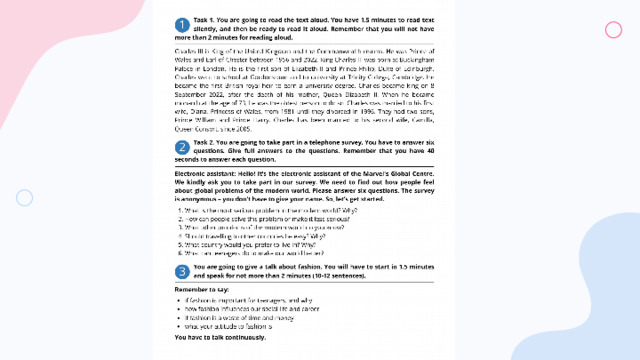
1. What is the most serious problem in the modern world? Why? I think the most serious problem in the modern world is climate change. It affects everyone on the planet, leading to extreme weather, rising sea levels, and loss of biodiversity. If we don’t take action, future generations will face severe consequences.
2. How can people solve this problem or make it less serious? People can solve this problem by reducing carbon emissions. This includes using renewable energy sources, planting more trees, and promoting eco-friendly lifestyles. Governments should also enforce stricter environmental laws and invest in sustainable technologies.
3. What other problems of the modern world do you know? Some other problems include poverty, pollution, wars, and inequality. These issues harm societies and individuals, creating challenges like hunger, lack of education, and social unrest.

4. Should travelling to other countries be easy? Why? Yes, travelling to other countries should be easy because it promotes cultural exchange and understanding. When people explore new cultures, they learn to appreciate diversity, which helps create a more peaceful and connected world.
5. What country would you prefer to live in? Why? I would prefer to live in Norway because it has a high standard of living, excellent healthcare, and beautiful nature. The country also focuses on sustainability and offers great opportunities for personal and professional growth.
6. What can teenagers do to make our world better? Teenagers can make the world better by raising awareness about global issues. They can participate in community service, promote recycling, and use social media to spread positive messages. Small actions, like saving water or reducing waste, can also have a big impact.

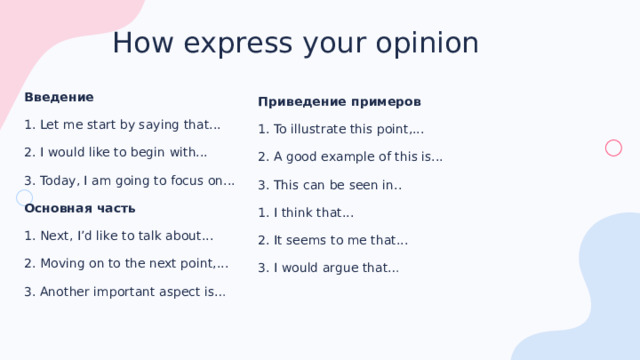
How express your opinion
Введение
1. Let me start by saying that...
2. I would like to begin with...
3. Today, I am going to focus on...
Основная часть
1. Next, I’d like to talk about...
2. Moving on to the next point,...
3. Another important aspect is…
Приведение примеров
1. To illustrate this point,...
2. A good example of this is...
3. This can be seen in..
1. I think that...
2. It seems to me that...
3. I would argue that…

How express your opinion
Сравнение
1. Compared to..., ...
2. While some may argue that..., others believe that...
3. Likewise,... Conversely,...
Подведение итогов
1. To conclude,...
2. In summary,...
3. Ultimately,...
Заключение
1. Thank you for your attention!
2. I appreciate your time and interest.
3. I look forward to hearing your thoughts on this topic.
Дополнительные фразы для акцентов
• It’s essential to understand that...
• One major benefit of this is...
• Additionally,... Furthermore,...
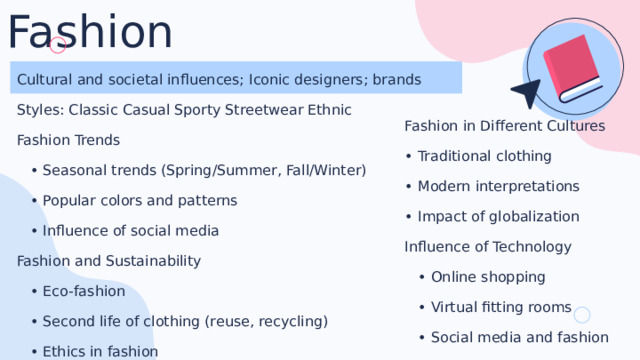
Fashion
Cultural and societal influences; Iconic designers; brands
Styles: Classic Casual Sporty Streetwear Ethnic
Fashion Trends
• Seasonal trends (Spring/Summer, Fall/Winter)
• Popular colors and patterns
• Influence of social media
Fashion and Sustainability
• Eco-fashion
• Second life of clothing (reuse, recycling)
• Ethics in fashion
Fashion in Different Cultures
• Traditional clothing
• Modern interpretations
• Impact of globalization
Influence of Technology
• Online shopping
• Virtual fitting rooms
• Social media and fashion








Вебинар для учителей

Свидетельство об участии БЕСПЛАТНО!